Prices
Before advertising, billboards; logos and neon signs, we were already communicating in a language older than the printing press: flags.
Thousands of years before businesses competed for attention on busy high streets, social media feeds or crowded exhibition halls, people were trying to solve a much simpler problem:
The answer wasn't shouting louder: it was making yourself visible.
Across civilisations, continents and centuries, flags became one of humanity’s earliest long-distance communication tools. Long before they represented nations, they identified armies, guided travellers, directed ships and marked places of trade. The colours, symbols and shapes may have changed, but the purpose rarely did.
They indicated "something important is here". And despite thousands of years of technological progress, that is still exactly what flags in business do today.
Some of the earliest forms of flags and banners can be traced back thousands of years. Whether the 11th century Zhou dynasty of China or the ancient standards of Egypt show in the reliefs of the Narmer Palette, each civilisation used visual standards to identify groups, leaders and territories.
These weren't decorative objects by any means. They were practical tools designed to be recognised from a distance, long before written language could be read at scale.
In 100 BC Rome, military units carried vexilum banners, which were typically square cloth banners mounted on poles. These allowed soldiers to identify their unit, follow commanders and maintain formation during battle. In fact, it is where the term "vexillology" comes from, meaning the study of the history, symbolism and usage of flags.
The concept is still one we use today: when people can't hear instructions, they can still see them.
As Europe moved through the medieval period, flags didn't disappear from warfare, no. Instead, they became more structured, more symbolic and far more tied to identity. This is where heraldry comes in.
Coats of arms weren't just decorative artwork on shields, banners and armour. They were a formal system of identification. Families, knights and regions used specific colours, patterns and symbols to represent themselves in battle, tournaments and official life. A lion often symbolised courage. An eagle represented authority. A cross could signify faith or allegiance. Over time, these symbols became hereditary, passed down through generations from son to son.
Even subtle variations mattered. The eldest son, for example, might bear a version of the family arms marked with a label (a horizontal band at the top of the shield), symbolising succession. In other words, identity became designed, and more importantly, consistent.
That consistency is what made it powerful. In a crowded battlefield, or a tournament of competing households, recognition had to be instant. You either knew who you were looking at or you didn't. This same principle quickly extended beyond castles into everyday life.
In medieval towns, where people could not read or write, businesses couldn't rely on written names like "Starbucks" or "Tesco" to attract attention. Instead, inns, taverns, blacksmiths and merchants used painted signs, symbols and banners to communicate their offerings. A traveller didn't need to read "Premier Inn" to know they could find shelter for the night.
The same applied to trade guilds, who used shared marks and emblems to signal craftsmanship, member status and trust. These symbols acted as early quality guarantees, similar in practice to the way a modern business would showcase their reviews. Markets, fairs and busy streets all operated on the notion that, in a crowded environment, clarity beats explanation.
In many ways, this was the earliest form of structured branding. Not branding as we know it today, but something far more fundamental: the system for being recognised before you are read.
As trade expanded and exploration connected distant parts of the world, flags evolved beyond land-based identity. At sea, they became an entire language.
Long before radios were invented, ships relied on flags to communicate with each other over vast distances. Eventually, this became the International Code of Signals (INTERCO), where combinations of flags represent letters, numbers and pre-defined messages still used in maritime communication today.
But not all flags at sea were designed for cooperation. Few are more recognisable, or rather, notorious, than the Jolly Roger. Far from being decorative, pirate flags were a form of psychological signalling. Pirates would often sail under false colours before raising their true flag at close range, signalling a stark choice: surrender or face attack.
Even among the most dastardly, flags functioned as identity. Captains developed distinctive designs using skulls, skeletons, hourglasses and weapons to build reputation and recognition at sea. Whether guiding friendly ships or intimidating enemy vessels, the principal remained the same: the flag carried the message.
Today, businesses have websites, social media and digital advertising. And yet, flags remain one of the most effective ways to attract attention outdoors.
Why? Because they solve the same problem they always have: people need to know who, what or where you are. Whether it's a retail park, a car dealership, an exhibition stand, a café or a business on an industrial estate, discoverability still matters. Customers can't visit somewhere that they don't notice.
Fixed signage relies on recognition. Flags create attention.
One of the key reasons is movement. From an evolutionary perspective, movement signals change in the environment, which naturally draws human attention before conscious processing begins. Combined with height, flags rise above vehicles, signage and crowds, making them visible from a distance where other forms of branding can get lost.
They don’t compete at eye level. They communicate above it.
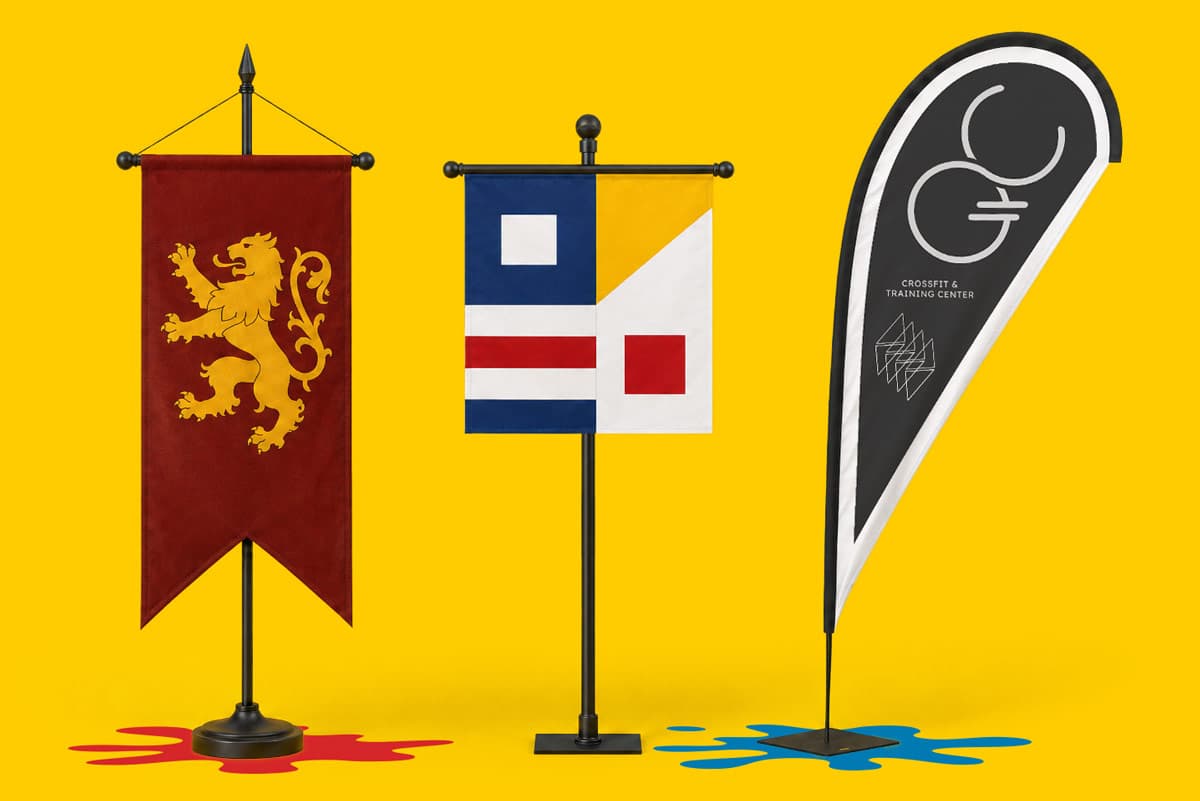
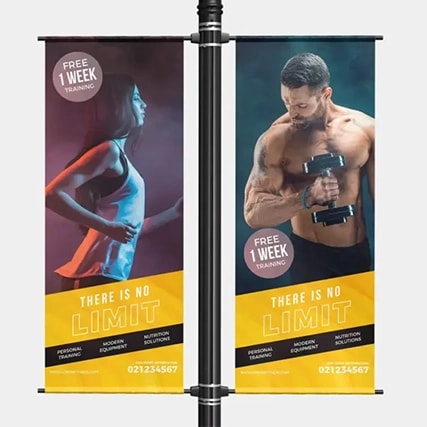
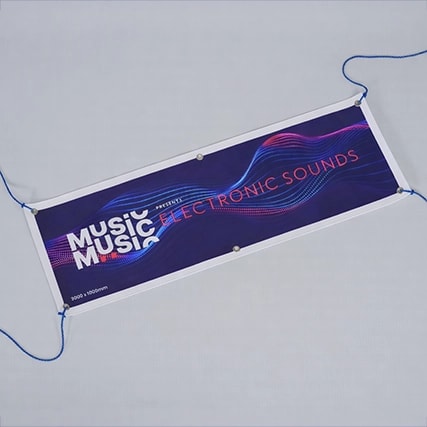
Different environments call for different solutions, which is why there isn’t a single “best” advertising flag. It also goes to show why, since we introduced them to our range of outdoor banners, display and signage, it has quickly grown to become one of our biggest sellers:
Each format works differently, but the goal is the same: help people find you faster.
It is easy to think of flags as decorative additions to a space. History suggests otherwise. For thousands of years, they have helped people stay organised, communicate messages and locate destinations in unfamiliar places.
Modern business flags continue that same function. The materials have changed, the quality is better, the design more refined, but the purpose? The purpose remains unchanged. At its core, flags still say the same thing it always has: "We're here".
Posted on July 2, 2026 by Miller Lane-Williams
Related topics: