Prices
Choosing the right print products can make the difference between a charity campaign that gets noticed and one that doesn't.
The most effective campaigns don’t just rely on digital; they also use print to build trust, increase visibility, and drive real-world action.
Here’s how to choose the right print materials for your charity campaign and use them where they matter most.
Despite the rise of digital marketing, print continues to deliver strong results, especially for charities and nonprofits looking to build local awareness and credibility.
Research shows that direct mail response rates can reach 4-5%, compared to less than 1% for many digital channels like email. Print is also more likely to be remembered, as people tend to engage with physical media for longer and recall it more clearly.
For charity campaigns, this matters. Trust, recognition, and emotional connection all play a role in whether someone donates or participates, and print helps reinforce all three.
Not all print serves the same purpose. Choosing print products for a charity campaign means matching the format to your objective, whether that’s awareness, fundraising, or event visibility.
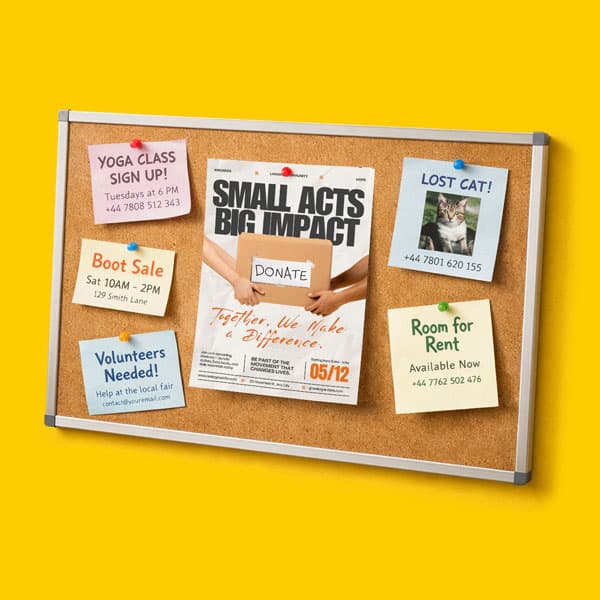
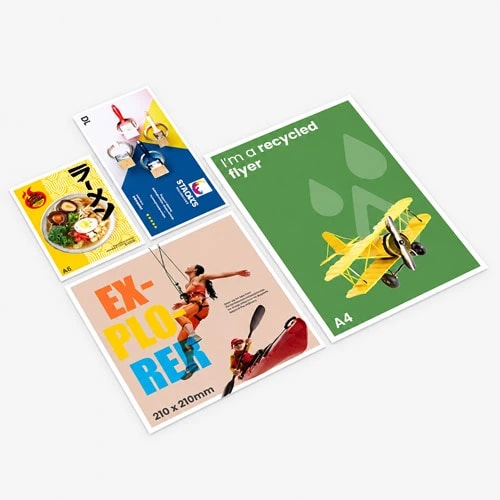
If your goal is to get your event or cause seen by as many people as possible, flyers and posters are essential.
They are often the first touchpoint, so be sure to keep your messaging clear and visually impactful.
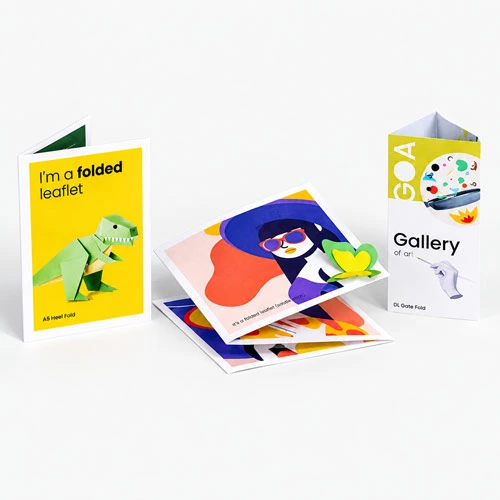
When you need to build trust and explain your cause in more detail, brochures and folded leaflets are the best choice.
This is where supporters decide whether your cause is worth supporting.
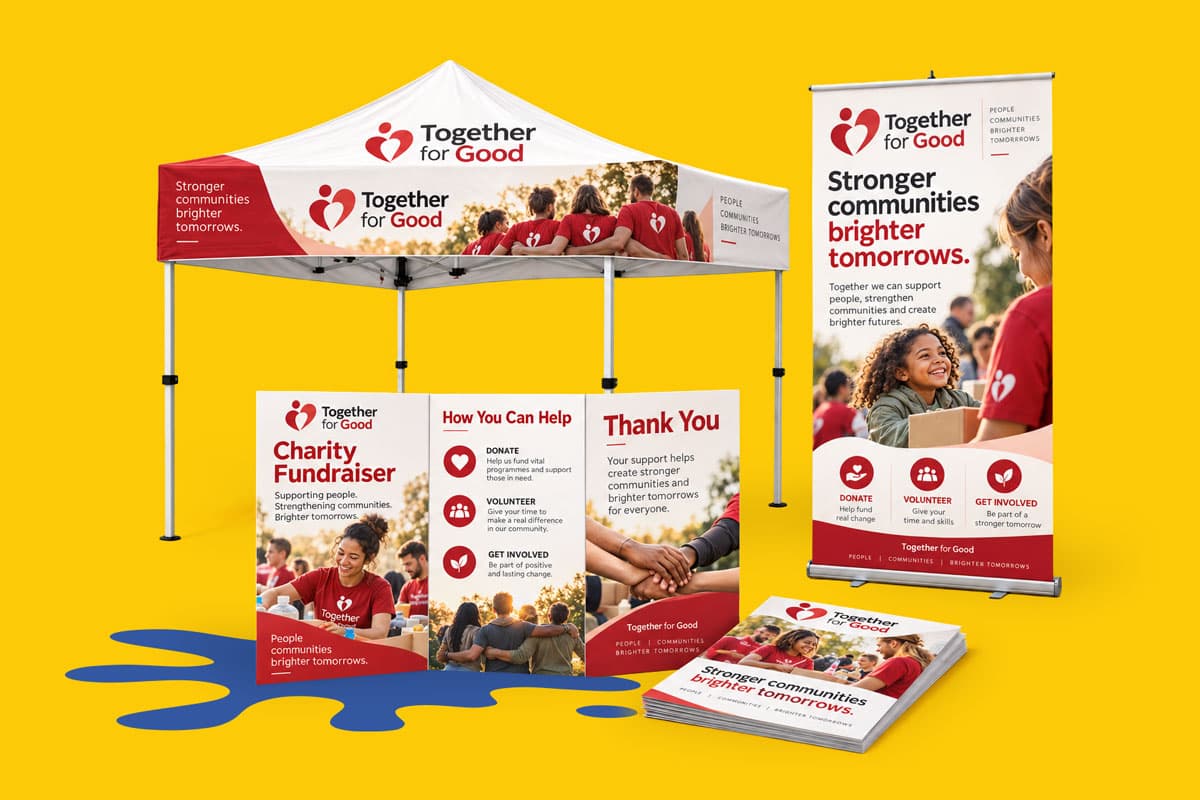
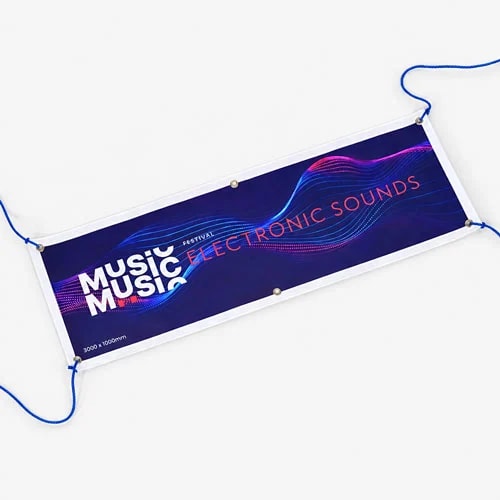
At the event itself, visibility is key. Banners, roller banners and signage help you stand out and create a professional presence.
If well placed, even simple signage can significantly improve awareness and make your event feel polished and approachable.
For high-footfall outdoor events, visibility from a distance is key. Flags, a-frames, and branded gazebos draw attention, create a clear hub, and help supporters instantly recognise your campaign.
Research shows that visually prominent outdoor displays can increase engagement, footfall, and participation, helping your charity campaign stand out in crowded areas.
If your goal is to drive donations, direct mail campaigns remain highly effective.
Leaflet distribution and door drops remain a cornerstone of successful charity campaigns looking to spread the word locally.
Choosing the right print product is every bit as much about format as it is placement. Ask yourself:
For example:
Placement matters as much as the product itself. The more aligned your print is with your audience’s environment, the more effective it becomes.
Even the right print product won’t perform if the design doesn’t work. Consistency across your print is key.
Use the same colours, fonts, and imagery across everything. This not only helps audiences recognise your campaign, but also keeps your message simple and easy to scan. Make your call to action as obvious as possible so people know what to do next.
Studies show that consistent branding improves recognition and trust, which are both critical for charity and fundraising campaigns.
Print works best when it’s part of a wider strategy. Campaigns that combine both print and digital channels consistently outperform single-channel approaches.
Whether it’s a flyer that directs people to your social media page, a poster that reminds them to attend your event, or a follow-up email that prompts them to donate, each touchpoint builds on the last—resulting in increased awareness, engagement, and action.
At every stage, your print should lead people towards a clear next step. Whether that's:
Make it obvious and easy to follow through. The best-performing charity campaigns don’t just inform; they guide supporters towards action.
The right print depends on your goals, audience and where you intend to use it:
Used together, they create a stronger, more effective campaign that reaches people in multiple ways.
If you're planning a charity or fundraising campaign, choosing the right print products is the first step to running a successful campaign. Check out our charity printing services today for up to 15% off our wide range of essential fundraising print today.
Posted on March 19, 2026 by Miller Lane-Williams
Related topics:
£21.76
£38.46
£17.48





£87.92
£17.71