Prices
Zines have always been about sharing ideas without waiting for permission.
They’re independent, personal and creative by nature. Some are rough and handmade. Some are polished and collectable. Some are made for a small community, while others become part of a wider creative movement.
That’s why zine printing is such an interesting space. It sits somewhere between DIY publishing, book production, art print, magazine design and small run print. You don’t need a huge publishing budget to make one, but you do need to make a few important decisions before your zine goes to print.
This guide explains how to print a zine, including size, page count, paper, binding, artwork setup and finishing options, so you can create something that feels right for your content, your audience and the way you want to share it.
A zine is an independent, self published booklet or small magazine, usually created around a specific subject, interest, scene or point of view.
Zines can be about almost anything. They’re often linked to music, art, photography, poetry, comics, politics, fashion, personal essays, football, food, local culture, fan communities and creative experiments. What connects them is the freedom of the format. A zine doesn’t need to follow the rules of a traditional magazine or book. It can be niche, personal, playful, messy, thoughtful or completely unexpected.
That’s a big part of the appeal. Zines give people a way to publish ideas that might not fit neatly anywhere else.
Zines have a long history in independent publishing. They’ve been used by science fiction fans, punk communities, artists, activists, writers and people who wanted to make something physical for a community of like minded readers. British Library research into zine collections also shows how zines have been recognised as part of cultural memory, especially for communities, creatives and activists whose work often sits outside mainstream publishing.
They still matter because print feels different from digital content. A post can be scrolled past in seconds, but a zine can be held, kept, collected, passed on, posted, sold at an event or left somewhere for someone else to discover. The Guardian has also covered the renewed interest in zine culture, showing that handmade and independent publishing still has a place in a heavily digital world.
That physical quality is part of the experience. The paper, the binding, the size, the cover and the way the pages turn all affect how the zine feels. A small A6 poetry zine creates a very different impression to a square photography zine or a perfect bound art publication.
Professional printing doesn’t have to take away from that independent spirit. It can simply help you produce your idea more consistently, especially if you’re selling copies, creating a run for an event or producing a series.
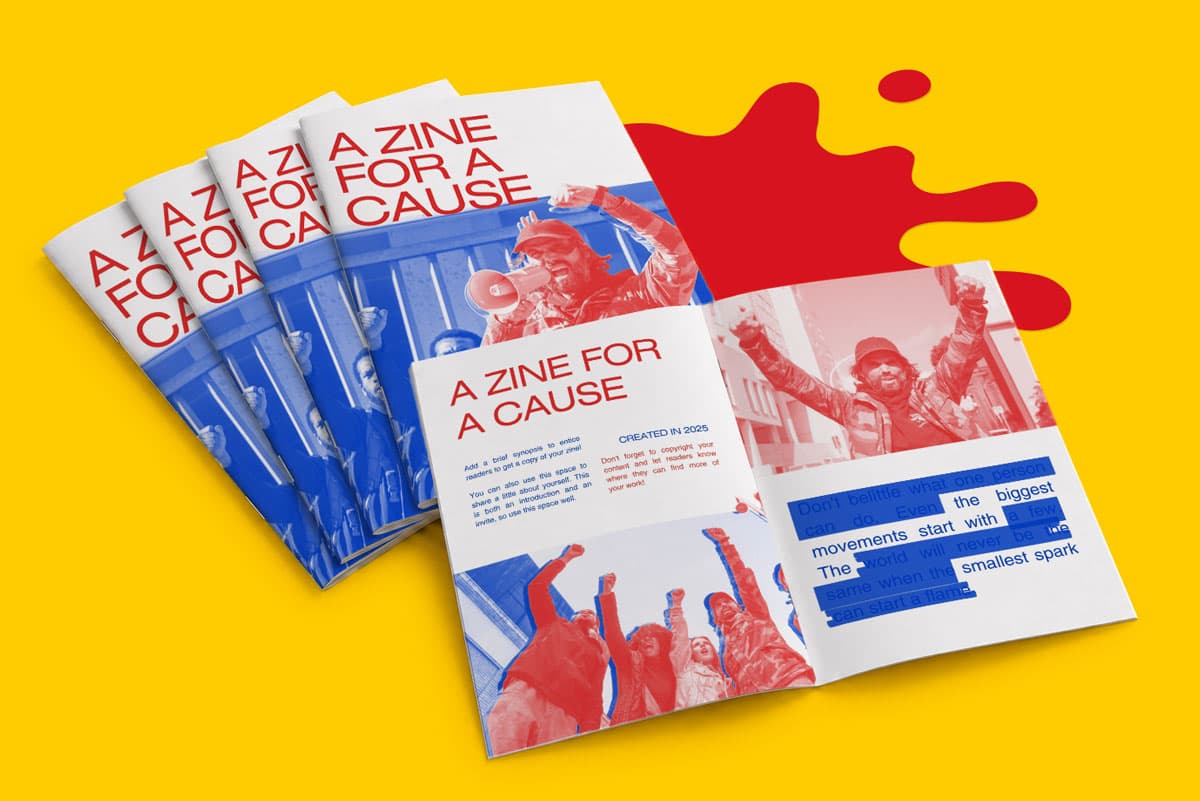
A zine can be a one off creative project or part of a wider publishing idea. It could be a short artist book, a photography collection, a poetry zine, a comic, a campaign piece, a student project, an event publication, a lookbook, a local guide or a small press magazine.
The format works well because it’s flexible. A zine can be simple and low cost, especially if it’s being shared at an event or used as a creative handout. It can also become a more premium printed piece, with heavier paper, a stronger cover, specialist finishes and a more polished layout.
That flexibility is what makes zines so useful. They can feel personal and handmade, but they can also be turned into a finished product that’s ready to sell, post or distribute.
Zines have strong DIY roots, and that should be respected. A cut, paste, fold and staple approach can be exactly right for some projects. It gives the zine a rawness and immediacy that can be part of the message.
However, if you’re making more than a handful of copies, professional zine printing can make the process easier and the final result more consistent. You’ll get cleaner print quality, neater trimming, stronger binding and more control over paper stock, page count and finish.
That doesn’t mean your zine needs to look overproduced. If the design is messy, bold, raw or experimental, that can still come through in the printed piece. The aim isn’t to remove the personality. It’s to make sure every copy carries that personality clearly.
Professional print is especially useful if you’re selling your zine online, taking it to a market, including it in a merch range or producing multiple issues. It helps the finished piece feel more reliable without losing the independent feel that makes zines interesting in the first place.
There’s no single correct zine size. The best size depends on the content, the budget and how people will use it.
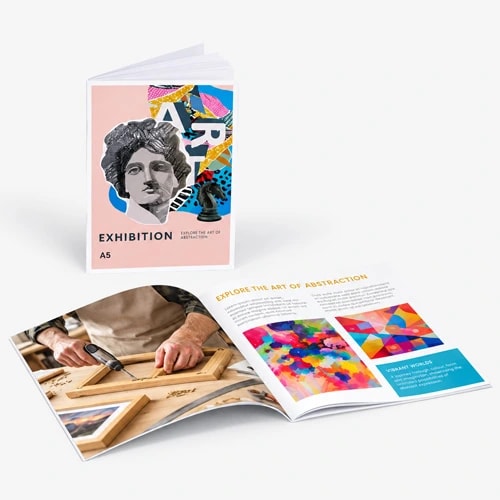
A5 is one of the most popular zine sizes because it feels like a classic booklet. It gives you enough room for artwork, photography, interviews and longer pieces of text, while still feeling compact enough to post, carry or sell at events.
A6 works well for smaller zines, short stories, poetry, mini guides and compact illustrated projects. It has a more pocket sized feel, which can suit zines designed to be picked up quickly or handed out in person.
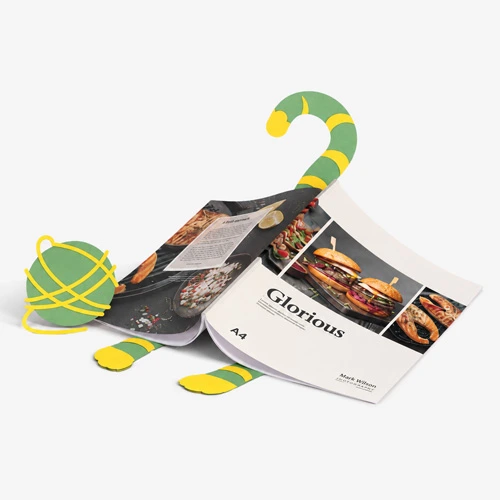
Square zines can feel more creative and design led. They’re useful for visual projects, photography, illustration, fashion, art and portfolio style pieces. A4 can work for larger visual publications, but it’ll feel closer to a magazine or catalogue than a traditional small format zine.
If you’re unsure, A5 is usually the safest starting point. It gives you enough space to design properly without making the zine feel too large or too expensive to produce.
Page count matters because it affects binding, cost, paper choice and how the finished zine feels.
For a classic saddle stitched zine, the pages are folded and secured through the centre. Because of the way folded sheets work, saddle stitched zines usually need to be supplied in page counts that are multiples of 4. That means common page counts include 8, 12, 16, 20, 24, 28 and 32 pages. You can find more setup guidance in our stitched book artwork guide.
A short zine might only need 8 or 12 pages. That can be enough for a simple idea, a small collection or a short run event piece. A more substantial issue, photo zine or illustrated publication might need 24, 32 or more.
If the project becomes too thick for saddle stitch, perfect bound book printing may be a better option. This gives the zine a square spine and a more book like finish, which can work well for premium editions, collections and longer creative publications.
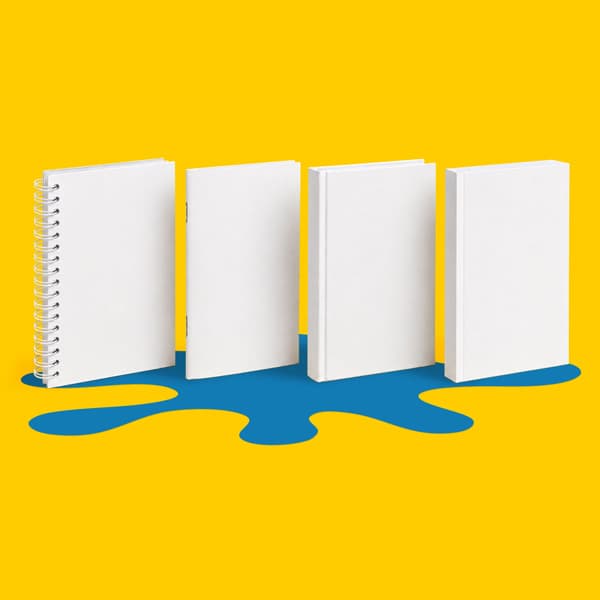
Binding is one of the most important choices because it changes both the look and the practical use of your zine.
Saddle stitch printing is usually the best choice for classic zine printing. The pages are folded and secured through the centre crease with staples, creating a simple booklet format that feels familiar, accessible and cost effective. It works well for lower page counts, indie magazines, comics, event zines, community projects and creative handouts.
Perfect bound book printing gives your zine a square spine, closer to a paperback book or thicker magazine. This is better for larger page counts, photography zines, art collections, annual issues, creative journals and premium editions. It also gives you space for spine artwork, which can make the zine feel more collectable if it’s going to sit on a shelf. You can also use WTTB’s perfect bound artwork guide to help prepare the cover and inner pages correctly.
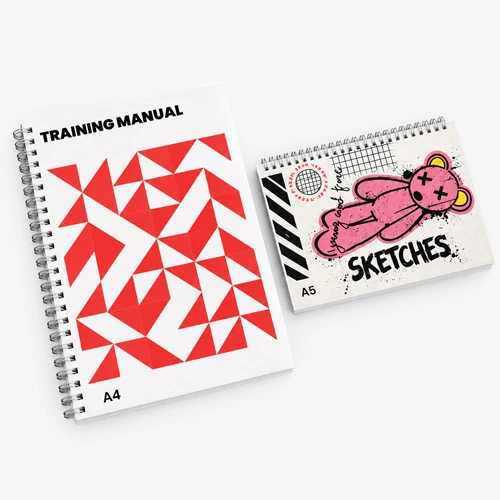
Wiro bound book printing is less traditional for zines, but it can work for certain creative formats. If your zine needs to lie flat, be used as a workbook, sketchbook, creative journal, recipe collection, activity guide or reference piece, wiro can be a useful option.
For most zines, saddle stitch or perfect bound will be the better fit. Saddle stitch keeps things simple and accessible. Perfect bound makes the zine feel more substantial. Wiro is more specialist, but it’s worth considering when function is part of the idea.
Paper choice changes the whole feel of your zine. If you’re comparing options, WTTB’s Print Materials Hub can help you understand how different paper stocks look and feel before you choose.
A rough, text heavy zine might look best on uncoated paper because it has a softer, more natural feel. A photography zine might need silk or gloss to help images feel sharper and more vibrant. A creative art zine might use heavier paper to make each page feel more substantial.
Silk is a strong all round option because it has a smooth finish, good colour reproduction and less glare than gloss. It works well for zines that mix text, photography, illustration and colour.
Gloss has a brighter, more reflective finish. It can work well for bold images, high contrast artwork, photography and colour heavy layouts. If your zine is designed to feel bright, punchy or image led, gloss may be the right fit.
Uncoated paper has a more natural, tactile feel. It suits poetry, essays, illustration, sketchbook style layouts and zines that need a softer or more handmade character. Recycled paper can also work well for community projects, eco focused zines, independent makers and publications where the material choice is part of the message.
The cover usually needs to work harder than the inner pages. A heavier cover can make your zine feel more durable and more finished, especially if it’s being sold, posted or handled at events. For a simple zine, the same stock throughout may be enough. For a more premium zine, a heavier cover with lighter inner pages can give the piece more structure.
This is one of the biggest creative decisions.
A zine doesn’t have to look polished to be good. In fact, some zines work best when they look raw, photocopied, chaotic or handmade. That energy can be part of the identity.
Other zines benefit from a more premium finish. If you’re selling copies online, producing a photography collection, creating an artist edition or using a zine as part of your brand, a stronger finish can help it feel more valuable.
A heavier cover, matt lamination, soft touch lamination, Spot UV, Scodix foil, thicker inner paper or a perfect bound spine can all change how the zine is perceived. The right finish depends on the content. A punk fanzine probably doesn’t need soft touch lamination. A limited edition photography zine might.
Think about what the reader should feel when they pick it up. That should guide the spec.
Before you send your zine to print, your artwork needs to be set up correctly. A print ready file helps avoid delays, trimming issues, missing pages and unexpected results. Our Support Guides are a useful place to check the artwork requirements before you order.
Your artwork should usually be supplied as a print ready PDF at the correct finished size. You’ll also need to include bleed where required, keep important text and images inside the safe area and check that your images are high enough resolution for print. If you’re new to this, WTTB’s print ready PDF guide can help you understand the basics.
Page order is important too. Your zine should be supplied in the correct reading order, rather than laid out as printer spreads, unless the specific artwork guide says otherwise. For saddle stitched zines, remember that the page count usually needs to be in multiples of 4. For perfect bound zines, page count and spine width become more important.
If you’re using design software or Canva, make sure your export settings are suitable for professional print. WTTB’s Canva Print Hub can help with export settings, bleed, crop marks and preparing Canva artwork for print.
It’s also worth checking the relevant WTTB support guide before ordering. Zines may be creative and flexible, but the production file still needs to be set up properly.
The cost of printing a zine depends on the specification.
A simple saddle stitched zine with fewer pages will usually be more cost effective than a larger perfect bound zine with premium paper and cover finishes. Size, page count, quantity, binding type, paper stock, paper weight, colour, cover finish and delivery speed can all affect the final price.
Quantity also matters. A small run is useful if you’re testing an idea, creating an event piece or producing a limited edition. A larger run can reduce the cost per copy if you already know there’s demand.
The best approach is to start with the purpose of the zine. If it’s a handout, keep the spec simple. If it’s a product people will buy, think more carefully about paper, cover weight and finish.
Once your zine is printed, think about how people will find it.
Zines can be sold or shared through independent shops, art fairs, zine fairs, markets, music events, galleries, bookshops, Etsy, your own website, social media drops, subscription boxes, creative workshops, community spaces, direct mail and merch tables.
A zine can also support a wider creative range. An illustrator might sell a zine alongside prints, postcards and stickers. A photographer might create a limited edition photo zine. A band might sell a tour zine with posters and merch. A brand might use a zine to tell a story in a more tactile way.
That’s where professional print can help. It gives you a finished product that’s easier to price, package and post.
The simplest way to choose a format is to start with the content.
If you’re making a classic indie zine, Booklet printing is usually the best place to start. It feels familiar, keeps production simple and works well for shorter page counts.
If you’re making a thicker art, photo or literary zine, Perfect bound book printing may be a better option. It gives the publication more weight and creates a spine, which can make the finished piece feel more collectable.
If you’re making a workbook, sketchbook, guide or practical publication, Wiro bound book printing can make sense because the pages can lie flatter when in use.
If your idea is more unusual, Bespoke book printing may be worth exploring. This can help when the size, finish, binding or production requirement doesn’t fit a standard route.
The format should help the reader experience the work in the right way. Short, punchy and low cost usually points to saddle stitch. Thick, collectable and premium usually points to perfect bound. Practical, hands on and page turning usually points to wiro.
Whether you’re producing your first zine, creating a limited edition issue or building a series, WTTB’s Book Super Centre can help you choose the right route for your project.
You can compare book and booklet formats, explore binding types, choose from a range of paper stocks and use Support Guides to prepare your artwork correctly before it goes to print.
Professional print doesn’t have to smooth away the things that make a zine feel personal, handmade or unmistakably yours. It simply helps you turn that idea into something people can pick up, keep and share.
Saddle stitch is usually the best binding for a classic zine because it’s simple, cost effective and works well for lower page counts. Perfect bound is better for thicker zines that need a spine, while wiro binding works well for workbook style zines.
A5 is one of the most popular zine sizes because it gives you enough space for text and images while still feeling compact. A6 is good for smaller zines, while square formats work well for art, photography and design led publications.
A zine can be as short or as long as the project needs, but saddle stitched zines usually need pages in multiples of 4. Common options include 8, 12, 16, 20, 24 and 32 pages.
No. Zines can be handmade, photocopied or professionally printed. The right choice depends on the project. Professional printing is useful when you want cleaner print quality, consistent copies, stronger binding or a zine you can sell or distribute more widely.
It depends on the style of your zine. Silk is a good all round option, gloss works well for bold images and photography, uncoated gives a softer tactile feel, and recycled paper suits independent or eco focused projects.
Yes. Small runs are a good way to test a zine idea, produce a limited edition, create event copies or print a first issue before committing to a larger quantity.
Yes. Many creators sell zines through markets, fairs, independent shops, Etsy, their own websites, galleries, music events and social media drops.
A print ready PDF is usually the best format. Make sure your file is set up at the correct size, with bleed, safe areas and the right page count for your chosen binding.
Posted on July 10, 2026 by Ben Riches
Related topics:
£51.01
£61.61
£117.25