Prices
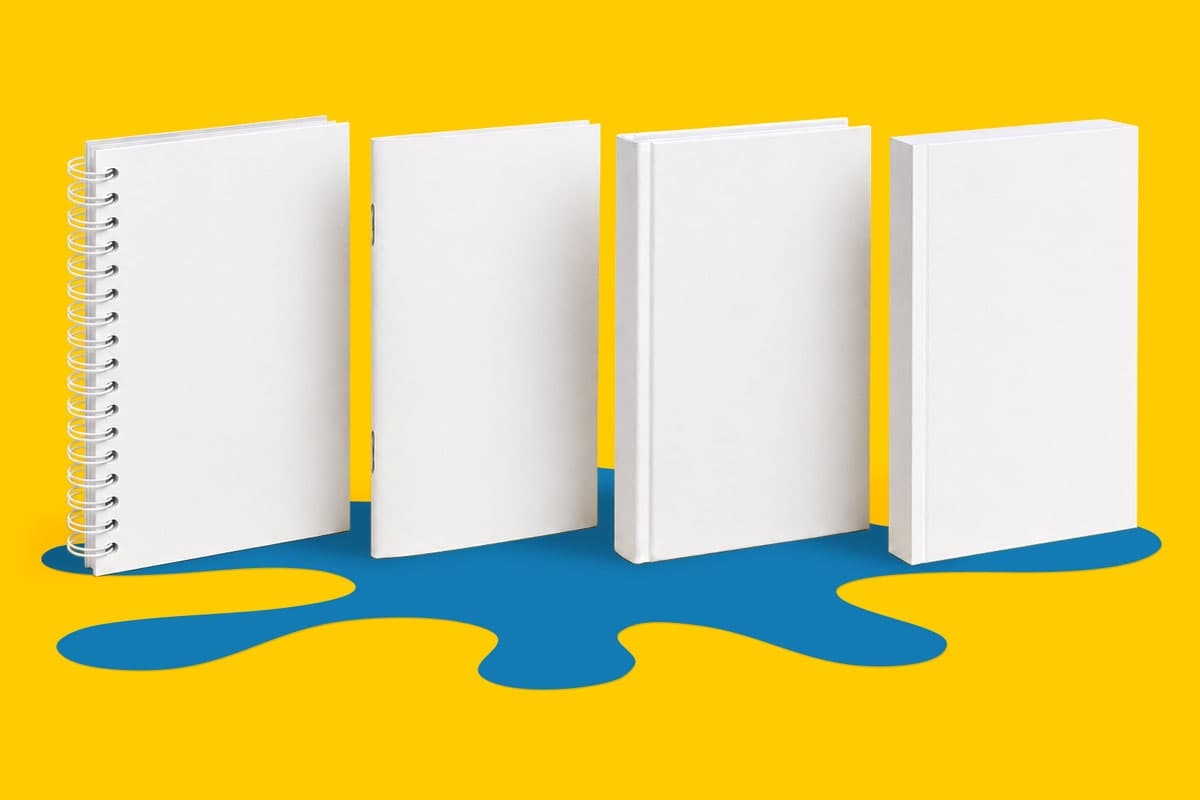
Choosing the right book binding can change how your finished project looks, feels and performs. A cookbook needs to feel durable. A product catalogue needs to be easy to browse. A photography book needs to show images clearly. A training manual needs to stay open while it’s being used.
That’s why book printing isn’t just about page count and paper choice. It’s about how your book will be handled, read, displayed and kept.
Print books are still a major part of the publishing market too. According to The Publishers Association, print accounted for 79% of UK consumer publishing revenue in 2025, with consumer print revenue reaching £2.1 billion. That demand shows why the physical details still matter. The right binding can help your book feel more professional, more practical and more suited to its purpose.
If you’re comparing options, WTTB’s Book Super Centre is a useful place to start. It brings together book printing formats, binding comparisons, artwork guidance, inspiration and support, helping you move from idea to finished book with more confidence.
Book binding is the method used to hold printed pages together and turn them into a finished book, brochure, booklet or publication.
Some binding types use staples. Some use glue. Some use wire. Some are designed for premium presentation, while others are designed for speed, flexibility or everyday use. The best option depends on what you’re printing, how many pages you have, how long the book needs to last and how the reader will use it.
A short event programme doesn’t need the same finish as a hardback yearbook. A training workbook doesn’t need to behave like a coffee table book. A product catalogue doesn’t need the same construction as a photo album.
The aim is to match the binding to the job.
Before you choose a binding type, think about four things:
Question | Why it matters |
|---|---|
How many pages does the book have? | Some binding types are better suited to shorter books, while others work better for thicker publications. |
How will the book be used? | A manual may need to lie open, while a catalogue may need a clean spine for shelf appeal. |
What finish do you want? | A hardback book feels more premium, while a saddle stitched booklet is lighter and easier to distribute. |
Does the artwork need special setup? | Covers, spines, bleed, safe areas and page order can all change depending on the binding type. |
Here’s a simple starting point.
Project type | Binding option to consider | Why it works |
|---|---|---|
Event programmes, brochures and short catalogues | Lightweight, cost effective and ideal for lower page counts. | |
Novels, reports, manuals and catalogues | A professional paperback style finish with a flat spine. | |
Yearbooks, cookbooks, keepsake books and premium reports | Durable, rigid and well suited to books that need lasting impact. | |
Photography books, portfolios and visual projects | Layflat books | Pages open flat, helping images and layouts carry across spreads. |
Workbooks, planners, presentations and training manuals | Easy to open, turn and keep flat while in use. | |
Specialist premium projects | A better route for custom requirements, including thread sewn books. |
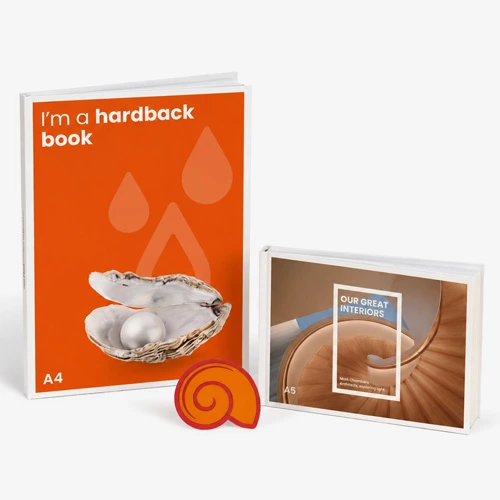
Case bound books are hardback books with a rigid cover, giving them a more premium and durable finish. They’re a strong choice for projects that need to feel substantial, long lasting or gift worthy.
They work well for:
The main advantage of case binding is presentation. A hardback book has more weight, more shelf presence and a more polished feel than many lighter formats. It’s a good option when the book itself is part of the experience, not just a way to hold information.
There are also a few artwork details to watch. Case bound covers need careful setup because they include the front cover, back cover, spine and wraparound area. If your design includes background colour, images or patterns, these need to extend correctly so the finished cover doesn’t have unwanted white edges. Spine width also matters, especially for thicker books.
If you’re preparing artwork for this format, use our Support Guides before uploading your files. They give more detailed guidance on setting up book artwork properly, including cover and inner page requirements.
Perfect bound books are a popular choice for paperback style publications. The pages are glued into a wraparound cover, creating a neat square spine and a professional finish.
They’re well suited to:
Perfect binding works especially well when you want something more substantial than a stapled booklet, but don’t need the rigidity of a hardback book. The flat spine also means you can include spine text, which is useful for books that may be stored, stacked or displayed on shelves.
This format is often a good fit for businesses, publishers, universities, authors and organisations that need a polished publication without moving into hardback production.
Artwork setup is important because the cover needs to include the front, back and spine as one piece. You’ll need to keep key text away from the spine and trim areas, and you’ll need to make sure the inner pages are supplied in the correct order.
For print terminology such as spine, bleed, safe area, CMYK and PUR, use our Print Dictionary while preparing your project. It explains common print terms in plain English, so you don’t have to work through production jargon on your own.
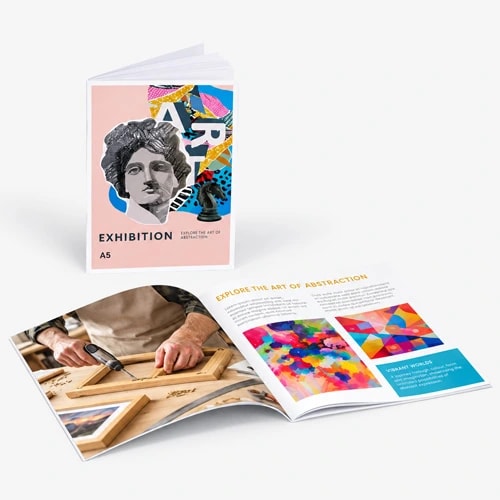
Saddle stitched books are made by folding printed sheets and securing them through the spine with staples. They’re one of the most practical and cost effective options for shorter publications.
They’re a good choice for:
Saddle stitching is useful when your project needs to be lightweight, easy to distribute and simple to read. It’s ideal for print that will be handed out at events, posted to customers, placed in welcome packs or used as part of a wider marketing campaign.
The main thing to consider is page count. Saddle stitched books are made from folded sheets, so the total page count needs to work with the format. It’s also worth thinking about where important content sits, as anything too close to the fold may be harder to read once the book is finished.
If your book is getting longer, or you want a square spine, it may be worth considering perfect bound books instead.
Layflat books are designed to open completely flat. This makes them especially useful for visual projects where images, layouts or designs need to run across a full spread.
They’re ideal for:
The biggest benefit is that very little detail gets lost in the centre of the book. For photography, artwork, product imagery and visual storytelling, this can make a big difference. Instead of forcing the reader to hold the book open, the pages sit flatter and allow the content to take centre stage.
Layflat books are a good option when the viewing experience matters. They’re less about quick browsing and more about presentation, impact and detail.
When setting up artwork, pay close attention to image placement across spreads. Even though layflat binding is designed to reduce disruption through the centre, you should still avoid putting small text or essential detail directly across the join unless the design has been created with that in mind.
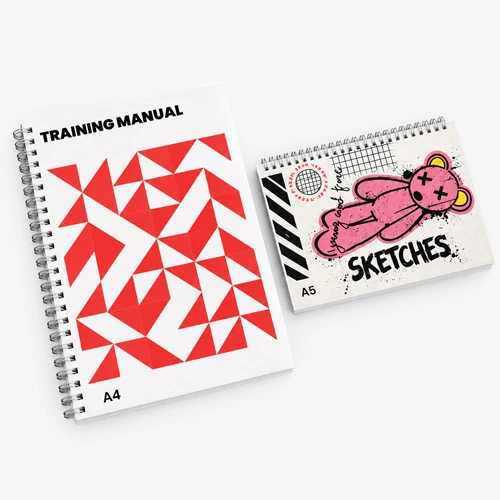
Wiro bound books are held together with a metal wire spine. The pages can turn easily and the book can lie flat, making this format one of the most practical options for working documents.
They’re a strong choice for:
Wiro binding is useful when the reader needs to use the book hands free, take notes or keep pages open at a specific section. That makes it especially suitable for education, training, workshops, internal documents and instructional content.
It’s also a good option for documents that need to be revisited regularly. A wiro bound manual can sit open on a desk, counter or workbench, which is something a glued spine doesn’t always allow as easily.
When designing for wiro binding, keep important content away from the binding edge. The pages need to be punched for the wire, so text, page numbers and key visuals should sit comfortably inside the safe area.
Thread sewn binding is a traditional book binding method where sections of pages are stitched together with thread before being bound into the cover. It’s known for strength, durability and a premium finish.
At WTTB, thread sewn books are currently available through bespoke book printing rather than as a standard online product. That makes bespoke the right route if your project has more specialist production requirements, unusual construction needs or a premium specification that sits outside the core book range.
Bespoke book printing also opens up additional finishing choices, such as head and tail bands and custom printed endpapers. These details can make a book feel more polished and distinctive, especially for premium publications, keepsake books, brand books, special editions and projects where the finish is just as important as the content.
Binding is only one part of the book printing decision. Paper, cover stock and finishing choices also affect how the final book feels.
Silk paper is a versatile option with a smooth finish that works well for colour, photography and general printed content. Gloss paper can help images feel bright and vibrant. Uncoated paper has a more natural feel and is often easier to write on, making it useful for workbooks, planners and text led publications. Recycled paper can be a strong option for projects where material choice is part of the message.
If you’re unsure which stock is right for your project, our Print Materials Hub breaks down paper types and print materials in more detail. It’s a useful resource when you want to compare how different papers look, feel and perform before choosing the best option for your book.
Cover finishes can also change the overall feel. Matt lamination gives a more understated finish. Gloss lamination adds shine and can make colours feel more vibrant. Soft touch lamination creates a smoother, more tactile cover. Specialist finishes such as foil or Spot UV can add extra detail when the artwork is prepared correctly.
The best choice depends on the purpose of the book. A training manual needs to be usable. A photo book needs to make images look their best. A premium report needs to feel considered. A catalogue needs to balance appearance, cost and durability.
Good book printing starts with good file setup. Even a strong design can run into problems if the artwork isn’t prepared correctly.
Before uploading your book artwork, check the following:
Artwork check | What to look for |
|---|---|
Bleed | Make sure backgrounds, images and colours extend beyond the trim edge where required. |
Safe areas | Keep important text, logos and page numbers away from the trim edge and binding edge. |
Spine setup | For perfect bound and case bound books, check that the spine width matches the final specification. |
Page order | Supply inner pages in the correct order and check whether the product needs single pages or another setup. |
Image quality | Use high resolution images so the finished print looks sharp. |
Colour setup | Artwork should be prepared for print, usually using CMYK rather than RGB. |
Fonts | Make sure fonts are embedded or outlined where needed. |
Cover files | Check whether the cover needs to be supplied separately from the inner pages. |
Special finishes | Foil, Spot UV or other finishes may need extra artwork layers or specific setup. |
WTTB’s Support Guides are there for deeper artwork setup help. They cover file preparation, print specifications and product specific book guidance, so you can check the details before you order.
If you’d like an extra level of reassurance, WTTB also offers artwork technical checks. This service reviews the technical aspects of your files before they move into production, helping to identify issues such as bleed, resolution, trim, colour setup and other print readiness concerns. It’s especially useful for book projects, where cover setup, spine width, page order and file quality all need to work together.
A few simple checks can prevent delays, rework or unexpected results.
Choosing the binding before checking the page count Different binding types suit different page ranges. Start with the content, then choose the format that supports it.
Putting important content too close to the spine Text, faces, logos and page numbers can become harder to see if they sit too close to the binding edge.
Forgetting about bleed If a colour, image or pattern runs to the edge of the page, it usually needs bleed. Without it, you may risk unwanted white edges.
Supplying low resolution images Images that look fine on screen can print poorly if the resolution is too low.
Using the wrong file type Print ready PDFs are usually the safest route. Always check the product requirements before uploading.
Not checking cover setup Perfect bound and case bound books need careful cover setup, especially when a spine is involved.
Ignoring paper choice Paper affects readability, image quality, durability and feel. Don’t choose it on thickness alone.
Missing special finish requirements Foil, Spot UV and other finishes need correct artwork setup. They can look excellent, but only if the file is prepared properly.
Book printing comes with a few technical terms, but they’re much easier to understand when you know what they mean for the finished product.
Bleed is the extra artwork area that extends beyond the trim edge. If your design has a background colour, image or pattern that runs to the edge of the page, bleed helps avoid unwanted white edges after trimming.
The safe zone is the area where your important content should sit. Text, logos, page numbers and key design details should stay inside this area so they don’t sit too close to the trim edge or binding edge.
CMYK refers to the colour setup used for print. Designs created in RGB may look bright on screen, but print works differently, so setting artwork up correctly helps your colours reproduce more reliably.
Spine width matters for formats such as perfect bound books and case bound books, because the cover needs to wrap around the inner pages accurately. The thicker the book, the more carefully the spine needs to be calculated and designed.
You may also see terms such as trim, DPI, PUR, saddle stitch, single PDF upload and split PDF upload when preparing your files. If you’re unsure what any of these mean, WTTB’s Print Dictionary explains common print terminology in plain English, so you can check the details before you upload your artwork.
Printing a book comes with more decisions than most people expect. It’s not just about choosing a size and uploading a file. The binding, paper, cover finish, spine, page count and artwork setup all affect how the finished book feels in someone’s hands.
That’s where WTTB can help. Our Book Super Centre brings the main book printing options together, so you can compare formats and choose the route that makes sense for your project. A short booklet, a polished paperback, a premium hardback, a practical wiro bound manual, a layflat photo book or a more specialist bespoke publication all need slightly different thinking.
The value is in making those choices with more clarity. You can explore what each format is best for, understand what your artwork needs and get support before your book reaches production. That means fewer surprises, a smoother order journey and a finished book that’s better suited to the way it’ll be read, used, shared or kept.
The best book printing starts with a clear idea of what the finished piece needs to do. Should it feel premium? Open flat? Travel easily? Sit on a shelf? Be written in? Be kept for years?
Once you know that, choosing the right format becomes much easier. Explore WTTB’s book printing options and turn your pages into something people can properly hold, use and remember.
Posted on June 30, 2026 by Ben Riches
Related topics:
£136.00
£61.61
£117.25
£51.01