Prices
In today’s digitally driven world, it's easy to assume digital marketing is the only route to growth. Digital channels matter, but they are crowded and fast-moving, which makes it harder to stand out and easier to be forgotten.
A social advert can trigger an instant impulse, but if the customer does not act immediately, it often disappears into the scroll. Printed brochures and booklets work differently. They slow the interaction down, stay in homes and workplaces, and give people something they can return to when they are ready to decide.
Research backs this up. Royal Mail Marketreach highlights that campaigns including mail were more likely to deliver igher sales performance and acquisition outcomes compared with campaigns without mail. In an IPA databank analysis, campaigns that included mail achieved over twice the market share growth compared with campaigns that did not include it.
If you're exploring booklet printing for your next campaign, this guide covers what to include, how to choose a practical spec, where to distribute, and how to track results.
There are plenty of marketing materials you can use, but brochures and booklets are a strong place to start because they combine reach with depth. They can introduce your brand, show your range, answer common questions, and guide someone from first impression to enquiry.
They also support other channels. A brochure or booklet can reinforce what a customer has already seen online, give a sales team something to leave behind, and provide a consistent message across your website, social posts, email marketing, and face-to-face conversations.
A brochure or booklet performs best when it has a single purpose and a clear audience. When you try to squeeze in everything, the message becomes vague and the reader does nothing. Decide what you want the reader to do next, then build the content around that action.
If you want a simple starting point, use a brochure or booklet to do one job well:
Brochures and booklets do not cost the earth, and you have a lot of control over the final price. That's because print costs are mostly driven by a small set of choices you can adjust without compromising the overall look. If you know what each driver affects, you can decide where to spend for impact and where to keep things simple to protect your budget.
Before choosing a spec, think about how the brochure will be used. Is it a quick handout at an event, something posted to prospects, or a piece that needs to live on a counter for weeks. Usage affects what matters most: durability, visual impact, or the lowest possible cost per copy.
The main drivers are:
Tip - If you want a strong all-round format, A5 is popular because it's easy to hand out, easy to post, and easy to keep. For image-heavy campaigns, A4 can work well when you want more visual impact.
Brand identity is not just your logo. It's the promise you make, the tone you use, the problems you solve, and the way you make customers feel. A printed brochure or booklet helps you communicate that consistently, especially if you're selling something that relies on trust.
A reader should be able to pick it up and quickly understand who you are, what you do, and why you're a safe choice. The aim is to feel consistent with your website and your sales conversations, so the reader experiences one clear message wherever they find you.
Use your brochure to show:
If you want the brochure to generate enquiries, it needs to earn trust fast. The strongest brochures make a clear promise, back it up with proof, and then make the next step obvious. The list below gives you the highest impact elements to include, even in a short page count.
What to include for stronger conversion:
People can scroll past hundreds of messages a day. A printed piece slows things down. It can sit on a desk, be pinned to a noticeboard, go in a drawer, or be passed to a colleague. That physical presence makes it easier to stay front of mind.
This is particularly useful when the buying decision takes time. If someone needs to compare options, get approval, or wait for a budget window, your brochure can stay in their world until the timing is right.
Tip - Make it easy to return to you. Put your phone number, website, and a simple next step on the back page, not just once inside.
Most businesses have more to offer than customers realise. A brochure or booklet is an easy way to introduce additional services, upgrades, packages, or seasonal offers without making the customer feel pressured.
Selling more to existing customers is usually cheaper than finding new ones, but it only works when customers can see the full range of what you offer. A brochure makes cross-selling and upselling feel helpful rather than pushy because it puts ideas in front of people at the right time, especially when you group services into simple packages.
Examples across sectors:
Tip - Include a simple section called Popular add-ons or Recommended next steps. Customers like guidance, especially if it saves them time.
Handing someone a brochure creates a different interaction to sending a link. It feels more considered and can lead to a short conversation that builds trust quickly. This works well in reception areas, events, showrooms, appointment packs, welcome packs, and partner locations.
Tip - If you meet customers face to face, keep brochures where they naturally pause, such as by the till, in waiting areas, or alongside a sign-in point.
A brochure should read like a guided decision, not a catalogue of features. The goal is to move the reader from interest to confidence, then towards one clear action. Use the checklist below to make sure you cover what people actually need in order to enquire, rather than what you assume they want to know.
If you sell a service, include a section called How it works and break the process into three to five steps. It reduces uncertainty and increases trust.
AIDA stands for Awareness, Interest, Desire, Action. It's a practical way to shape content so the reader moves towards a decision. AIDA works well for print because it mirrors how people naturally read a brochure. They notice the cover first, then scan for relevance, then look for reassurance, then decide what to do. If you design each stage intentionally, your brochure feels easier to follow and more persuasive without needing more pages.
Your cover needs to do more than look nice. It should tell the reader what you do and why it matters.
Help the reader quickly understand if you're right for them.
Build confidence and reduce perceived risk.
Make the next step obvious and easy.
Tip - Do not bury your call to action. Put it near the front, again near your proof, and on the back page.
If you're new to print, you can make decisions quickly by focusing on usability and durability. The best spec is the one that fits how the brochure will be used. A brochure that's handed out at an event needs to be easy to carry and quick to scan, while a brochure that's posted needs to feel durable and arrive looking clean. Use the guide below to choose a spec that balances cost, practicality, and the impression you want to create.
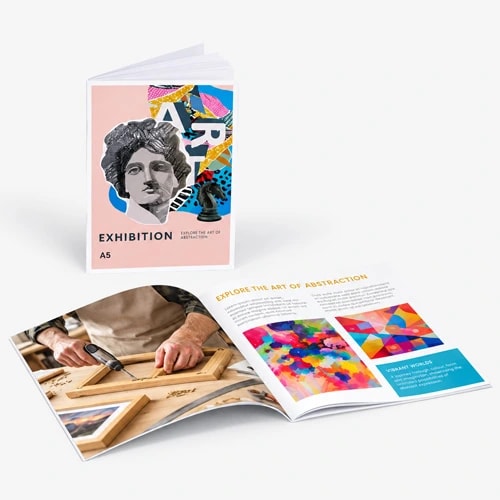
A5 is the most popular choice for marketing because it's easy to hand out, post, and carry, and it typically keeps print and postage costs sensible. It also works well for welcome packs and counter displays where people want something quick to pick up and flick through.
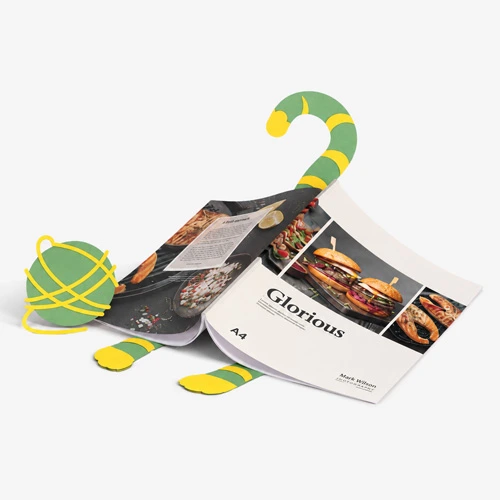
A4 suits brochures where visuals do the selling. It gives you more space for photography, diagrams, price tables, and comparisons, and it can feel more premium for sectors like property, construction, interiors, and corporate services.
8 to 16 pages is ideal when you want a tight message with a clear offer. It's enough space for your value proposition, benefits, proof, and a strong call to action without padding. This range also tends to be a good fit for short-run testing before you scale up.
20 to 40 pages works best when you need to educate or show range. Use it for detailed service guides, menus, lookbooks, training style brochures, or when you want sections like FAQs, case studies, and package comparisons.
Silk or gloss coated stocks are a strong option for brochures that rely on colour and imagery. They help photos look sharper and colours more vibrant, and they generally give a cleaner, more polished marketing feel.
Uncoated stocks feel more natural and tactile. They suit brands that want an understated look and they are also practical when you want customers to write on the brochure, for example appointment notes, order forms, or checklists.
Matt laminate gives a smooth, premium feel and is a good choice for brochures that will be handled frequently, such as in reception areas or at events. It also helps with scuff resistance and can make darker designs look more refined.
Gloss laminate is designed for impact. It adds shine, makes colours pop, and can work well for bold designs, photography-heavy brochures, and high energy retail style marketing. It's also a durable choice when brochures are being posted or passed around.
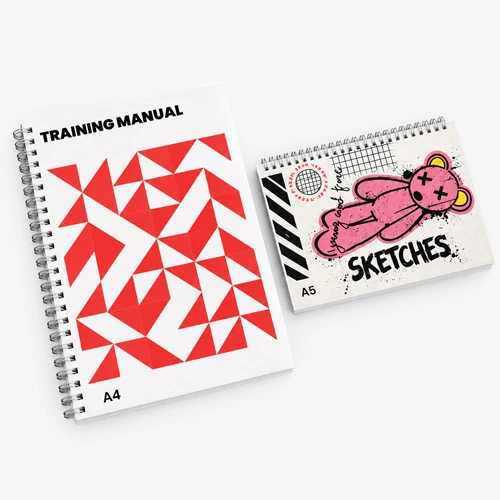
Choose a binding that suits your page count and how the piece will be handled. For many marketing brochures and booklets, a stitched format is a reliable choice because it opens well and stays neat. For more guidance on binding types, see our Book Super Centre.
Standing out is mostly about clarity. A reader should understand your offer within seconds. Most brochures do not fail because the printing is poor. They fail because the message is unclear and the layout makes the reader work too hard. Standout comes from simple structure, strong hierarchy, and a clear offer. The points below help you improve impact without adding pages.
Ways to increase impact:
Tip - Add a unique offer code and a QR code that links to a dedicated landing page. This helps you measure response without guesswork.
Printing is only part of the process. Where and how you distribute your brochures matter just as much as what is inside them. Place them where people are already considering a purchase, and use targeted distribution when you want to reach new prospects. Start with one or two channels you can run consistently, then measure response before scaling up.
Local distribution works best when you're specific about who you want and where they are. A smaller, well chosen area will usually outperform a wider scatter approach, because the message reaches people who are more likely to need what you offer.
Direct mail is most effective when the message and the list match. If you can define your audience clearly and offer a relevant next step, mail can drive high-quality responses because the brochure arrives as a focused piece of communication rather than another advert in a feed.
Tip - Start small, measure results, then scale. A short run sent to a well-chosen list is often more profitable than a large run sent broadly.
You do not need complex analytics to understand whether print is working. The goal is simply to give each brochure campaign a unique route back to you, so you can separate print responses from everything else and compare which offers and locations perform best.
You can track print performance with simple tools:
If you run both print and digital, align the message across both. The brochure should match the landing page headline and offer, so the experience feels seamless.
If you want your brochures and booklets to generate enquiries, keep the message clear, support it with proof, and make the next step obvious. Start with a practical spec that suits how you will hand out or post your brochures, then choose a quantity that fits your budget and lets you test what works. Explore our booklet printing options to choose the right format, get an instant price, and order with low minimum quantities. If you're working to a deadline, choose a specification that balances speed, cost, and quality, so you can get your marketing into your customers' hands and start your campaign immediately.
Posted on January 30, 2026 by WTTB
Related topics:
£117.25
£51.01
£61.61