Prices
Finding new business matters for every print reseller. Whether you’re growing your customer base, bringing in repeat orders or trying to build steadier sales throughout the year, you need a consistent way to create opportunities.
The challenge is that traditional outreach can feel difficult. Cold calls are easy to ignore. Generic sales emails often get deleted. Hard sales messages can make the conversation feel uncomfortable before it’s even begun.
That doesn’t mean calling and emailing have no place. They can still be useful, but they work best when they’re backed by context. Instead of reaching out to a business with no clear reason, resellers can look for warmer ways to start the conversation.
Recent sales research from HubSpot found that 42% of sales teams said social media delivers the highest cold outreach response rate, compared with 26% for email and 23% for phone calls. For print resellers, that doesn’t mean every sale has to happen on social media. It does show that modern sales is becoming more connected, more visible and more relationship led. Buyers are more likely to respond when they recognise you, understand your value or feel like your message is relevant to what they’re already doing.
Warmer outreach isn’t about waiting for customers to come to you. It’s about paying attention, spotting real print needs and using those signals to start better conversations.
Warmer outreach is still proactive. You’re still making the first move, starting conversations and putting print ideas in front of potential customers. The difference is that you’re not starting from nothing.
Cold outreach often begins with the reseller wanting to sell. Warm outreach begins with the customer’s situation.
That situation might be a local event they’re promoting, a new business they’ve opened, a menu they’ve updated, a poster they’ve already displayed or a previous order they might be ready to repeat. It gives you a reason to get in touch that feels practical rather than random.
Instead of asking, “Do you need any print?”, a warmer opening might be, “I noticed you’re promoting your open day and thought flyers, posters or directional signage could help you get more visibility before the event.”
That small shift matters. It shows you’ve paid attention, you understand what they’re trying to achieve and you’re suggesting print as a useful solution, not just pushing a product.
The warmest opportunities are often the people who already know who you are. Previous customers, past enquiries and existing contacts are easier to approach than completely cold prospects because there’s already some connection.
Start by looking at customers who haven’t ordered for a while. They might not have gone elsewhere. They might simply need a reminder, a new idea or a reason to come back.
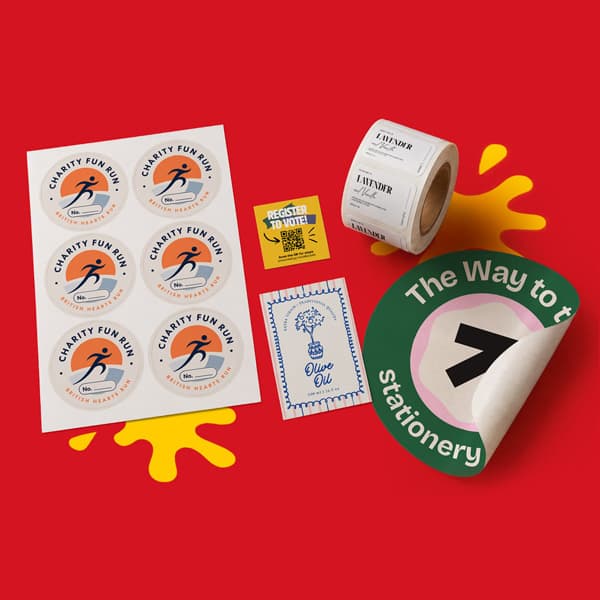
Look at customers who only buy one product too. Someone who orders flyers may also need posters, banners or business cards. A customer who orders menus may need table talkers, loyalty cards, window graphics or stickers. A business that orders brochures might also benefit from presentation folders, pull up banners or branded stationery.
Quote requests can also be useful. If someone asked for a price but didn’t place an order, it doesn’t always mean the opportunity is gone. Their timeline may have changed, the project may have paused or they may need help choosing the right option.
A simple monthly check in list can make this easier. Review recent orders, older customers and past quotes, then look for natural reasons to make contact. The aim isn’t to send everyone the same email. It’s to use what you already know to make the message more relevant.
Email can still be a valuable sales tool, but only when it feels considered. A generic email that lists every product you sell gives the customer very little reason to reply.
A warmer email should be short, specific and easy to act on. The first line should show why you’re getting in touch. The body should suggest one or two relevant print ideas. The call to action should feel simple, not demanding.
It’s also worth making your emails more visual where possible. Customers don’t always know exactly what they need from a product name alone, but they can often understand it instantly when they see it in context. That’s where an image library can make email outreach much stronger.
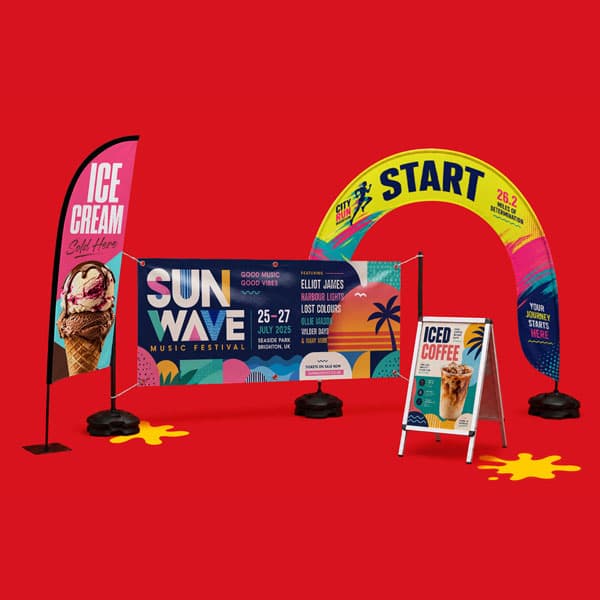
With access to hundreds of in situ example images across a wide range of industries, resellers can show customers how different print products could work in real settings. Instead of only explaining how banners, menus, labels, signage or display products could support a campaign, you can include a relevant visual that helps the customer picture it straight away.
For example, if you’re emailing a hospitality business, you could share an image showing menus, table talkers or window graphics in a similar setting. If you’re contacting an event organiser, you could include examples of banners, posters or signage in use. If you’re reaching out to a retailer, you could show how stickers, shelf materials or window displays could help promote an offer.
A cold email might say:
“Hi, we supply flyers, banners, business cards and brochures. Let us know if you need anything.”
A warmer email might say:
“I noticed you’re promoting your open day next month. Flyers, posters and directional signage could help build awareness beforehand and make the day easier to navigate. I’ve attached a couple of examples so you can see how similar products could work in practice.”
This works better because it has context. It gives the customer a reason to read the message, helps them understand the product more quickly and connects print to something they’re already trying to do.
Print demand is often triggered by a moment. Businesses need print when they’re opening, launching, promoting, refreshing, attending, hosting or preparing for something. That means resellers can make outreach warmer by looking for buying signals.
A new café might need menus, loyalty cards, window graphics and signage. A school promoting an open day might need flyers, posters, banners and wayfinding signs. A wedding supplier attending a fair might need brochures, business cards, sample cards and display materials. A local shop planning a seasonal promotion might need posters, stickers, shelf talkers or flyers.
Good buying signals include new business openings, local events, menu updates, seasonal campaigns, product launches, wedding fairs, school open days, trade shows, charity fundraisers, recruitment drives, property listings and rebrands.
Set aside a short amount of time each week to look for these signals. Check local business updates, LinkedIn, Instagram, Facebook groups, event listings, community pages and local news sites. We’ve explored how to use Facebook groups for prospecting in more detail in our guide to finding print leads through Facebook groups.
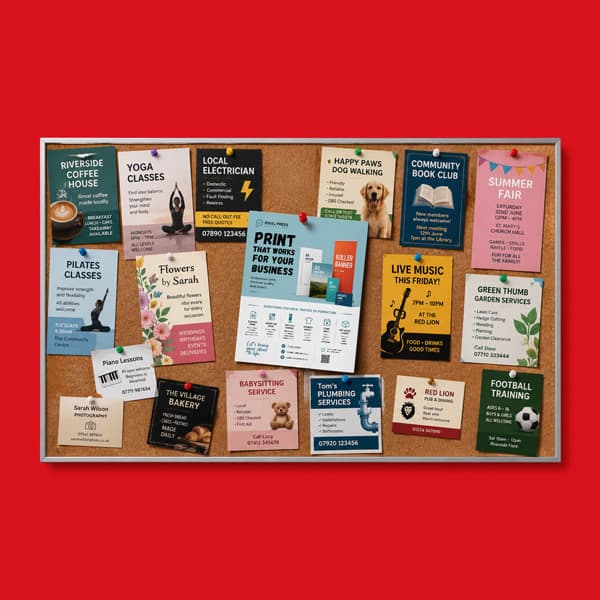
Local notice boards are one of the simplest examples of warm prospecting in action. A flyer in a coffee shop, a poster in a leisure centre or a business card pinned in a village hall tells you something useful straight away. That business is already using print to promote itself.
We’ve explored this in more detail in our blog on local notice board print opportunities, which explains how community boards can help resellers spot businesses, groups and organisations that are already using flyers, posters and cards to get noticed locally. It also highlights how a notice board gives resellers a natural starting point for a more personal conversation.
That starting point is important. You’re not approaching the business with a generic pitch. You’re approaching them because you’ve seen what they’re promoting and you’ve taken the time to think about how print could help them do it better.
For example, a yoga teacher advertising a new class might benefit from matching flyers, posters and loyalty cards. A local café promoting a seasonal offer might need menus, window graphics or pavement signage. A tradesperson with a simple business card on a notice board might need leaflets, appointment cards or branded workwear.
Make it a habit to visit a few local notice boards each week. Note which businesses are advertising, what they’re promoting, what format they’re using and whether their print looks fresh, clear and professional. From there, you can research the business and approach them with one or two useful ideas.
Sometimes the best way to start a sales conversation is not with a sales message at all. It’s with something useful.
White label resources are especially valuable for print resellers because they let you support your customers under your own brand. A downloadable print checklist, artwork guide or simple setup sheet can be passed on without the customer knowing it came from your supplier.
That helps you look helpful, prepared and professional. It also gives you a reason to contact people that feels more useful than simply asking if they need print.
For example, if a customer is planning an event, you could send them a print checklist covering flyers, posters, banners, signage, table materials and follow up items. If a designer is preparing artwork for a client, you could share an artwork guide to help them set up files correctly. If a business is planning a product launch, you could send a simple guide showing which print products might support the campaign before, during and after launch.
This turns your outreach from “Do you want to buy something?” into “I thought this might help with what you’re working on.”
Build a small bank of useful resources and match them to customer types. One checklist for events, one guide for artwork, one seasonal planning resource and one launch checklist can give you several warmer reasons to get in touch throughout the year.
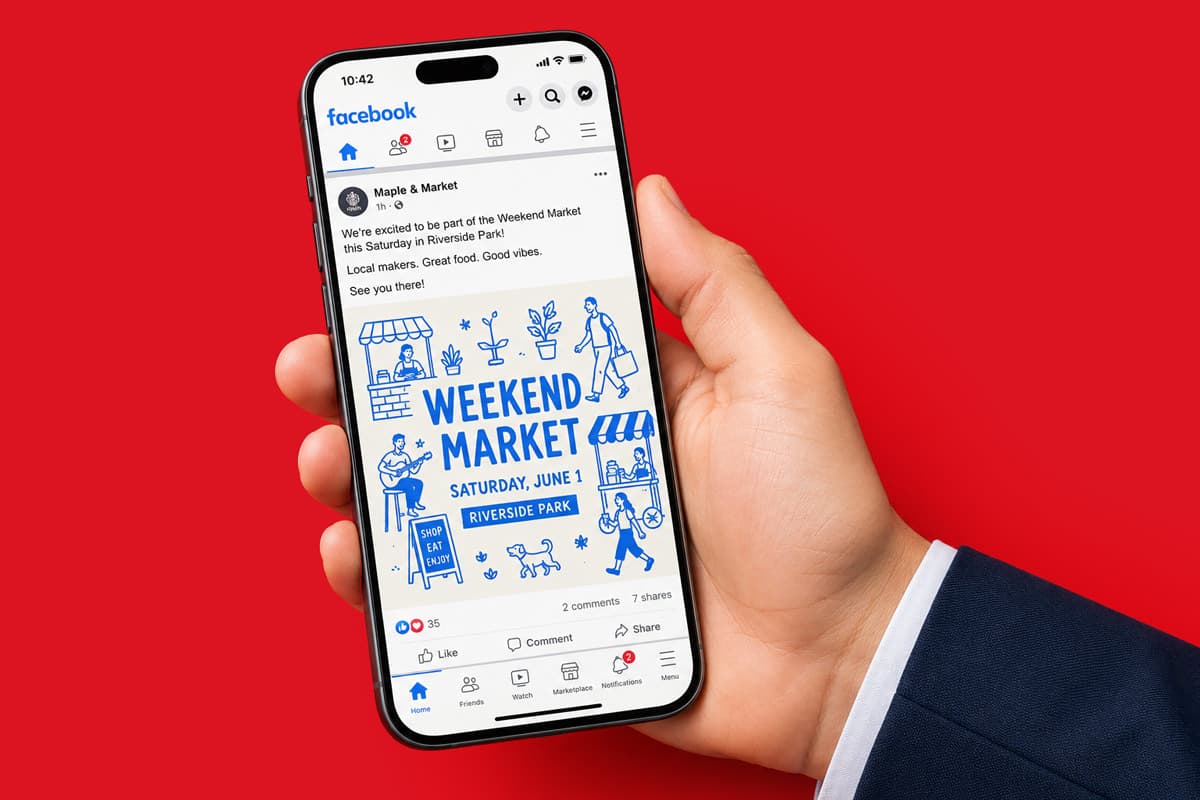
Social media doesn’t have to be separate from sales. For print resellers, it can be a simple way to build recognition, share useful advice and spot warmer opportunities.
The key is not to post product links constantly. The aim is to show customers how print can help them solve real problems.
You could share event print checklists, seasonal reminders, product pairing ideas, artwork tips, common print mistakes, local business print ideas or simple explainers that help customers choose the right format. Visual examples can make this even stronger, especially when customers need to see how a product could look in practice. Using the image library with in situ examples gives resellers ready made visuals to support posts across different industries, from hospitality and retail to events, property and more.
For example, a post about preparing for summer events could mention flyers, posters, outdoor banners and directional signage, supported by visuals that show those products in use. A post for hospitality businesses could cover menus, table talkers, loyalty cards and window graphics. A post for new businesses could explain the basic print items worth preparing before launch.
The sales opportunity comes from engagement. If someone comments on a post about menus, signage or event print, they’re already showing interest in that topic. That makes a follow up message much warmer than contacting someone with no previous interaction.
Not every opportunity has to come directly from the end customer. Some of the best routes into new print business can come through people who already work with the same audience.
Graphic designers, web designers, marketing freelancers, event planners, wedding suppliers, photographers, social media managers, business consultants, sign installers and packaging suppliers may all have clients who need print.
Some of them may not want to manage print themselves. Others may want a reliable reseller they can recommend when a client asks for flyers, brochures, banners, business cards or branded materials.
A simple introduction can open the door:
“I help local businesses with reliable print for campaigns, events and everyday marketing. If your clients ever need flyers, brochures, banners, signage or branded materials, I can support that side for you.”
The goal is not to push for an immediate sale. It’s to build a relationship with people who are already close to potential print buyers.
Many customers know they need to promote something, but they don’t always know which print products they need. Bundles make that decision easier.
Instead of asking a customer to choose from a long product list, you can suggest a set of items that work together.
Bundles help turn print into a solution. They also make emails, calls and follow ups feel more helpful because you’re suggesting a practical route forward, not just naming products.
Warm outreach still needs follow up. People are busy, plans change and print is not always the first thing on their mind. The difference is that follow up should add value, not repeat the same message.
A simple sequence could start with a specific reason for contact. The next message could share one useful idea. After that, you could send a relevant checklist or artwork guide. The final message can leave the door open without pressure.
For example:
“No pressure, but I thought it was worth sharing while you’re planning the event. I’d be happy to suggest a few print options if useful.”
That kind of follow up feels helpful because it stays connected to the customer’s situation. It doesn’t chase for the sake of chasing.
Warmer outreach becomes more effective when you treat it as a repeatable process.
Keep a simple record of who you contacted, why you contacted them, which channel you used, whether they replied, whether they asked for a quote, what product they were interested in and whether they placed an order.
After a month, look at what created the most useful conversations. You might find that past customers respond best to email, local businesses respond better after seeing you on social media or event organisers are more likely to reply when you send a checklist.
The more you track, the easier it becomes to see which audiences, messages and channels are worth focusing on.
Winning print business doesn’t have to mean chasing strangers with cold calls, generic emails or hard sales tactics. The best opportunities often come from paying attention to what customers are already doing.
A flyer on a notice board, a local event listing, a seasonal promotion, a past order or a social media post can all become a warmer way into a conversation.
For print resellers, the opportunity is to become more than a supplier. By sharing useful resources, spotting relevant print needs and approaching customers with practical ideas, you can build stronger relationships and create more natural sales opportunities.
Warmer outreach isn’t about waiting for business to appear. It’s about knowing where to look, what to notice and how to turn everyday customer activity into better print conversations.
Posted on July 10, 2026 by Ben Riches
Related topics: