Prices
If you use Facebook for prospecting, the most useful opportunities probably won't be the posts asking, "Can anyone recommend a printer?"
Those are certainly worth noticing, but by that point the requirement already exists and you're likely to be competing with several other suppliers. The more interesting opportunities often appear earlier.
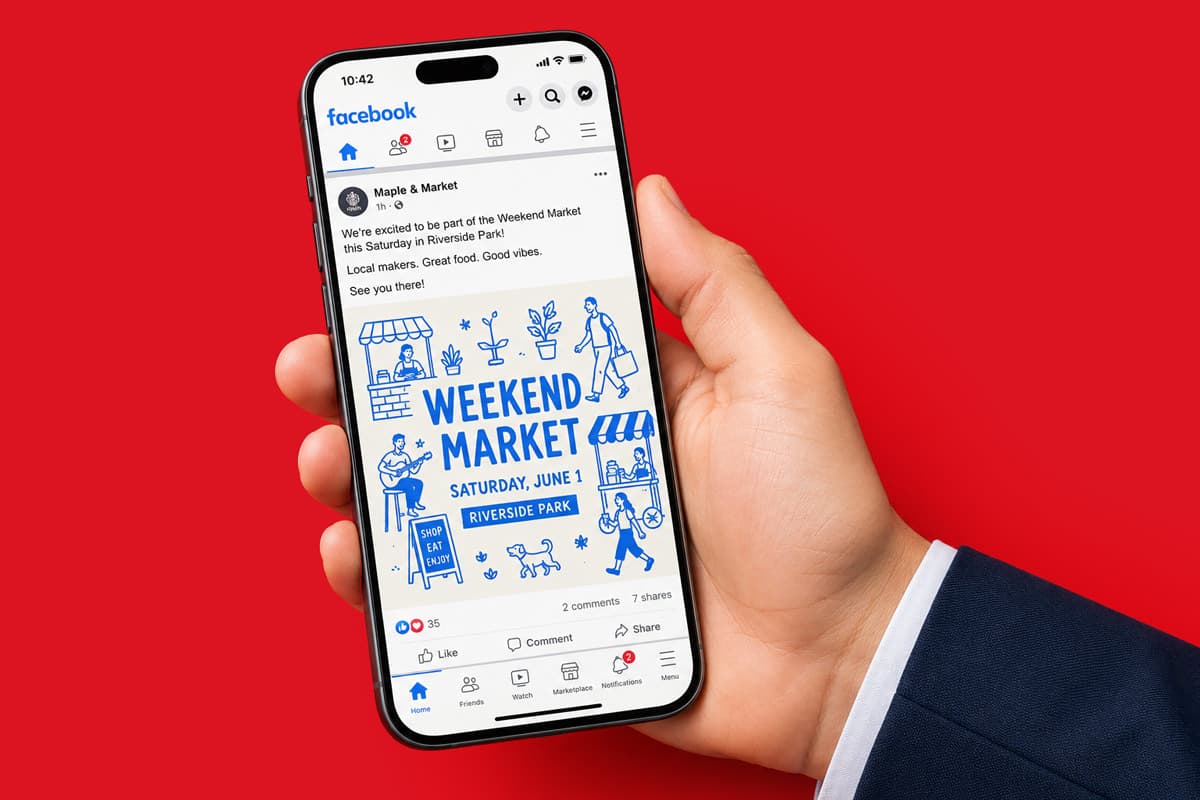
A restaurant announces a refurbishment. A new business shares its opening date. Someone starts organising a charity event. A retailer posts about an upcoming promotion. A local maker confirms their first Christmas market.
None of them has asked for print, but each has told you something useful. That's where Facebook can earn its place in your prospecting routine.
According to Ofcom, Facebook and Messenger reached 93% of UK online adults in May 2025, making them the most widely used Meta service in the UK. For you as a reseller, the opportunity isn't simply the size of the audience. It's the amount of day to day business activity being discussed publicly. The trick is learning how to read it.
Searching Facebook for the words "printer wanted" will only take you so far. A better approach is to look for commercial triggers.
A commercial trigger is simply something happening within a business that could create a reason to buy print. It might be an opening, launch, event, promotion, move, refurbishment, seasonal campaign or change of branding. You're not trying to manufacture a requirement that isn't there. You're looking for evidence that something is changing.
Imagine a local café posts photographs of its refurbishment and says it'll reopen in three weeks. You already know more than you would from a cold list of business names. There's a deadline. There's activity. There's probably a refreshed customer experience being planned. Existing menus, window materials, table print, posters or takeaway materials may need updating.
You still don't know exactly what they'll buy, and you shouldn't assume you do. But you've found a much stronger reason to investigate. That's the difference between finding a contact and finding an opportunity.
The real value comes from looking beyond what someone has written. Say a local brewery announces that it'll be attending a summer food festival. The immediate opportunity might appear to be a banner or a stack of flyers.
But look at what the business is actually preparing for. Will it be serving from a stand? Could customers need pricing or product information? Is it launching a new product at the event? Does its existing branding look consistent across its signage and printed materials? Is this one event or the beginning of a full summer schedule?
You don't need to pitch all of those things. The point is to understand the context before deciding whether you've got anything useful to say. That extra five minutes of research is often what separates a relevant approach from the messages every business owner receives saying, "We offer great prices on all your printing needs."
Some of the best prospects are businesses that are visibly doing something. Growth is particularly useful to watch. A second premises, additional staff, a new service, expanded opening hours or a move into events can all change what a business needs from its print. So can change.
If a restaurant is introducing a new menu, there may be a straightforward menu printing opportunity. If it's also repositioning the business around a different style of food, the wider requirement could be much more significant.
The same applies to seasonal activity. A retailer announcing a Christmas shopping evening may need promotional materials for one night. A retailer announcing a programme of events throughout November and December has a different potential value.
You're beginning to judge the size and shape of the opportunity before making contact. That's useful whether you're a one person reseller managing a handful of accounts or you're actively building a larger customer base.
Don't automatically stop at the person who made the post. Local Facebook discussions often reveal several businesses connected to the same opportunity.
Someone might ask which Christmas markets are still accepting applications. The replies can reveal market organisers, makers, food traders and independent retailers who are all preparing for the same period.
An exhibition organiser might announce a new event and exhibitors begin identifying themselves in the comments. A business networking group might discuss an upcoming awards evening and suddenly you've got visibility of the organiser, sponsors and businesses planning to attend.
That doesn't mean everyone in the thread becomes a prospect. It gives you a clearer view of where activity is happening. The distinction matters. Good prospecting isn't about collecting the largest possible number of names. It's about noticing which businesses have a timely reason to talk to you.
There's a temptation with local business groups to treat every relevant post as an invitation to sell. It isn't.
Sometimes the right move is to comment. Sometimes a message makes sense. Sometimes you're better off making a note of the business and approaching it through its normal business contact details later.
Group rules matter too. Some communities encourage recommendations and business introductions. Others are very protective of promotional activity. Being useful within a good group is likely to take you further than turning every discussion into a sales opportunity.
If someone asks about getting ready for their first exhibition and you can answer a genuine question about artwork, display sizes or what tends to be useful on a stand, that's valuable in its own right. You also become a familiar name. Then, when somebody does ask who can help them with their print, you're not appearing from nowhere.
You don't need to spend half the working day watching your Facebook feed. Searching within a handful of relevant groups is usually more useful. The terms worth searching aren't necessarily print products. Think about the activity that happens before somebody orders.
Search for opening, launch, exhibition, market, event, fundraiser, refurbishment, menu, new premises or stallholders and you're more likely to uncover the trigger behind a potential requirement. You can refine this around the customers you want more of.
If hospitality is a strong sector for you, you might pay more attention to openings, menus, events and refurbishments. If you work with creators and small retailers, markets, fairs, launches and pop ups are likely to be more productive.
Over time you'll start to recognise which language tends to appear before an enquiry reaches you. That's useful knowledge in itself.
Once something catches your attention, give yourself a simple test. Why does it make sense to contact this business now? If the only answer is "because they might buy print", keep researching. You want a more specific reason.
Perhaps they've just announced an opening date. Maybe they're attending three events over the next month. Perhaps the existing menu shown on their Facebook page still contains old branding after a refurbishment.
That reason becomes the basis of your approach. Instead of:
"Hi, we're a print company and can help with flyers, posters, banners and much more."
you've got:
"I saw you're opening the new location next month. If you're updating the printed materials at the same time, I can help with the menus and launch print."
You've demonstrated that you know why you're contacting them. You can then let the conversation develop rather than unloading a product catalogue in the first message.
A good lead can still be approached at the wrong time. If an event is tomorrow, the organiser has almost certainly dealt with its main print requirements already. If an event has just been announced for three months' time, you've found the opportunity at a much more useful stage.
The same applies to business openings, Christmas campaigns, seasonal menus and exhibitions.
Facebook can give you an advantage here because businesses often share their plans publicly while they're still being put together. Pay attention to dates.
If somebody announces a new restaurant that's "coming this autumn", it might not be worth making a sales approach immediately. Add it to your prospecting notes and revisit it when there's more evidence that the launch is approaching.
Not every lead needs chasing today. Knowing when to come back to something is part of finding better leads.
Once you've started a conversation, don't become too attached to the product that first caught your attention. The Facebook post might have made you think about flyers, but the real requirement could be an entire opening campaign.
A customer might start by asking about an exhibition banner and then reveal that they're also preparing brochures, handouts and follow up materials. You're not trying to force extra products into the quote. You're trying to understand the full job. Ask what they're preparing for, when it's happening and how the printed item will be used.
Those questions usually tell you much more than asking how many flyers they need. It's also where your experience as a reseller becomes valuable. You're not simply connecting a customer to a print product. You can help them work out what makes sense for the situation they're dealing with.
One of the weaknesses of using social media for prospecting is that opportunities disappear quickly. You see something useful, get distracted by another job and three days later you can't remember which group it was in.
Your system doesn't need to be complicated. When something looks worthwhile, record the business, what you noticed, when it's happening and when it might make sense to contact them.
The most valuable detail is often the trigger. If you record "potential customer", that won't mean much six weeks later. If you record "opening second café in October, refurbishment underway", you immediately know why the business caught your attention. That also makes future follow ups better.
If you win the work, keep the trigger in mind. An annual event may return next year. A retailer that runs one seasonal promotion may run several. A business that exhibits regularly could become a repeat display print customer.
Facebook may have helped you find the first opportunity, but the aim is to build a customer relationship that no longer depends on spotting them in your feed.
Facebook prospecting becomes even more useful when you combine it with the things you notice away from the screen.
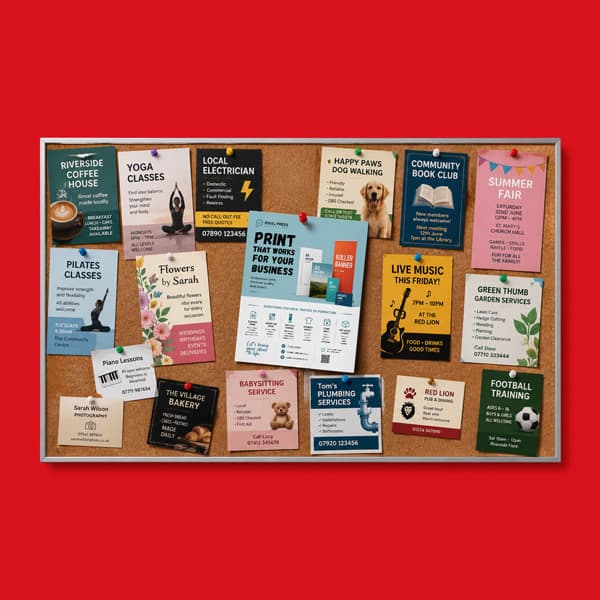
You might see posters for a new local event and then find the organiser discussing it in a community group. A business you first notice on a local notice board might have a Facebook page showing that it's expanding. A café announcing its refurbishment online might have a "coming soon" banner outside the premises a week later. Each piece of information gives you more context.
If you're already prospecting locally, our guide to finding print opportunities through local notice boards explores the offline side of the same approach. The principle behind both is similar.
Pay attention to what businesses are doing, not just what they're asking suppliers to quote.
Facebook won’t replace the relationships, referrals and experience you’ve already built, but it can give you another useful way to spot opportunities before they become obvious.
A few well chosen groups, a little regular attention and a good eye for what businesses are planning can help you start better conversations and put your print knowledge in front of customers at the right time.
Posted on August 11, 2026 by Ben Riches
Related topics: