Prices
Personalised Christmas gifts can give businesses a more thoughtful way to thank employees, clients and business partners, with everything from useful desk essentials to complete branded gift sets.
Christmas gifting can be as simple as sending a card or as ambitious as creating a personalised package for every member of your team. Either way, the best corporate gifts tend to have something in common. They feel relevant to the person receiving them rather than looking like another piece of promotional merchandise.
That doesn't mean your branding has to disappear. It means thinking about the recipient first, choosing something they'll genuinely use or enjoy, then finding a way to make your business part of the experience.
Whether you're thanking your team for another year, recognising loyal clients or putting together gifts for business partners, here are some ideas to help you make more of your Christmas gifting.
A useful gift is often a good place to start when you're buying for a whole team. Something that can become part of someone's working day gives your gift a life beyond December.
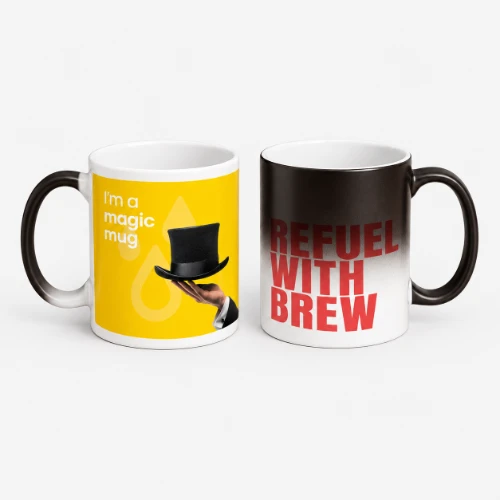
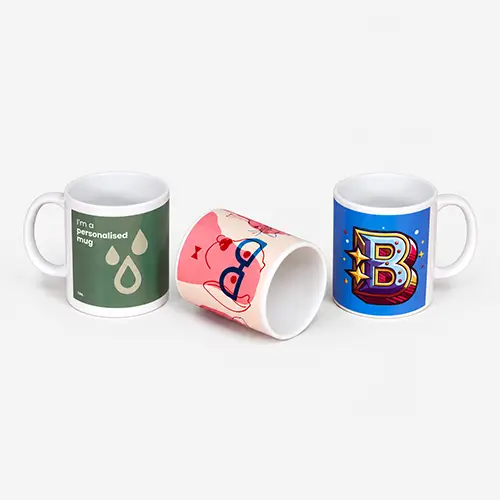
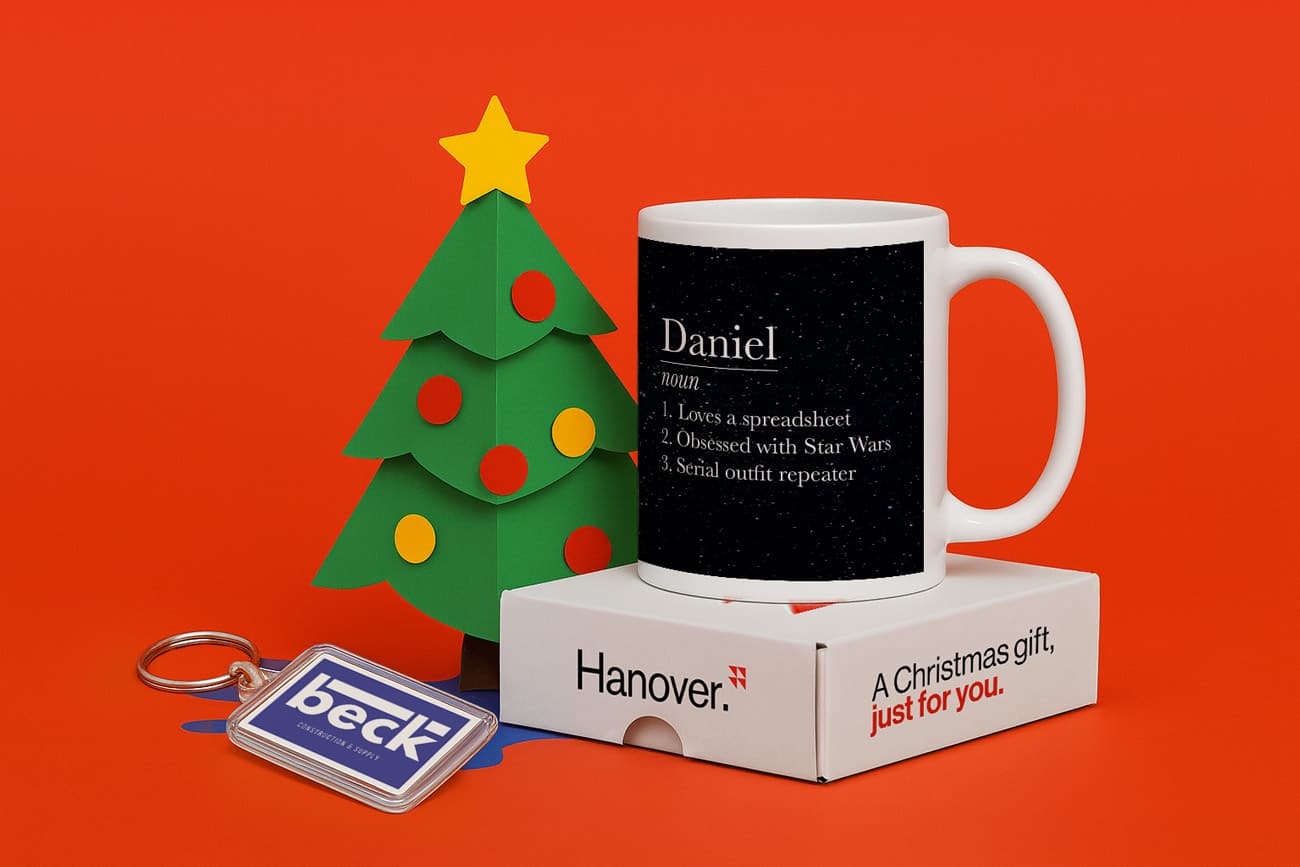
Personalised Mugs are an obvious example, but personalisation can make them feel much less generic. Rather than putting the same large company logo on every mug, you could add individual names, team artwork or a design connected to something your business has achieved during the year. WTTB's ceramic mugs can be personalised with your own artwork and are suitable for corporate use.
For employees who are regularly travelling or commuting, Travel Mugs give you another practical option. They can work particularly well when the design is subtle enough that the recipient will want to keep using it outside work too.
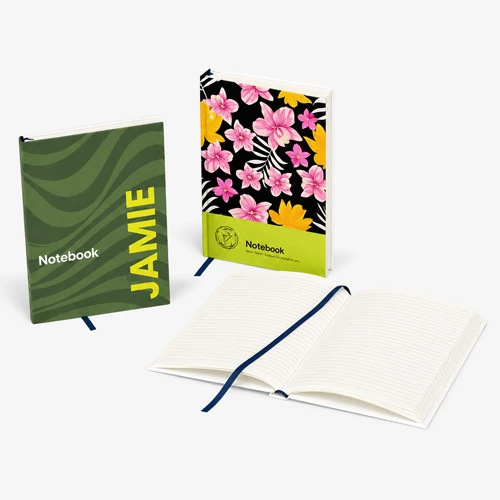
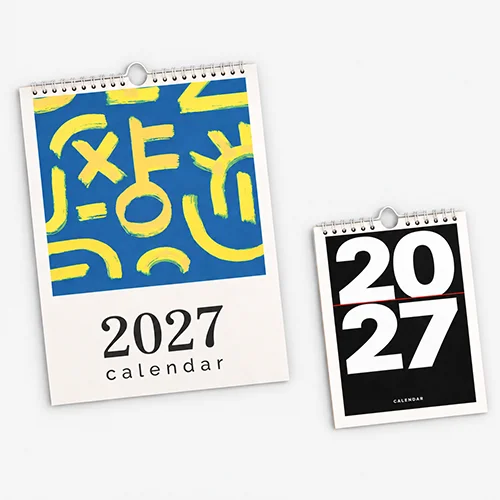
You could also look ahead to the new year. Personalised Notebooks, Diaries and Wall Calendars naturally fit the period between Christmas and January, giving your team something useful as they return after the break.
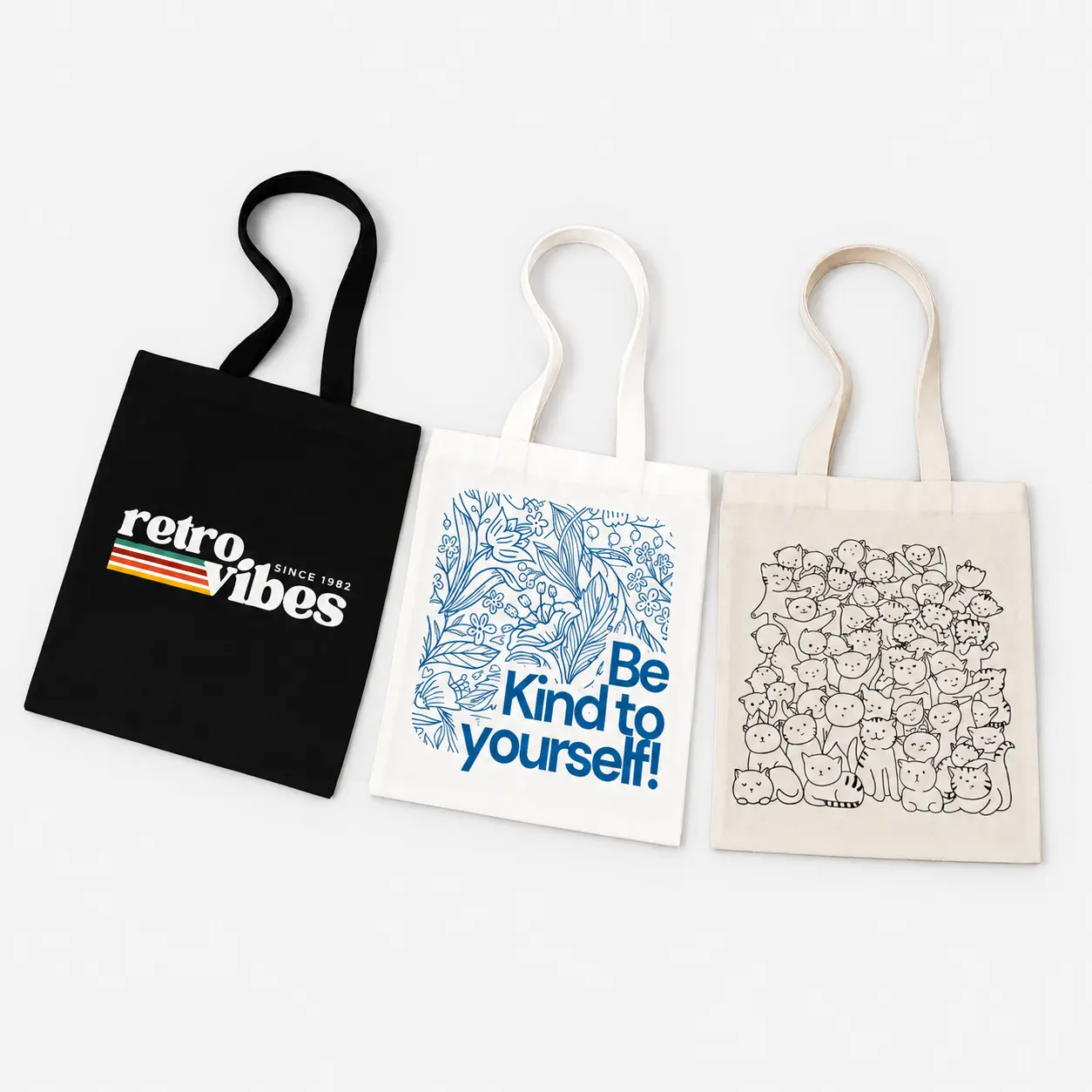
For something that works beyond the desk, Tote Bags give you plenty of room for illustration, artwork or branding without the gift needing to feel overly corporate.
The product matters, but so does what you put on it. A simple name, a message from the team or an illustration created specifically for Christmas can make an everyday object feel much more personal.
Client gifting calls for a slightly different approach.
The aim isn't necessarily to make your logo as prominent as possible. A Christmas gift can be a chance to reinforce the relationship you've built throughout the year, so the strongest ideas often keep branding subtle and put the thank you at the centre.
A Personalised Notebook can work as a practical business gift, particularly when paired with a personalised cover rather than a generic branded design. Coasters can suit businesses looking for a smaller gift or something to include within a wider package.
For something more visual, Acrylic Photo Blocks can be turned into branded desk pieces, commemorative gifts or displays connected to a shared project, campaign or milestone.
Think about why you're giving the gift too. A longstanding client might warrant something more personal than somebody you've only recently started working with. You could reference a successful project, an important moment from the year or simply write a genuine thank you rather than relying on a standard festive message.
Adding a Christmas Card gives you space to say what the gift itself can't. Even when the merchandise is the main event, a properly written message can be the part the recipient remembers.
Putting a company logo on a product makes it branded. It doesn't automatically make it personal.
If you're creating gifts for a relatively small team or client list, look for opportunities to make each one feel more individual. Names are the most obvious place to start, but you can go further.
You might use an illustration inspired by your team, reference an achievement from the year, create artwork around an internal phrase or develop a Christmas design that feels recognisably yours without simply filling it with company branding.
For client gifts, you could reference the work you've done together or create artwork around their industry. For employees, different teams could receive variations of the same concept.
The amount of personalisation should suit the relationship. Sometimes a name and a short message is enough. The goal is to make the recipient feel as though the item was chosen for them, not pulled from a cupboard of promotional giveaways.
Before choosing any corporate gift, ask what will happen to it once Christmas is over. Would someone use the mug regularly? Will the notebook end up on their desk? Is the calendar useful enough to stay on the wall? Would they actually carry the tote bag?
Practicality isn't the only reason to choose a gift, but it can be a useful filter when you're deciding between ideas.
It can also help you avoid overbranding. If you want someone to carry, display or use an item regularly, think about whether the design still works when it's removed from the context of your business.
A logo can still be there. It just doesn't always have to be the biggest element.
You don't have to limit a gift to one product. Combining a few complementary items can help you create something that feels more substantial while giving the whole package a stronger theme.
For an employee gift, you could build a simple new year desk set around a Notebook, Mug and Calendar. Use the same artwork, colours or visual theme across each piece so they feel like one collection rather than three separate products.
For clients, you might combine Coasters with a Christmas Card and present them as part of a wider thank you package.
If a mug is the main gift, a Custom Mug Box gives you another surface to continue the design and makes the presentation feel more complete. WTTB's mug boxes are specifically designed for mug presentation and can be printed with custom artwork.
You don't need to add products simply to make the package bigger. A smaller collection with a clear idea behind it can feel much stronger than an assortment of unrelated branded items.
The experience starts before the recipient reaches the gift itself.
If you're sending presents directly to clients or handing them out to employees, coordinated packaging can turn relatively simple merchandise into something that feels much more deliberate.
Personalised Gift Boxes can carry the main visual identity of your gift, while Christmas Wrapping Paper can bring the same artwork across the rest of the package.
Finish it with Gift Tags and a Christmas Card and you've got several opportunities to make the gift feel connected from the moment it's opened.
Try treating the whole package as one design rather than creating each part independently. Colours, illustrations, typography and messaging can carry across the box, wrap, tag and card without every element needing to look identical.
It's also an opportunity to keep branding more restrained. Your box could carry the company identity while the gift inside focuses more heavily on the recipient.
Budget is naturally going to influence what you choose, particularly when you're buying for a larger team.
It's also worth being aware of HMRC's rules around trivial benefits. HMRC says you don't have to pay tax on an employee benefit if it meets all of its qualifying conditions. These include the benefit costing £50 or less, not being cash or a cash voucher, not being part of the employee's contract and not being given as a reward for their work or performance.
There are additional rules in some circumstances, so businesses should check the full HMRC guidance on trivial benefits when planning employee Christmas gifts rather than assuming that every gift below £50 automatically qualifies.
That £50 threshold can nevertheless be a useful consideration when you're setting your gifting budget and deciding what combination of products might work.
The more personal you want your gifts to be, the more information you'll need before you order.
Start by deciding who is receiving a gift and what you want to spend. From there, choose the products and work out what information needs to change between recipients.
If every item will feature an individual name, make sure you've collected and checked those names before the artwork stage. For client gifts, confirm company names and branding rather than relying on old files.
It also helps to think about the complete package early. If you want the merchandise, packaging, wrapping and card to use the same design, plan them together rather than finishing the main gift before thinking about presentation.
Production options and quantities vary between products, so check the relevant product pages when you're planning your order and allow additional time if your idea needs something more bespoke.
If you're a print reseller, Christmas gifting creates plenty of opportunities to help business customers develop something more useful than a one product brief.
A request for mugs might develop into a coordinated gift set. A client looking for Christmas cards may also need packaging, personalised stationery or gifts for their team.
The opportunity isn't simply to sell them more. It's to understand who they're gifting to, how many recipients they have, what budget they're working with and how they want the finished package to feel.
For more on when to start those conversations and how to plan festive print with your customers, read our Christmas Print Planning for Resellers guide.
A successful corporate Christmas gift doesn't need to be complicated. Start with the recipient. Choose something appropriate to the relationship, personalise it in a way that adds value and think about how the gift will look when it arrives.
That might mean a named mug for every member of the team, a notebook and card for a valued client or a complete gift package carrying one festive design from the wrapping through to the product inside.
Explore our Christmas printing range for personalised festive print and gifts, or browse our Merchandise printing range for more great ideas.
Posted on August 11, 2025 by Emma Thompson
Related topics:

£12.06
£47.20
£12.06
£55.64
£17.07