Prices
Events give businesses something digital marketing can’t always deliver: real conversations with real customers. Whether you’re selling products at a summer market, promoting a service at an exhibition or setting up a pop up space at a local event, the right approach can help you attract attention, explain your offer and make it easier for people to buy.
It’s an opportunity worth taking seriously. According to Events Industry Alliance, the UK events industry was worth an estimated £68.7 billion in 2025, with exhibitions alone generating £11.5 billion in economic output. From large indoor trade shows to outdoor seasonal events, people are still showing up, browsing, asking questions and discovering businesses in person.
That also means there’s plenty of competition. A busy event space can be full of signs, stands, samples, conversations and distractions. If you want people to stop, shop, book or enquire, your setup needs to work quickly. These event hacks are designed to help you sell smarter, whether you’ve got a full stand, a market stall, a gazebo or a small table.
Summer events are a brilliant place to start because they often bring strong footfall, open spaces and a more relaxed browsing mindset. The challenge is that people may be walking past quickly, approaching from different directions or scanning a busy field for something that catches their eye.
That’s where visibility matters. People make quick decisions in busy spaces, so your setup needs to give them an easy visual shortcut. Before anyone reads your flyer or asks about your products, they need to understand that you’re there, open and worth a closer look.
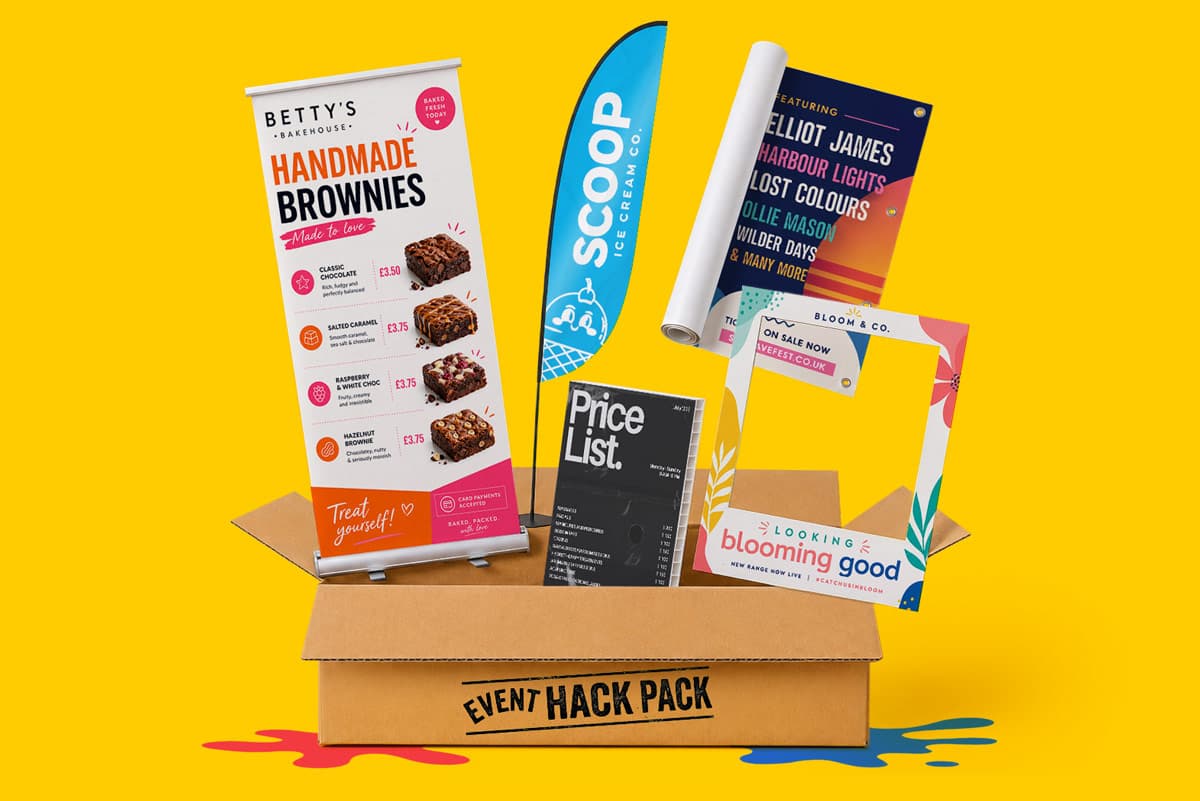
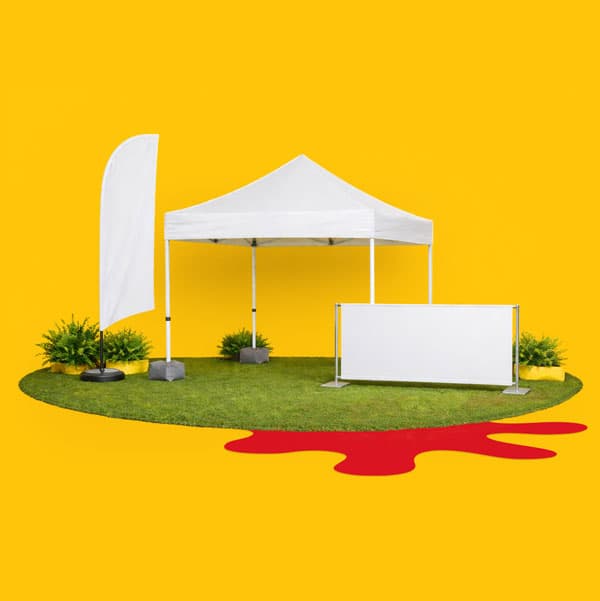
Height, movement and clear branding can all help. A flag can make your business easier to spot across a busy outdoor space, while a branded tent can create a clear base that feels more professional and easier to approach. An outdoor banner can also work well when you need one strong message to be seen from a distance, especially at markets, festivals and open air events.
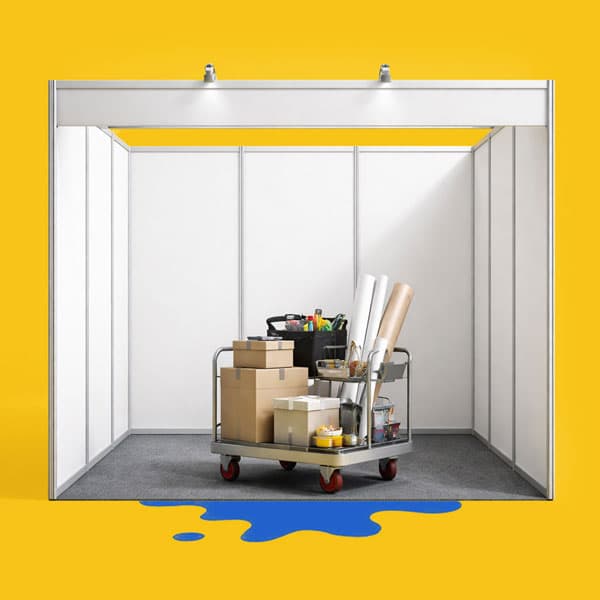
Indoors, the same principle applies. Your stand doesn’t need to shout, but it does need to be understood quickly. A roller banner can help make your message clear in a busy exhibition hall, giving people a quick sense of who you are and why they should stop.
Think of your biggest visual as the first hello. It doesn’t need to explain everything. It simply needs to make people look twice.
Top Tip: Stand a few metres away from your setup and ask whether a stranger could tell what you sell in three seconds.
One of the biggest event mistakes businesses make is trying to say too much too soon. When someone’s walking past, they’re unlikely to stop and read a long paragraph. They need a quick reason to care.
Too much information can slow the decision down. A single clear message gives people something easy to understand and respond to, whether that’s a best selling product, a free sample, an event offer or a service they can book.
A food business might lead with “Fresh coffee served here”. A skincare brand might focus on “Free samples today”. A service business might use “Book your free consultation”. A retailer might promote “New collection available today”.
Your main display should carry that simple message. The extra detail can come later, once someone has already stopped. Your biggest sign shouldn’t be your full sales pitch. It should be the easiest reason to start a conversation.
Top Tip: Choose one headline message before the event. If everything is important, nothing stands out.
Events move quickly. If customers have to work too hard to understand what you sell, how much it costs or what they need to do next, they may walk away before speaking to you.
Customers don’t always ask the questions that are stopping them from buying. If the price, offer or next step isn’t clear, they may move on without saying anything. Clear pricing, simple service options and visible next steps can remove those small doubts before they become lost sales.
This matters even more when your stand gets busy. Staff can only speak to one person at a time, but your setup can keep working in the background. If someone can see your bestsellers, understand your offer or work out how to buy while they wait, they’re more likely to stay engaged.
Good event print should support the conversation, not replace it. It gives people enough confidence to step closer, ask a better question or make a quicker decision.
Top Tip: Put prices, payment options and bestsellers where people can see them without asking.”
At outdoor events, you won’t always know exactly where your pitch, stall or stand will be until you arrive. You might be facing a walkway, placed near a queue or tucked into a corner. Indoor events can bring similar challenges, from awkward sightlines to limited floor space.
That’s why it helps to create a setup that works from more than one angle. Not every customer will approach your stand in the same way. Some will spot you from a distance, some will notice you while passing, and others may only engage once they’re close enough to see the detail.
Layering your message helps you speak to each of those moments. Larger visuals can help people find you, while clearer mid range information can explain what you offer once they’re closer. For outdoor spaces, correx signs can be useful for simple directional messages, prices or collection points because they’re lightweight, practical and easy to place where they’re needed. Indoors, posters can work well for key information, offers or product highlights, especially when wall space, display boards or stand panels are available.
This keeps your setup flexible without needing to know the exact layout in advance. First, help people find you. Then help them understand you. Finally, give them a reason to remember you.
Top Tip: Pack at least one piece of print that can be moved quickly if your pitch position changes.
Not everyone who stops at your stand will be ready to buy straight away. Some people will browse, compare, ask a quick question and move on. The right prompts can help turn that interest into action.
This doesn’t mean being pushy. It means making decisions easier. People often look for reassurance before making a purchase, especially when they’re discovering a business for the first time. Simple prompts such as “bestseller”, “event favourite” or “great for gifting” can help customers feel more confident because they show that other people are interested too.
For service businesses, reassurance might look slightly different. It could be a short client quote, a simple explanation of how the service works or a clear invitation to book a follow up conversation. The aim is the same: reduce uncertainty and make the next step feel easy.
The best prompts are honest, specific and easy to see. If something is popular, useful or only available at the event, make that clear.
Top Tip: Use small prompts to remove hesitation, such as bestseller, event favourite or great for gifting.
Not every sale happens at the event. Someone might be interested but not ready to decide. They may want to check their diary, talk to a colleague, browse your website or come back after payday. If they leave with nothing, they may forget your name by the time they get home.
After a busy event, customers may remember that they liked something, but not the business name, website or exact product. A useful takeaway gives that interest a second chance, especially when it includes a clear offer, product reminder or next step.
Flyers can work well here because they give people the detail they didn’t have time to take in at the stand. For service businesses, that might be a short overview of what you offer and how to book. For product sellers, it might be a bestsellers guide, event offer or reminder of where to shop after the event.
Business cards still have a place too, especially when the event is built around conversations. If someone has asked a question, taken an interest or said they’ll get in touch later, a simple card makes that next step easier.
The key is to make every takeaway useful. Don’t just hand over something with a logo. Give people a reason to keep it, whether that’s an event offer, a product reminder, a booking link, a discount code or a clear next step.
Top Tip: Make sure every flyer or business card tells people what to do next, not just who you are.
Digital actions can be useful at events, but only when people know why they should take them. A vague “scan here” is easy to ignore. A clearer prompt, such as “scan to watch how it’s made”, “scan for today’s offer” or “scan to book your consultation”, gives customers a reason to act.
For some businesses, it may be worth going a step further with a video QR code. CAMIcodes let you connect printed materials with video content, which can be especially useful when your product, service or story needs more than a few lines of copy. A food brand could share a short behind the scenes clip, a maker could show their process, a service business could introduce the team, or a product seller could show an item in action.
The main thing is to make the value clear. People are more likely to take that extra step when they know what they’ll get and why it’s useful.
At summer events especially, people often take photos of what they buy, where they visit and the brands they discover. That gives businesses a chance to extend the value of the event beyond the people standing in front of them.
People are more likely to remember a brand when they have interacted with it, not just looked at it. A photo friendly setup can add that extra moment of connection, especially when it feels natural to the event.
It doesn’t need to be complicated. A smart branded space, a bold backdrop or a selfie frame can give visitors an easy reason to stop, smile and get involved. Selfie frames can add a fun, engaging touch to your stand, helping people interact with your brand in a way that feels natural rather than forced.
For product sellers, this can work well around samples, new launches or limited edition ranges. For service businesses, it can help bring personality to a stand and make the brand feel more memorable. The best photo moments feel connected to the brand, not added as an afterthought.
A good event kit isn’t about taking everything you own. It’s about taking the things that help you attract, explain, sell and follow up.
When your setup is organised, you can focus more on customers and less on solving problems during the day. That confidence matters. If your prices, offer, samples, takeaways and follow up details are easy to find, the whole selling process feels smoother for you and for the customer.
Before the event, think about the journey you want people to take. How will they notice you? What will help them understand your offer? What might help them decide? What can they take away if they’re not ready to buy?
For some businesses, that might mean a banner for visibility, signage for simple practical messages, flyers for people who need more detail and business cards for follow up conversations. The exact mix will depend on what you sell, but the purpose should always be the same: make it easier for people to notice you, understand you and come back to you later.
It’s also worth packing the less exciting things that make the day run smoothly. Clips, tape, weights, pens, spare copies, chargers and cleaning wipes can all make a difference when you’re setting up quickly or dealing with a busy day.
Many event selling mistakes are small, but they can have a big impact. If your prices are hard to find, some customers won’t ask. If your main message has too much information, people may not read it. If your branding only faces one direction, customers approaching from another angle may miss you completely.
Before the event starts, step back and look at your setup like a stranger. Would you understand what the business sells? Would you know why it matters? Would you know what to do next?
This simple check can reveal gaps before customers do. It might show that your pricing needs to be clearer, your main message needs to be bigger or your takeaway information needs a stronger reason to keep it.
Once the event’s over, take a few minutes to review what worked. The questions customers ask are useful clues. If people keep asking the price, your pricing may need to be more visible. If they ask what happens next, your call to action may need to be clearer. If they ask what your product does, your main message may need simplifying.
It’s also worth noting what people picked up, what they commented on and what helped start conversations. These small details can help you improve your next event setup and make better decisions about what to bring next time.
Every event gives you insight into what helps customers stop, understand and buy. The more you learn from each one, the easier it becomes to sell with confidence at the next.
Top Tip: Write down the top three questions customers asked. Those questions usually show what your setup needs to explain better next time.
Whether you’re selling at a summer market, attending a trade show, promoting a service or taking your business to a local event, small details can make a big difference. The most effective event setups aren’t always the biggest or the busiest. They’re the ones that make it easy for people to notice you, understand what you offer and remember you afterwards.
Start with the customer. What do they need to see first? What might stop them from buying? What information would help them make a decision? Once you know that, it becomes much easier to shape an event setup that supports the sale from first glance to follow up.
For more practical advice, ideas and inspiration, explore our Events and Exhibitions Hub and start building a setup that works harder on the day.
Posted on June 18, 2026 by Emma Thompson
Related topics: