Prices
Outdoor events and exhibitions are one of the most effective ways to get your brand seen. From festivals and markets to trade shows, sporting events and community campaigns, they give you space, visibility and a direct connection with your audience.
But outdoor event printing comes with its own challenges. What works indoors doesn’t always work outside. Weather, wind, lighting and distance all affect how your print looks and performs, and if these factors aren’t considered, even the strongest designs can fall flat.
That’s why outdoor exhibition printing needs a different approach.
Unlike indoor exhibitions, outdoor environments are unpredictable. Conditions can change throughout the day, from shifting light to rising wind and fluctuating footfall.
Your print has to be ready for all of it.
This is where many businesses get caught out. They focus on how their print looks on screen, rather than how it performs in real-world conditions. At outdoor events, displays need to be durable, highly visible and easy to understand at a glance. People don’t stop to study them. They glance, scan and move on.
Material choice plays a major role in how well your outdoor print performs.
One of the most common mistakes is using indoor materials outside. It may seem like a small detail, but it has a big impact.
For example, when comparing PVC banners and mesh banners:
For outdoor events, festivals and exhibition spaces where wind is a factor, mesh banners are often the more reliable choice.
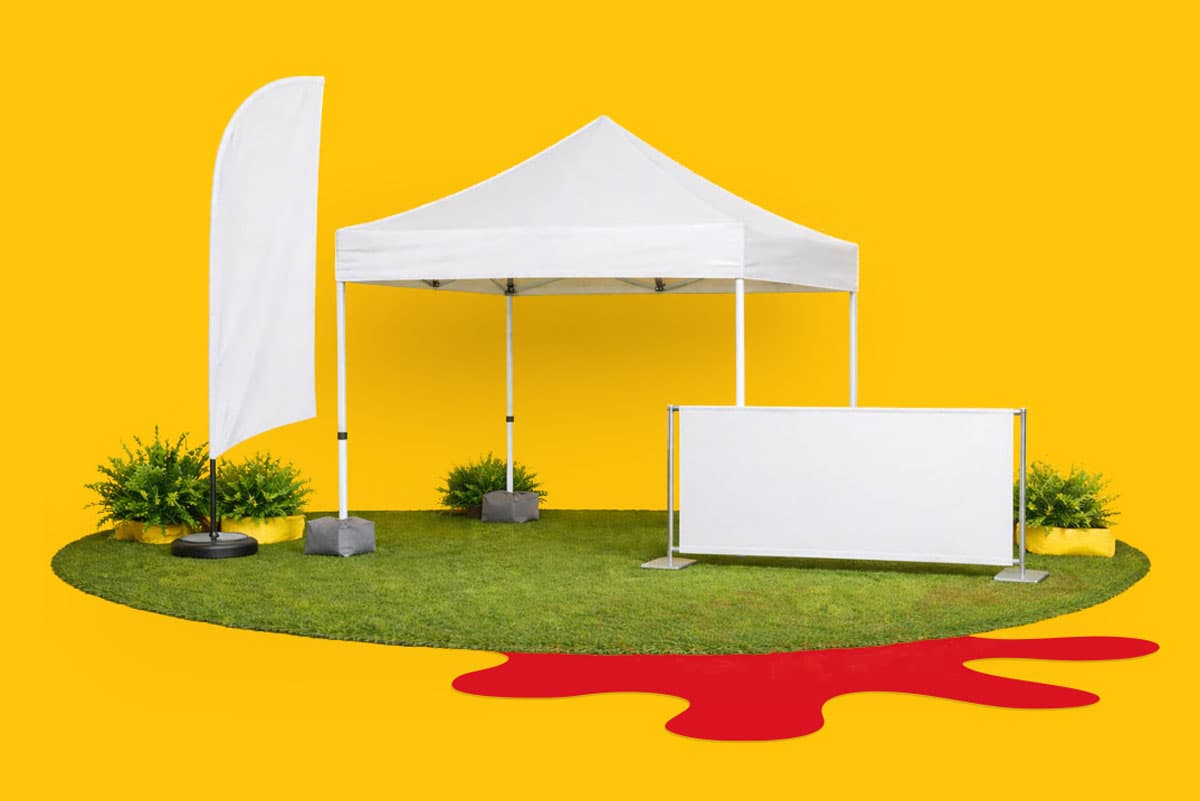
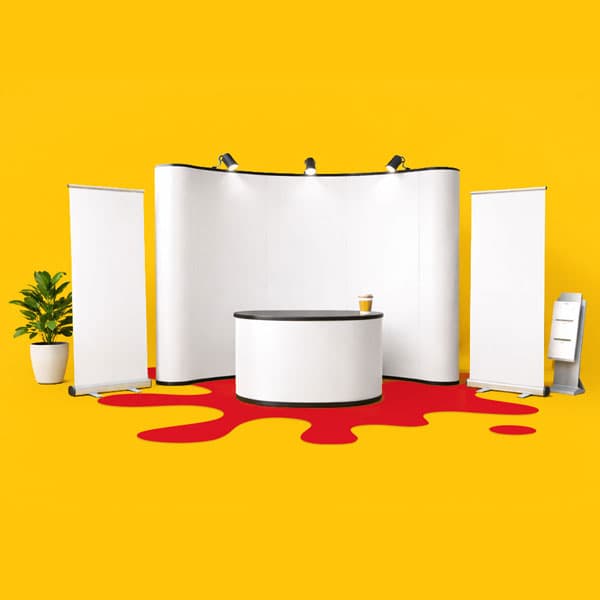
A successful outdoor exhibition setup isn’t built from a single product. It works because everything functions together as a system.
Consistency across your setup is key. Everything should feel connected and easy to understand at a glance.
At outdoor events, it’s not just about how your print looks. It’s about whether it stays in place.
Wind is one of the biggest challenges for outdoor exhibition displays, and it’s often underestimated. Flags, banners and gazebos all need to be properly secured to perform as intended.
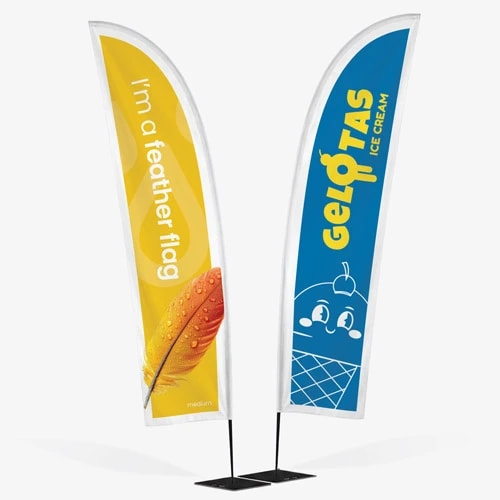
Water-based bases are commonly used for flags and arch flag systems, helping to maintain stability while still allowing natural movement, which is what makes them so effective at drawing attention.
For gazebos, simple additions like tent weights can make a significant difference, particularly in open or exposed locations.
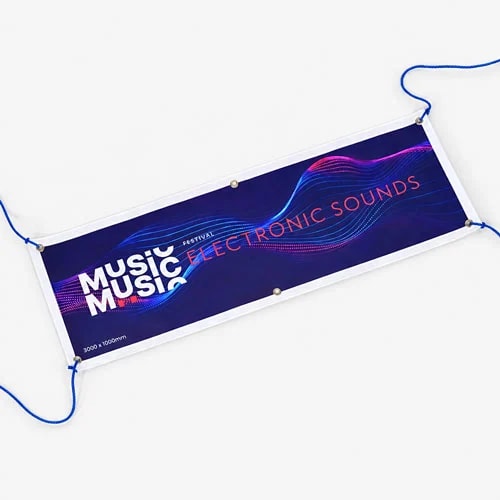
When it comes to banners, the fixing method is just as important as the material itself. Bungee cords, with durable elastic and strong hooks, help absorb wind movement, reducing strain on eyelets and lowering the risk of tearing. They are widely used across outdoor advertising, construction fencing and event branding because they combine flexibility with reliability.
It may seem like a small detail, but it often determines whether a display holds up or fails.
Design is where many outdoor event displays fall short, not because the design is poor, but because it hasn’t been adapted for the environment.
At outdoor events, people are moving, scanning and viewing from a distance.
Your design needs to work instantly.
Key messaging should sit at natural eye level. Not too high, not buried at the bottom of a banner or display. If it isn’t immediately visible, most people will not see it.
This sounds obvious, but it is one of the most common mistakes exhibitors make.
They rely on branding or visuals and assume people will understand what they offer. At outdoor events, clarity matters more than creativity.
If you sell print, say print. If you offer a service, make it obvious.
If people cannot immediately understand what you do, they will move on.
Many outdoor exhibition setups fail for the same reasons:
Individually, these issues may seem minor. Together, they significantly reduce impact.
Outdoor events and exhibitions are a huge opportunity to get your brand seen. But success comes from more than simply turning up with printed materials.
It comes from choosing the right materials, designing for real-world conditions and ensuring every element works together effectively.
When done properly, your print does not just look good. It performs.
Posted on April 13, 2026 by Emma Thompson
Related topics: