Prices
Workplace safety signage does more than tick a box. It helps people understand risks, follow instructions and move through a space with confidence.
From warehouses and workshops to offices, schools, shops, construction sites and public spaces, clear signage can make day to day communication easier. It can point visitors in the right direction, warn people about hazards, mark restricted areas, highlight fire exits or show where first aid equipment can be found.
Before printing any safety signage, it’s important to understand what your business actually needs. Official HSE guidance on safety signs explains when safety signs are required, and businesses should always check the latest guidance or speak to a competent health and safety adviser if they’re unsure.
Once you know what signage you need, print becomes the practical part. The right format, material, size and finish can help your signs stay clear, visible and suitable for the environment they’re used in.
Safety signage is there to communicate quickly. In a busy workplace, people don’t always have time to stop and read a long notice, especially if they’re walking through a warehouse, entering a restricted area or responding to an emergency.
That’s why strong workplace signage needs to be simple, visible and easy to understand. A good sign tells people what they need to know at the point they need to know it.
This could include warning people about a hazard, showing them where they can and can’t go, reminding them to wear protective equipment or helping them find a safe route through a building.
Signs shouldn’t be used as a replacement for proper risk control, training or safe working practices. They work best as part of a wider approach to workplace communication, where the printed sign supports the systems already in place.
Workplace safety signage can cover a wide range of messages, depending on the setting and the risks involved.
General information signs can also support safety, even when they’re not formal safety signs. Clear visitor instructions, delivery guidance, wayfinding signs and site rules can all help people understand how to move around your premises.
Once you know what message your sign needs to communicate, the next step is choosing the right printed format.
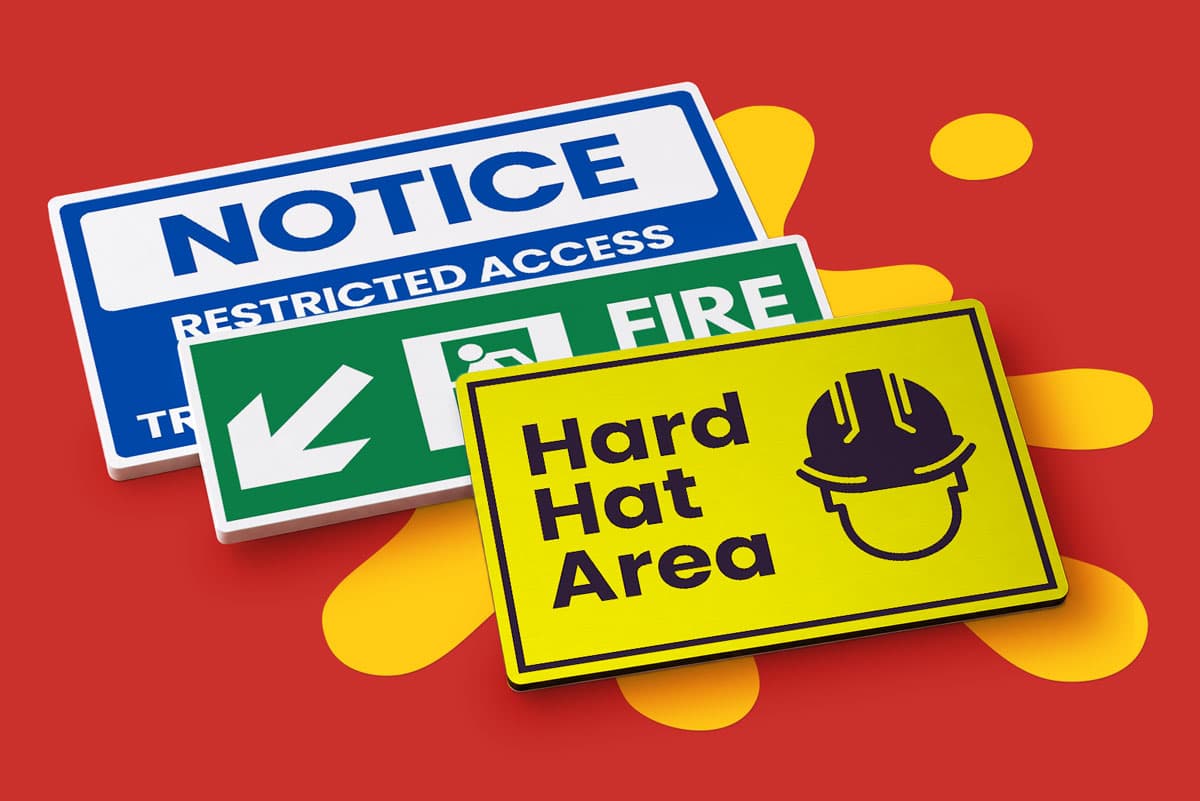
For general workplace signs, rigid boards can be a strong option because they’re easy to display on walls, doors, fences and temporary site areas. You can explore different board options through Display and Signage and compare materials in the Print Materials Hub.
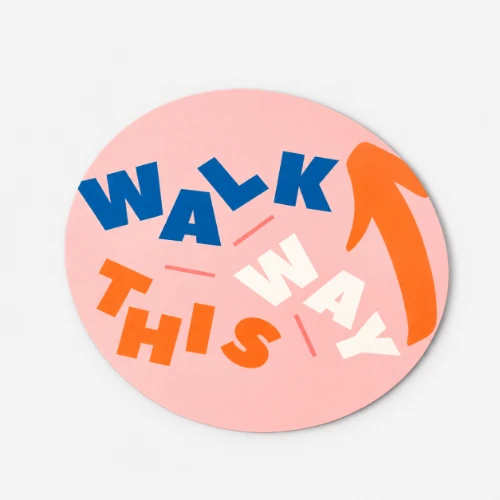
For floor based messages, Floor Stickers can work well in entrances, corridors, queues, warehouses and customer facing spaces. They’re useful when the message needs to appear directly in someone’s line of movement, rather than on a wall or stand.
For temporary information, event guidance or changing site messages, lightweight boards, posters and banners can be useful because they’re easier to move, update or replace.
For outdoor workplaces, yards, car parks and building entrances, the material becomes especially important. The sign needs to suit the conditions it’ll be exposed to, including weather, handling, visibility and installation.
Indoor signs are often used for wayfinding, staff instructions, visitor information, room identification and safety reminders.
In offices, schools, healthcare spaces and public buildings, signs usually need to look clean and professional while still being easy to understand. Clear typography, simple layouts and strong contrast can make a big difference.
In warehouses, factories and workshops, visibility is often more important than decorative design. Signs may need to be read from a distance, seen above machinery or understood quickly by people moving through an active environment.
Indoor workplace signage can include wall signs, door signs, posters, floor graphics, window notices and temporary point of need messages. The best format depends on where the sign needs to sit, how long it needs to last and how much wear it’s likely to receive.
Outdoor safety signage often has to work harder than indoor signage. It may need to deal with rain, wind, sunlight, dirt, handling and long distance visibility.
For construction sites, industrial spaces, yards, entrances and loading areas, printed signs can help communicate site rules, restricted access, delivery instructions and vehicle movement guidance.
Rigid boards are often useful when signage needs a firmer structure, while Outdoor PVC Banners can be helpful for larger messages that need to be seen across a wider space.
The key is to think about how the sign will be displayed before you choose the format. A sign fitted to a fence, fixed to a wall, placed by an entrance or used temporarily at an event may all need different materials.
Floor graphics can be especially useful when you want to guide people through a physical space. They can help mark walkways, direct queues, highlight entrances, show one way routes or draw attention to a specific area.
They work well in places where wall space is limited, or where the floor is the most natural place for the instruction to appear. For example, a floor sticker can help someone understand where to stand, where to queue or where to turn without needing extra signs on walls or counters.
When using floor graphics, placement matters. The message should be positioned where people can see it before they need to act. It should also be simple enough to understand while walking.
Not every workplace sign needs to be permanent. Businesses often need temporary signage for short term changes, events, refurbishments, maintenance work or seasonal layouts.
Temporary signs can help people understand a changed entrance, a blocked walkway, a temporary reception point or a new queue system. They’re also useful when staff, visitors or contractors may not be familiar with the space.
For this type of signage, flexibility is important. You may need something that’s easy to move, easy to store or quick to replace when the message changes.
This is where printed posters, lightweight boards, banners and freestanding signage can work well. They help you communicate clearly without committing to a permanent installation.
Workplace signage needs to be designed for clarity first. It’s not enough for a sign to look good close up on a screen. It has to work in the real place where it’ll be used.
Check the file setup before you upload. WTTB’s Support Guides can help you prepare print ready artwork, including bleed, safe zones and file requirements.
Health and safety requirements can vary depending on the workplace, the activity and the risks involved. That’s why businesses shouldn’t rely on a print supplier to decide which safety signs are legally required.
The official HSE guidance on safety signs explains that employers must provide safety signs where there’s a significant risk that can’t be avoided or controlled in another way. It also explains that signs aren’t needed where they don’t help reduce a significant risk.
The Health and Safety Safety Signs and Signals Regulations 1996 set out the legal framework for safety signs and signals in Great Britain.
If you’re unsure which signs your workplace needs, check the latest official guidance or speak to a competent health and safety professional before ordering your print.
Once you know what signs you need, WTTB can help you turn them into clear, professional printed products.
You can choose from a wide range of signage formats, including rigid boards, banners, floor graphics, window graphics, posters and display products. You can also use the Print Materials Hub to compare materials and understand which option is best suited to your space.
Whether you’re updating signs across a workplace, preparing a site for visitors or creating temporary guidance for a specific area, the right printed format can help your message stay visible, practical and easy to follow.
Explore WTTB’s Display and Signage range to find a suitable option for your workplace safety signage.
Workplace safety signage is used to communicate important information about risks, instructions, restrictions, safe routes and emergency equipment. It helps employees, visitors and contractors understand what they need to do in a specific area.
Not always. Official HSE guidance explains that safety signs are needed where there’s a significant risk that can’t be avoided or controlled in another way. If a sign doesn’t help reduce a significant risk, it may not be needed.
Yes, you can print custom workplace signs once you know what your sign needs to say and where it’ll be used. Custom signage can help with site rules, visitor instructions, directional messages, restricted access notices and other workplace information.
It depends on where the sign will be used. Indoor signs, outdoor signs, floor graphics and temporary notices all have different requirements. The Print Materials Hub can help you compare options before ordering.
Floor stickers can be useful for directional messages, queue guidance, walkway markers and point of need instructions. They work well when you want the message to appear directly where people are walking.
Posted on June 18, 2026 by Emma Thompson
Related topics:
£27.05
£38.46
£32.00



£29.39
£25.69