Prices
Writing an autobiography is not about recording every event that has ever happened to you. It is about selecting the experiences that explain who you are, what shaped you and what you want others to remember.
Your finished book might be a private family keepsake, a record of a career, an account of a defining experience or a memoir you plan to publish and sell. Whatever the purpose, careful planning will help you turn scattered memories, photographs and documents into a story that readers can follow.
This guide explains how to write an autobiography or memoir, organise your material and prepare your finished life story for professional book printing.
The terms memoir and autobiography are often used interchangeably, but there is a useful distinction.
An autobiography usually tells the broader story of a person’s life, often moving from childhood through to the present day. It may cover family, education, relationships, work and the major events that shaped the writer.
A memoir normally focuses on a particular period, relationship, theme or experience. Someone might write a memoir about growing up in a particular community, building a business, serving in the armed forces, travelling the world or recovering after a life changing event.
Neither approach is better than the other. The right format depends on the story you want to tell.
If covering your entire life feels too broad, choosing one theme or period can give the book a clearer direction.
Before you begin drafting chapters, decide what you want the finished book to achieve.
You may want to:
Your purpose will affect the tone, structure, length and design of the book.
A private family history might include detailed family references, scanned letters and photographs. A memoir intended for sale may require more context for readers who do not already know the people or places involved.
It also helps to picture one reader. Ask yourself what you want that person to understand, feel or remember after finishing the book.
One of the most common problems when writing an autobiography is trying to include too much.
Every life contains more material than one book can comfortably hold. Selecting what belongs in the story is just as important as the writing itself.
Start by completing this sentence:
This book is about my experience of...
Your answer might be your whole life, but it could also be more specific:
A clear focus gives you a way to judge every possible story. If a memory does not support the central purpose of the book, it may be interesting without being essential.
You do not have to discard unused memories. Keep them in a separate document for a future chapter, companion volume or family archive.
A timeline gives your memories a structure before you begin turning them into a narrative.
Start with major dates and periods, including:
You can then add smaller memories around those fixed points.
A simple table can help. Create columns for the year, your age, the location, the people involved, what happened and any photographs or documents connected to the event.
Do not worry about creating chapters yet. At this stage, you are collecting and arranging material.
Memory is a valuable starting point, but dates and details can become blurred over time. Research helps you strengthen the factual foundation of your story.
Useful sources may include:
Interviewing other people can reveal details you have forgotten or show how the same event was experienced differently.
Ask open questions rather than questions that suggest an answer. Instead of asking, “Were we happy living there?” ask, “What do you remember about that house?”
Record who gave you each piece of information. This will make it easier to check facts later and credit contributors where appropriate.
Your book does not automatically have to begin with your birth and end in the present day. There are several ways to structure a life story.
A chronological autobiography moves through events in the order they happened.
This is a clear and familiar approach, particularly for family histories and books covering an entire life. The challenge is making sure the book feels like a developing story rather than a list of events.
A thematic memoir groups chapters around subjects such as family, work, travel, creativity or community.
This gives you more freedom to move between different periods while keeping each chapter focused.
You can begin with one powerful moment and use it as the frame for the wider story.
A move, loss, achievement, discovery or reunion can provide a strong opening before you return to earlier events and explain how you reached that point.
Whatever structure you choose, each chapter should contribute something new. Avoid repeating the same lesson or background information in several places.
Readers connect with specific moments more easily than broad summaries.
Instead of writing that your childhood was difficult, choose a moment that demonstrates why. Describe where you were, who was present, what happened and how you understood it at the time.
For each important memory, ask:
Physical details can make a scene feel real, but they must serve the story. A remembered sound, object, room or piece of clothing may be more effective than several paragraphs of general description.
Your role is not to make every memory dramatic. It is to help the reader understand why it mattered.
An autobiography should sound like a person telling their story, not an official report.
Read sections aloud as you edit. If a sentence feels unnatural when spoken, it may feel unnatural on the page too.
Contractions, familiar expressions and variations in sentence length can help preserve your voice. However, try not to reproduce every pause or repetition from ordinary conversation.
Dialogue can bring a scene to life, but exact conversations are difficult to remember years later. Avoid presenting reconstructed dialogue as a precise record unless you have written evidence. You can make it clear that you are recalling the spirit of what was said.
A life story does not need to present the writer as perfect. Mistakes, uncertainty and changed opinions often make a memoir more believable and useful.
However, honesty does not mean filling gaps with invented facts.
Where you are unsure, use language that reflects that uncertainty. Phrases such as “as I remember it” or “I believe this happened around” allow you to remain truthful without interrupting the story.
It is also important to distinguish between what you witnessed, what someone told you and what you later came to believe.
Your autobiography may be your story, but it will often include the lives of other people.
Check names, dates and important claims wherever possible. Think carefully before including private information, serious accusations or details that could cause unnecessary harm.
You may choose to show particularly sensitive passages to the people involved, although this will depend on the circumstances and purpose of the book.
Where a manuscript includes serious allegations, confidential information or potentially damaging claims about identifiable people, seek professional legal advice before publication.
Photographs, letters, newspaper cuttings and documents can add depth and evidence to an autobiography. However, possessing a physical copy does not always mean you own the right to reproduce it.
Copyright may belong to the photographer, writer, publisher or another rights holder.
Review the UK Government guidance on using copyright material and request permission where necessary.
Keep a written record of permissions, credits and image sources. This is particularly important if the book will be sold or made publicly available.
Do not wait until the layout stage to think about photographs. Decide early which images are important and where they support the story.
For each photograph, record:
Scan photographs at a high resolution and keep the original scans untouched. Create separate edited copies for cropping, colour correction or restoration.
For strong print quality, images should normally be at least 300 dpi at the size they will appear in the book. Enlarging a small or heavily compressed image can make it look blurred or pixelated.
Not every photograph needs to fill a page. Smaller images, grouped photographs and well written captions can often tell the story more effectively.
Finish the main editing process before beginning the final page layout.
Late changes can alter page count, chapter openings and the width of the book spine. This can create unnecessary design work and increase the risk of mistakes.
Work through the manuscript in three stages.
Check whether the chapters are in the right order, whether important context is missing and whether any sections feel repetitive or unrelated to the main story.
Improve clarity, pacing and consistency. Remove repeated words, unnecessary explanation and details that slow the story without adding meaning.
Check spelling, grammar, names, dates, page numbers, captions and headings after the book has been formatted.
Ask at least one other person to read the manuscript. A fresh reader will notice gaps and assumptions that are easy for the writer to miss.
For broader advice covering editing, publishing and selling, read our guide to creating, publishing and selling your first book.
Book design is not only about appearance. It affects how easily the reader can follow and enjoy the story.
Choose the final book size before completing the layout. A compact portrait format normally works well for text led memoirs, while a larger or square book may better suit a family history containing many photographs and documents.
Pay attention to:
The inner margin, sometimes called the gutter, needs enough room to prevent words and important parts of photographs from disappearing into the spine.
Keep the overall design consistent. Too many fonts, decorative elements or competing page styles can distract from the story.
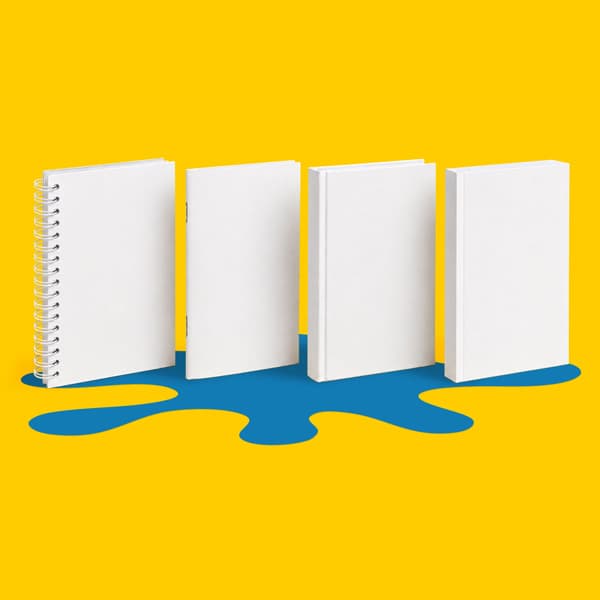
The best binding depends on the length, purpose, audience and budget of the book.
Paperback book printing is well suited to text led memoirs and autobiographies, particularly when you plan to print a larger quantity or sell copies.
Perfect bound book printing also creates a professional paperback style book with a printed spine and wraparound cover. It offers a wide choice of sizes, papers and finishes for books combining text and images.
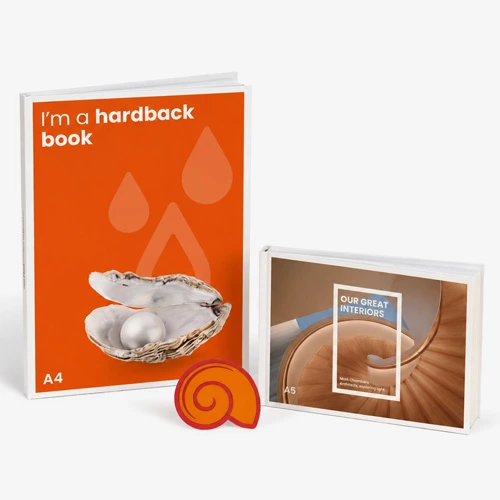
Hardback book printing gives a memoir a more substantial and lasting finish.
It is particularly suitable for family keepsakes, commemorative books, premium editions and stories intended to be given as gifts. The rigid cover also provides additional protection for a book that may be handled and kept for many years.
Our book binding guide compares the main options in more detail.
Paper affects how the finished book feels, how comfortably it reads and how photographs reproduce.
Uncoated paper has a natural feel and is often a strong choice for books containing long sections of text. It produces a softer appearance that suits personal writing and traditional memoirs.
Silk paper offers a smoother surface and helps colour photographs appear clear and vibrant. It can work well for family histories containing a balance of text, photography and scanned documents.
The paper weight also affects the thickness of the finished book. A heavier paper will produce a wider spine at the same page count, which is why the cover should not be finalised until the complete specification is known.
Explore the Print Materials Hub for more information about available paper stocks.
A memoir cover does not have to contain a portrait of the author.
You could use:
The title should be clear at a small size, particularly if the book will be promoted online. A subtitle can explain the period, place or subject of the story.
Do not guess the spine width. It will depend on the final page count, paper and binding specification. Use the measurement provided when configuring your book and build the cover using the relevant template.
Cover lamination can help protect the print, while finishes such as foil or spot UV can highlight selected details.
Artwork requirements vary between book formats, so follow the guide and template supplied for the product you choose.
In general, you will need to:
Perfect bound books normally require separate files for the cover and internal pages. The cover is supplied as a continuous spread containing the back cover, spine and front cover.
Follow the perfect bound book artwork guide or hardback book artwork guide for the format you select.
You can also use our Artwork Technical Check to identify technical file issues before production. Remember that an artwork check is not a proofreading service, so spelling, captions, names and page order should still be reviewed separately.
A screen cannot show you exactly how a printed book will feel.
Where possible, order one copy or a small quantity before committing to the full print run. Read the physical proof from beginning to end and inspect:
Make corrections to the original files and export new PDFs rather than attempting to patch individual pages.
Many WTTB book formats are available in low quantities, allowing you to check the finished result before ordering more.
An ISBN is not a legal requirement, but publishers, booksellers and libraries use it to identify, order and manage individual books and editions.
A private family book that will only be given to relatives may not need one. If you plan to sell the book through retailers or make it widely available, you should investigate obtaining an ISBN through the NielsenIQ UK ISBN Agency.
Books published and distributed in the UK may also be subject to British Library legal deposit requirements.
Check the latest requirements before making your book publicly available.
There is no fixed length for an autobiography.
A focused memoir may tell its story effectively in a relatively short book, while an account covering an entire life may require several hundred pages.
The book should be long enough to fulfil its purpose without including scenes simply because they happened. A focused and carefully edited story will usually be more engaging than a complete record of every event.
Your final page count will also influence the binding, paper choice, production cost and spine width.
Writing an autobiography takes time, reflection and patience. Printing it turns those memories into something that can be held, passed on and returned to.
Whether you are creating one copy for your family or preparing a memoir for a wider audience, WTTB offers flexible book printing options across paperback, perfect bound and hardback formats.
Visit our Book Super Centre to compare binding types, papers, finishes and artwork guidance, then choose the right format to bring your life story into print.
Posted on May 1, 2026 by Emma Thompson
Related topics:
£85.13
£136.00
£117.25