Prices
Writing your own book can feel like a huge task, especially when you’re starting with a blank page and a rough idea. You might know what you want to write about, but not how to shape it. You might have chapters written, but not know what comes next. Or you might already be thinking ahead to the finished book and wondering how your manuscript becomes something people can actually hold, read and keep.
The good news is that a book doesn’t have to come together all at once. It’s a process. First, you shape the idea. Then you write, edit, refine and prepare it properly for print.
This guide walks through the key stages, from planning your book to getting it ready for professional production. Whether you’re writing a novel, memoir, children’s book, poetry collection, cookbook, brand book, zine or short run publication, the same principle applies. The stronger the preparation, the better the finished book will feel.
Before you start writing, it helps to understand what your book is meant to do.
Some books are written to entertain. Some are written to teach, inspire, document, promote, sell or preserve a story. A children’s book has a very different job to a business book. A poetry collection has a different rhythm to a recipe book. A short story anthology needs a different structure to a photography book.
Getting clear on the purpose early helps you make better decisions later. It affects the tone of writing, the length, the layout, the format and even the type of binding that could work best when the book is printed.
Ask yourself three simple questions before you begin.
That last question is easy to overlook, but it matters. A book doesn’t only exist as words on a screen. Once it’s printed, it has weight, shape, texture and structure. Thinking about that early can help you write with the final result in mind.
Most books start with an idea, but an idea on its own isn’t always enough to carry a full manuscript. Before you get too far into writing, spend time shaping the concept.
For fiction, that could mean working out your setting, characters, conflict and ending. For nonfiction, it could mean defining the problem you’re solving, the points you want to make and the order your reader needs to receive them in. For children’s books, it could mean thinking about age range, reading level, illustration space and page rhythm.
Research can help here, even if you’re writing something highly personal or creative. If you’re writing a crime novel, you may need to understand police procedure. If you’re writing a memoir, you may want to check dates, places and details. If you’re writing a cookbook, recipe testing and photography planning will be just as important as the written instructions.
Research gives your book depth. It also helps you avoid vague writing, thin sections and avoidable mistakes.
A strong structure makes writing easier. It gives you something to return to when you lose momentum, and it helps you see where the book is heading.
For a novel, your structure might be a chapter by chapter outline. It doesn’t need to be rigid, but it should give you a sense of the key scenes, turning points and ending. For a nonfiction book, your structure might be built around questions, themes or lessons. For a poetry collection, it might be arranged by mood, theme, season or story arc.
Think of your structure as scaffolding. It can change as you write, but it gives the project enough shape to keep moving.
It’s also worth thinking about the likely length of the finished book. Page count can influence the most suitable binding type, so it helps to have a rough idea from the beginning. A short booklet, longer paperback, hardback book or wiro bound manual will all need slightly different production choices later.
It’s easy to focus only on what you want to say, but a strong book also considers what the reader needs.
Your opening should give them a reason to continue. Your chapters should move clearly from one idea or moment to the next. Your language should suit the audience. A children’s book needs clarity, pace and imagination. A business book needs useful insight and structure. A memoir needs honesty, detail and a reason for the reader to care.
If you’re writing fiction, keep asking what your reader knows, what they want to know and what will make them turn the page. If you’re writing nonfiction, make sure each chapter earns its place. If a section doesn’t help the reader understand, feel or do something, it may need to be cut or reworked.
Good writing is not just about adding more. Often, it’s about knowing what to remove.
Once the first draft is complete, it can be tempting to jump straight into formatting and cover design. Try not to do that too early.
Editing should come first. Start with the big picture before you worry about spelling and punctuation. Look at the structure, chapter order, pacing, repetition and clarity. Are there sections that drag? Are there missing explanations? Does the ending feel complete? Does the reader get what they were promised at the beginning?
After that, move into line editing. This is where you improve sentence flow, tone and readability. Then proofread carefully once the content is stable.
It’s useful to get another person involved at this stage. That could be a professional editor, a proofreader, a trusted reader or someone who understands the audience you’re writing for. Fresh eyes often spot things the writer has stopped seeing.
This stage is also important because late edits can affect the printed book. If the text changes after layout, the page count can shift. That can alter the spine width, cover setup and final artwork file.
Once your manuscript is taking shape, start thinking about what the finished book should be.
This is where the project moves from writing into print planning. The right format depends on what your book is, how it will be used and how you want it to feel.
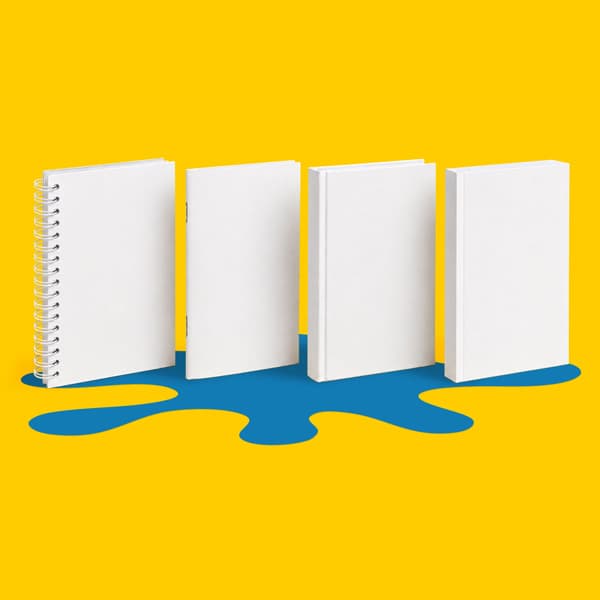
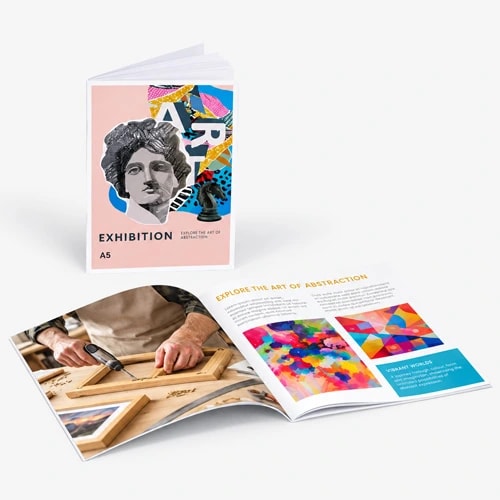
A shorter story, zine, event programme, poetry booklet or small publication may work well as a saddle stitched book. This is a simple and practical format where pages are folded and secured through the spine with staples.
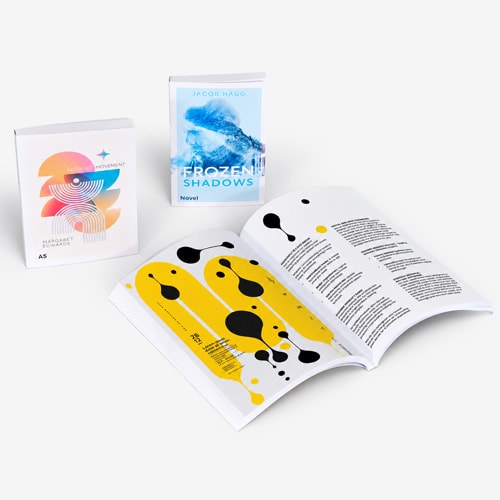
A longer novel, memoir, catalogue, guide or paperback style book may suit perfect bound printing. This gives the book a clean spine and a professional paperback feel.
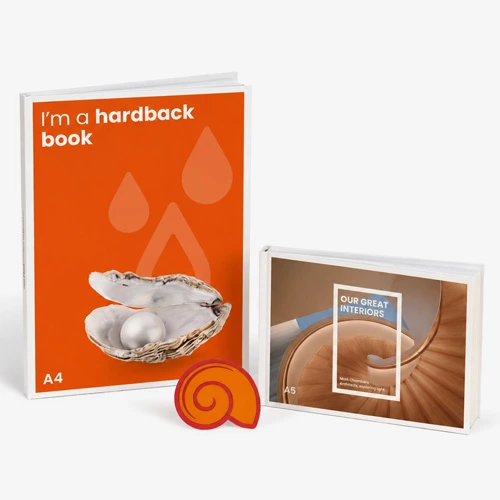
A premium children’s book, coffee table book, keepsake, anniversary publication or special edition may suit hardback printing. A hardback format adds durability and weight, which can make the finished book feel more substantial.
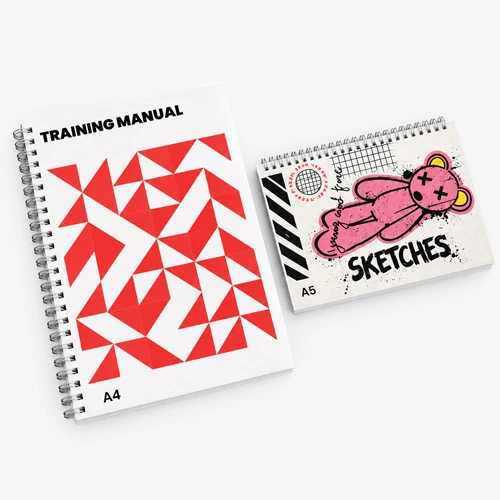
A manual, workbook, planner or training document may work better as wiro bound print because it can sit open more easily while being used.
A photography book, portfolio or visual publication may benefit from layflat printing, where the pages open flat so images can run across a spread with less interruption.
For a full comparison of book formats and production options, use WTTB’s Book Super Centre as the next step.
Binding is one of the most important decisions in book printing because it affects both appearance and usability.
A book that will be read once and handed out at an event has different requirements to a book that will sit on a shelf for years. A recipe book may need to stay open while someone cooks. A children’s book may need to handle repeated use. A photography book may need to show images cleanly across a spread. A novel may need a comfortable spine and a polished paperback feel.
That is why choosing a binding type should not only be about cost. It should be about how the book will be read, handled, stored and remembered.
If you already know your project will be a shorter booklet, look at Saddle Stitched Books. If it’s a longer paperback style project, look at Perfect Bound Books. If you want a premium hardback finish, explore Hardback Books.
For more specialist projects, WTTB can also support bespoke book printing, including options such as dust jackets, ribbon bookmarks, printed endpapers, head and tail bands, embossing and debossing.
The words matter, but the physical finish matters too.
Paper choice affects how the pages feel, how images appear and how premium the book seems in the hand. Gloss paper can help images feel bright and sharp. Silk paper gives a smooth finish that works well across many book types. Uncoated paper has a softer, more natural feel and can suit workbooks, journals and text led projects. Recycled paper can be useful when the material choice is part of the story or brand.
The cover also has a big impact on first impressions. Matt lamination can feel clean and understated. Gloss lamination can add shine and impact. Soft touch lamination can make the cover feel more premium and tactile.
Finishes such as Spot UV and foil can help draw attention to key cover details, such as the title, author name, logo or illustration. They are not right for every book, but they can make a cover feel more polished when used with care.
Use WTTB’s Print Materials Hub if you want to understand paper types, finishes and material choices before placing an order.
When the writing, editing and design are finished, your files need to be prepared correctly for print.
This is where many first time book projects can run into delays. A book is not just a Word document or a set of pages. It needs to be supplied in the correct file format, with the correct page order, bleed, margins, resolution and cover setup.
Your internal pages and cover artwork need to be checked carefully before upload. Page count, spine width, cover size and binding type all need to line up. If your artwork is not set up correctly, the final book may not print as expected.
Before submitting your files, check the relevant Support Guides for your chosen book format. These guides can help with artwork setup, file preparation and specifications for different book products.
For extra confidence, WTTB’s Artwork Check options can help you spot technical issues before your book goes into production.
Proofreading on screen is useful, but it can be hard to spot everything digitally. Once your book has been laid out, read it again as a finished piece.
Check the cover, spine, contents page, chapter starts, image placement, page numbers and any blank pages. Make sure headings are consistent, margins feel comfortable and images are high enough quality. For illustrated books, cookbooks, photography books and children’s books, check that the visuals sit properly on the page and that nothing important is too close to the trim edge.
This stage is about more than spelling. It’s about making sure the whole book feels coherent.
The more carefully you proof the book before print, the smoother the production process is likely to be.
Before choosing your final print specification, think about what will happen after the book is printed.
Will you sell it online? Hand it out at an event? Use it as a portfolio? Send it to clients? Give it as a gift? Stock it in a shop? Use it as part of a campaign?
The answer can influence quantity, format, finish and budget. A short run can be useful for testing demand, reviewing the final product or creating a limited edition. Larger quantities can work well when you already know the book has an audience or a clear distribution plan.
If your book is part of a business, brand, event or creative project, think about how it connects with the rest of your printed materials too. Bookmarks, postcards, flyers, packaging stickers and presentation materials can help support the launch and make the final book feel part of a wider campaign.
Writing your own book starts with an idea, but it becomes real through planning, editing, design and print preparation. Each stage has a part to play.
A strong manuscript gives the book substance. Good editing makes it clearer. Careful formatting makes it easier to read. The right binding, paper and finish make it feel right in the hand.
Whether you’re creating your first story, a personal memoir, a children’s book, a cookbook, a brand publication or a limited edition creative project, professional print helps turn the work into something finished, physical and worth keeping.
When you’re ready to compare formats, binding types, artwork guides and production options, explore WTTB’s Book Super Centre and choose the route that best fits your book.
Posted on June 8, 2026 by Emma Thompson
Related topics:
£51.01
£117.25
£85.13
£136.00
£61.61