Prices
Printed marketing can be useful, memorable and effective, but every product uses materials, energy and transport before it reaches its audience.
Making a more responsible choice does not mean finding one product labelled as sustainable and using it for every campaign. It means looking at the complete job and asking whether the quantity, format, material and finish are appropriate for what the print needs to achieve.
A lightweight flyer may use fewer materials than a detailed brochure. A durable display may be a sensible choice when it will be used repeatedly. A recycled paper may suit one product, while a responsibly sourced virgin fibre may perform better for another.
The aim is not to choose the option with the strongest environmental language. It is to reduce unnecessary production, keep useful products in use for longer and plan what will happen when they are no longer needed.
This guide explains how to make more responsible print decisions without compromising the purpose of your campaign.
The waste hierarchy provides a useful structure for thinking about printed materials.
It places prevention first, followed by preparing products for reuse, recycling, other recovery and disposal. Businesses and public bodies that produce or handle waste are expected to apply this order unless another option provides a better overall environmental outcome.
For print, this means asking three questions in sequence:
Recycling matters, but it comes after preventing waste and extending the life of products that already exist.
The most effective way to reduce print waste is to avoid producing materials that will not be used.
Begin with a realistic quantity. Ordering more may reduce the unit price, but that saving disappears when boxes of unused brochures, leaflets or posters remain in storage.
Use previous campaign results, event attendance, mailing lists and expected distribution to estimate demand. For a new campaign, a smaller initial quantity may provide enough information to make the next order more accurate.
It is also worth checking whether every item in the campaign has a clear purpose. A flyer, brochure, postcard and promotional insert may repeat the same message when one carefully chosen format would be enough.
Reducing quantity should not mean ordering too little to complete the campaign. It means producing what can be distributed effectively, then reviewing the response before repeating the order.
Print often becomes waste because part of the information changes.
Prices, dates, staff details, offers and web addresses can make an otherwise useful product obsolete. Separating temporary information from longer lasting content can extend its useful life.
A brochure could explain the core service while a smaller insert carries the current price list. An event display could use evergreen branding with changeable posters for individual dates. A menu holder can remain in place while the printed menu is replaced.
QR codes can also direct readers towards information that changes regularly. They should not replace essential details, but they can connect printed materials with current availability, booking pages, campaign terms or product information.
Test every code before printing and make sure the linked page is likely to remain active for the expected life of the product.
More pages and heavier materials do not automatically create a better campaign.
A flyer may be enough for one clear offer. A folded leaflet can organise several sections without requiring binding. A brochure becomes useful when readers genuinely need detailed information and are likely to keep it.
Choose the smallest format that can communicate the message clearly and remain practical to use.
This may involve asking:
The answer will differ between a takeaway menu, product catalogue, event programme and local leaflet campaign. The strongest choice is the one that meets the need without unnecessary material or complexity.
A well targeted print campaign can require fewer copies than an untargeted one.
Door drops can be planned around relevant locations rather than distributing across an unnecessarily wide area. Direct mail lists should be reviewed so outdated, duplicate or unsuitable addresses are removed. Event materials should reflect expected attendance rather than maximum venue capacity alone.
Targeting can also improve the usefulness of the finished piece. A local service leaflet can feature the area it covers, while a catalogue sent to existing customers can focus on products related to their previous interests.
Reducing wasted distribution does not only save paper. It can also reduce packaging, handling and transport connected with materials that were unlikely to generate a response.
Some print products are designed for one campaign, while others can support repeated activity.
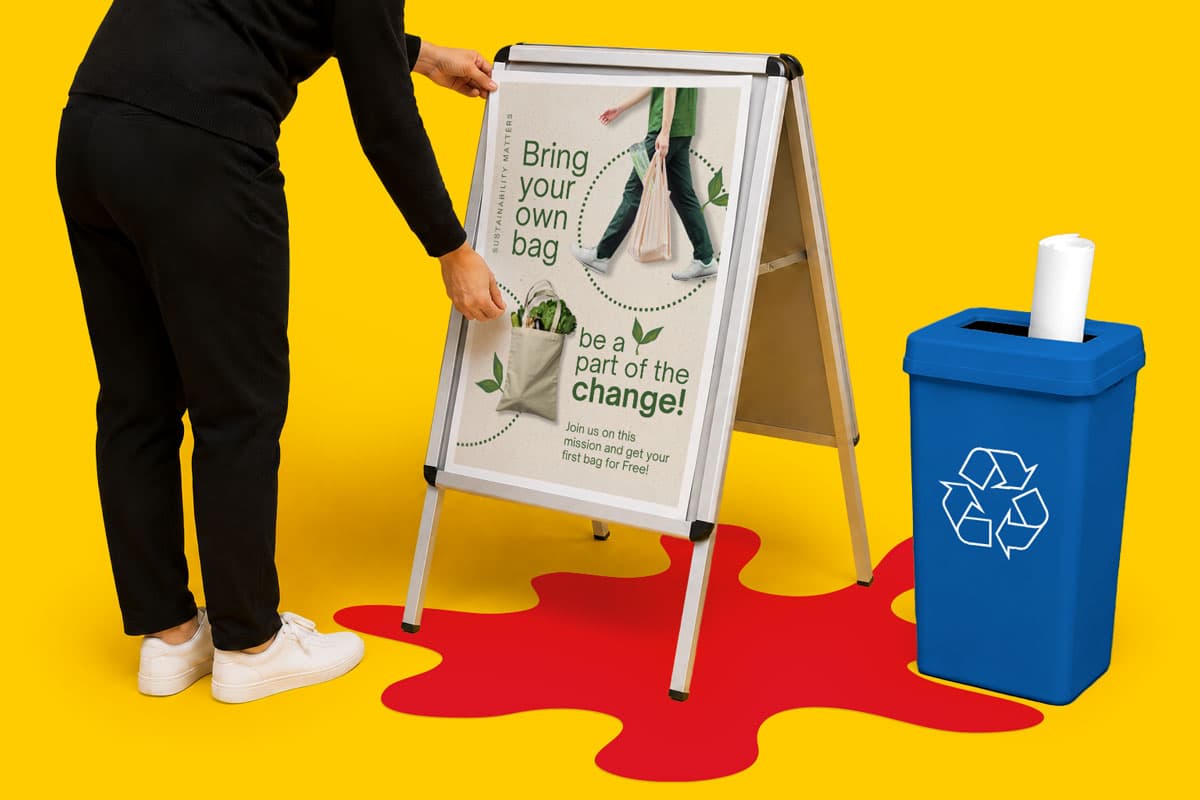
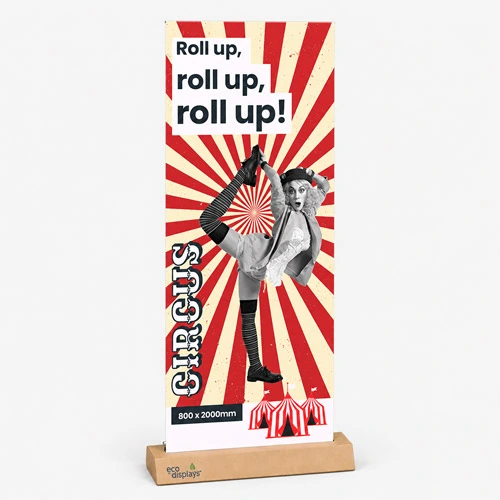
A pavement sign can hold changeable posters. A roller banner cassette may support a replacement graphic where the product specification allows it. Poster frames, sign holders and display stands can remain in use while the message changes.
Reusable hardware can be particularly useful for businesses attending several events or running regular promotions. Instead of producing a complete new display each time, the permanent structure can remain part of the event kit.
The design should allow this from the beginning. Keep permanent branding separate from temporary dates, offers and venue details wherever the product construction allows.
Before ordering, check whether replacement graphics are available and how easily the product can be stored, transported and assembled. A reusable product only delivers value when the business can continue using it.
Choosing the lightest or simplest material is not always the most responsible decision.
A short term poster displayed indoors may not need a rigid board or protective lamination. A menu handled throughout the day may need additional durability to avoid repeated replacement. An outdoor sign needs a material designed for weather exposure rather than a heavier paper that will quickly deteriorate.
Think about the expected lifespan and conditions of use.
A durable specification can reduce repeat production when the item will be used frequently. However, durability that is not needed may introduce additional material and make disposal more complicated.
The aim is to match the product to its environment rather than automatically choosing either the least or most substantial option.
Recycled paper is made using fibre recovered from previous paper products or manufacturing processes.
Using recycled fibre can reduce demand for new fibre and provide a market for recovered materials. However, the percentage and source of recycled content can vary, so the exact product specification matters.
An FSC Recycled label indicates that the wood or paper content has been independently verified as reclaimed or recycled. FSC states that paper products carrying this label contain verified reclaimed material, with requirements governing post consumer and pre consumer sources.
Recycled paper may differ from virgin fibre paper in shade, texture, opacity and colour reproduction. These differences are not necessarily disadvantages, but they need to suit the design and intended use.
A natural recycled stock may work well for stationery, invitations or brand materials where visible texture forms part of the appearance. A highly photographic publication may require a different surface to reproduce its images effectively.
Recycled content and responsible sourcing describe different characteristics.
Paper made from virgin fibre can be sourced through independently certified forestry systems. FSC certification provides a chain of custody system for materials originating from forests and recycled sources. FSC certified printers can supply eligible printed products with authorised FSC claims or labels.
Certification does not mean a printed product has no environmental impact. It provides assurance about the source and traceability of eligible forest based materials.
The correct certification claim must apply to the specific paper, production route and finished order. An FSC logo cannot simply be added to artwork because the customer believes the paper may be certified. Its use must be authorised through the relevant certificate holder and certification process. (
When responsible sourcing matters to a project, confirm the exact stock and certification options before completing the artwork.
(Source: Forest Stewardship Council UK)
There is no single paper that is the most responsible option for every printed product.
The right stock needs to perform properly. A publication that becomes difficult to read, write in or handle may be discarded sooner, even when its material has a positive environmental attribute.
Consider the complete specification:
A lighter paper can reduce material and mailing weight, but it may allow printing to show through. A heavier paper may last longer, but it can increase the weight of a large mailing. An uncoated stock may be easier to write on, while a coated stock may reproduce photographs more effectively.
The WTTB Print Materials Hub can help you compare paper surfaces, weights and characteristics before choosing a product specification.
Lamination, foil and other finishes can change the appearance, texture and durability of print.
They may be useful when they support a specific need. A lamination can protect a frequently handled menu or book cover. Foil can highlight a small detail on an invitation or premium cover. Spot UV can create contrast between selected elements and the surrounding surface.
However, finishes add materials and production stages. Plastic films, adhesives, metallic elements and mixed constructions may affect how a product can be recycled through ordinary collections.
This does not mean all finishes should be avoided. It means they should be chosen for a clear practical or creative reason rather than applied automatically.
For a short lived leaflet, lamination is unlikely to be necessary. For a publication intended to remain in use for years, additional protection may help extend its life.
Check the complete construction and local recycling guidance rather than assuming that any paper based product can enter the ordinary paper stream.
A reusable promotional product can keep a brand visible, but only when the recipient wants and uses it.
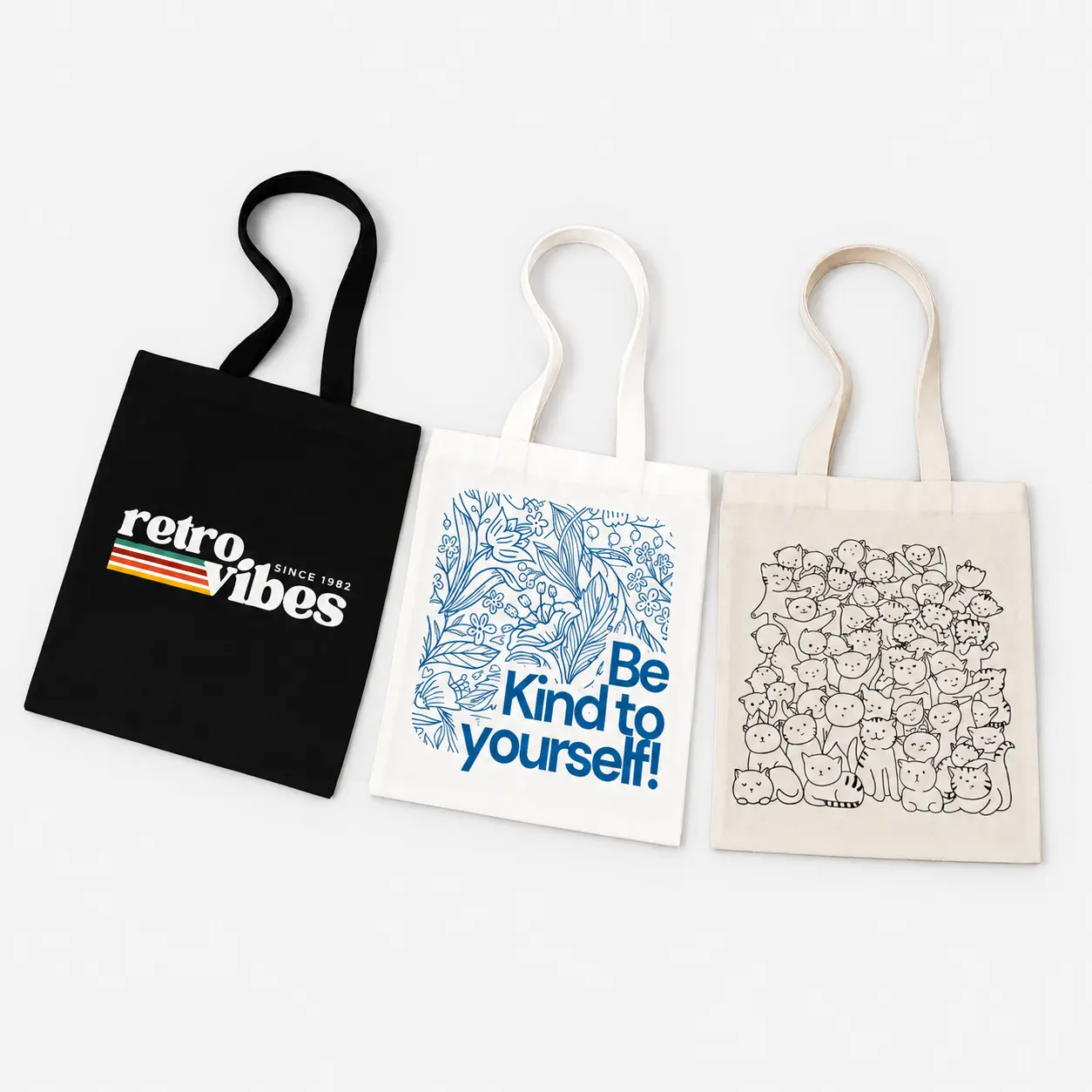
A mug, tote bag, notebook or item of clothing requires more material than a leaflet or card. Ordering large quantities for indiscriminate distribution can create waste when the products do not suit the audience.
Start with a defined use and recipient.
A branded tote bag may be useful for customers collecting purchases at an event. A notebook may suit a conference where attendees will take notes. A travel mug may work for a team that will use it regularly.
Avoid adding merchandise simply because it is available. Choose products connected with the audience and order quantities based on realistic demand.
Where the product is intended for sale, smaller initial quantities or preorders can help test interest before more stock is produced.
Exhibition and retail displays can create significant waste when every campaign begins with a completely new set of products.
Build a core display kit containing the elements that can remain consistent, such as sign holders, banner stands, exhibition furniture and brand panels. Change the printed graphics when the message, product or event changes.
Keep designs adaptable. Avoid placing one event date across a large permanent structure when it could appear on a smaller replaceable panel.
Storage matters too. Display products that are difficult to pack, label or protect may be damaged between events and replaced sooner than expected. Use suitable cases where available and keep an inventory so existing materials are not reordered unnecessarily.
Packaging needs to protect the order, but additional layers should have a reason.
Choose packaging that fits the product and prevents movement or damage. An item that arrives unusable may need to be reprinted and sent again, creating more waste than a suitable level of protection would have used.
Printed inserts should also serve a clear purpose. A care guide, thank you card or product instruction can improve the customer experience. Several promotional cards repeating information already available online may not.
Review packing processes regularly. Customer feedback, damaged order reports and returns can show whether protection needs improving or whether unnecessary materials can be removed.
The end of a product’s life should be considered during specification, not after it has already become waste.
Ask how the item will be collected and whether its materials need to be separated. A paper poster may have a straightforward disposal route, while a laminated board, mixed material banner or display structure may require different handling.
Recycling services vary between locations and between household and commercial collections. Local authorities and commercial waste providers should be used as the source of truth for what they accept.
Businesses also have a duty of care for the waste they produce. Government guidance explains that waste must be managed safely and transferred to authorised organisations using the correct documentation where required.
Do not describe a product as recyclable without understanding the complete material and the collection route available to the customer.
The term biodegradable can be misleading when it is presented without conditions.
Materials break down at different rates and may require particular temperatures, moisture levels or industrial processes. A biodegradable claim does not mean that an item can be littered, placed in a home compost bin or sent to landfill with no environmental impact.
For paper products, prevention, reuse and recycling should normally remain the first considerations where suitable systems exist.
Only make a biodegradability claim when it applies to the complete product, the necessary conditions are explained and reliable evidence supports it.
Environmental language should help customers understand a verifiable characteristic.
Broad claims such as green, planet friendly, environmentally safe and sustainable may imply that the complete product or business has little or no adverse environmental impact. The Competition and Markets Authority warns that general claims are more likely to mislead unless a business can substantiate the impression they create.
A stronger statement identifies exactly what is being claimed.
Avoid | Use |
|---|---|
Printed on sustainable paper. | Printed on paper containing 100 per cent recycled fibre. |
An eco friendly display. | The stand can be retained and fitted with a replacement graphic for a future campaign. |
Fully recyclable packaging. | The cardboard packaging can be placed in paper and card recycling where accepted locally. Remove any non paper components first. |
Claims should be truthful, clear, supported by evidence and based on the complete product where relevant. The responsibility does not disappear because information came from another supplier. Updated CMA guidance published in 2026 reinforces that businesses across a supply chain need to check the claims they communicate.
Keep a simple record of what was produced, distributed, reused and left over.
This can help improve future quantities and show where waste occurs.
Record the product, quantity, campaign, distribution route and remaining stock. For reusable displays, note their location and condition so teams know what is already available.
At the end of the campaign, review whether the complete quantity was needed, whether the format worked and whether any information caused materials to become outdated.
This creates a practical improvement cycle. Decisions become based on evidence from previous campaigns rather than estimates repeated every time.
WTTB offers a wide range of paper, display and promotional products, with specifications suited to different uses and quantities.
Product pages show the available materials, paper weights and finishing options so customers can choose within the requirements of each format. Our Print Materials Hub provides further information about papers and rigid materials, including recycled and specialist options where available.
Flexible quantities can help businesses avoid committing to more stock than a campaign needs. For repeated displays, products with replaceable graphics may allow part of the original structure to remain in use.
WTTB Support Guides can also help customers prepare artwork correctly, reducing the risk of avoidable production problems caused by dimensions, bleed, colour or file setup.
Before approving a printed product, ask:
These questions will not produce one universal answer. They help ensure that each decision has a reason behind it.
No single paper is best for every job. Recycled content is a useful material attribute, but the stock must still suit the design, product and intended use. Responsible sourcing, quantity, durability and disposal also matter.
Not necessarily. FSC certified products may use responsibly sourced virgin fibre, recycled fibre or a combination, depending on the label and product claim. The FSC Recycled label specifically identifies verified reclaimed material.
It depends on the construction and the recycling service. Plastic film and adhesives can affect whether the material is accepted through ordinary paper collections. Check the specification and local or commercial waste guidance.
Not automatically. A heavier paper uses more material and may increase delivery weight. It may be appropriate when additional strength extends the useful life of the product, but unnecessary weight does not create an automatic environmental benefit.
Only when they are genuinely wanted and used.
An unwanted mug or tote bag can become waste despite being reusable. Match merchandise to a defined audience and order realistic quantities.
Print and digital channels serve different purposes.
The more responsible choice is to use each channel where it is useful, avoid duplication without a clear reason and measure the response. A targeted printed piece may be more effective than a large volume of poorly directed materials.
Broad environmental terms can mislead when they are not clearly explained and supported.
Describe the specific attribute instead, such as recycled content, certified sourcing, replaceable parts or the absence of a particular finish. Follow the CMA Green Claims Code when communicating environmental benefits.
More responsible printing begins with better decisions before production starts.
Order what you’re likely to use, choose a format that fits the message and avoid materials or finishes that don’t serve a clear purpose. Where possible, keep display hardware in use, replace only the printed elements and plan how each product will be handled at the end of its life.
The WTTB Print Materials Hub brings together the papers, boards and materials available across our range, helping you compare surfaces, weights, recycled options and product suitability before you order.
Use it to make a choice based on how the print needs to look, feel, perform and be disposed of, rather than relying on broad environmental labels. The result is print that works harder, lasts as long as it needs to and uses materials with a clear purpose.
Posted on June 30, 2026 by Emma Thompson
Related topics:

£88.65
£15.75
£25.58
£17.07