Prices
Wall Calendars have been around for a long time. And with a calendar already sitting inside just about every phone, laptop and tablet, it’d be easy to assume their job is done. But that misses much of what makes a printed calendar interesting.
A wall calendar isn’t just somewhere to check the date. It’s 12 months of visibility and a format that can become artwork, merchandise, marketing, a gift, a fundraiser or something created for a very specific audience.
For designers, creators and print businesses, that leaves plenty of room to do something different. And when you’re helping a customer shape the idea, that opportunity goes a little further.
A customer might come to you asking for a calendar, but they might not have thought much beyond putting their logo and a few photographs on it. That’s where your experience can add value.
You can help them think about who the calendar is for, what would make somebody keep it on the wall and how each month could be used to tell a story, showcase something different or give the recipient something useful.
Sometimes the strongest print ideas start with showing a customer what they could be doing, rather than waiting for them to ask for it.
Digital calendars haven’t stopped physical ones from being useful. Research from the Advertising Specialty Institute found that 76% of consumers would refer to a promotional calendar at least once a week, with 68% saying usefulness would be a reason to keep one. Half said they’d keep one because it was attractive.
There’s a wider opportunity for branded print too. In ASI’s 2026 UK research, 78% of consumers said they viewed promotional products more positively than other forms of advertising. That combination of usefulness and visibility is what makes a calendar particularly interesting. Once it’s on the wall, it has the potential to stay there for an entire year.
So what could you put on it?
If you’ve already got a library of photography, you could already have most of a calendar sitting on your hard drive.
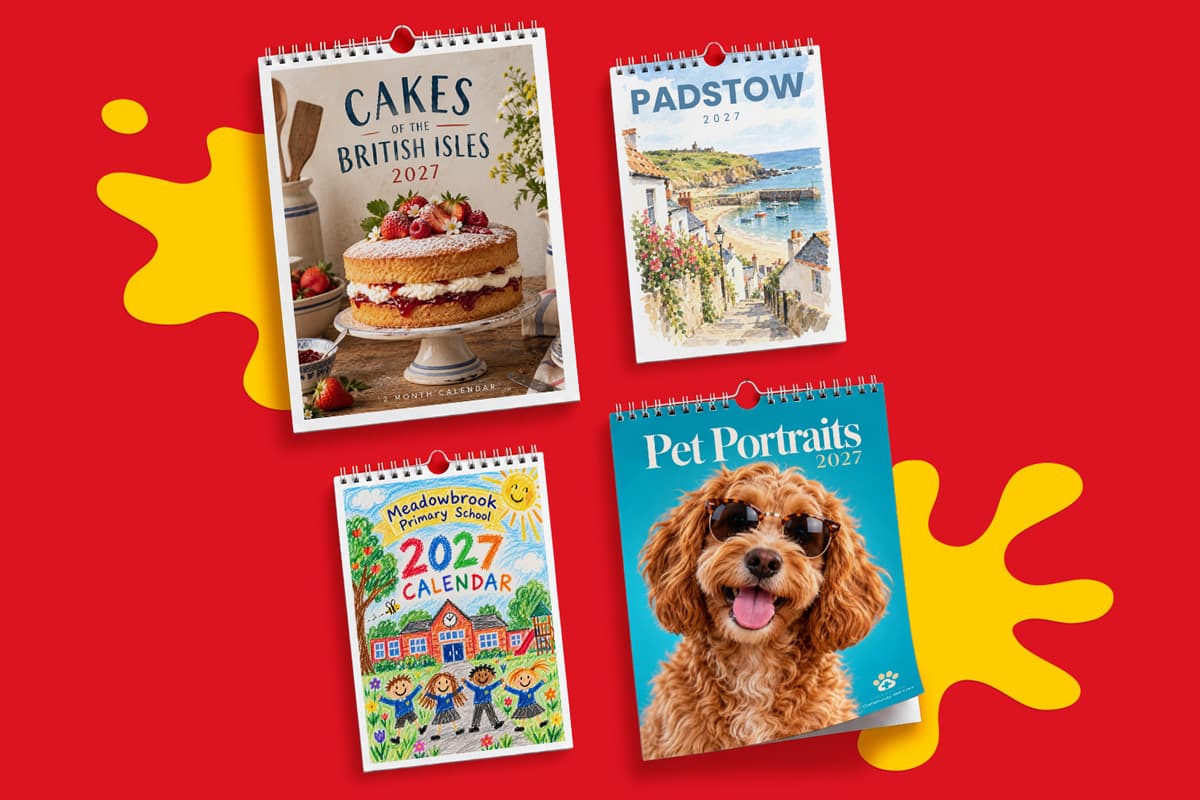
Landscapes, wildlife, architecture, cars, food, travel and street photography can all become themed collections, with a different image taking centre stage each month.
For professional photographers, it’s another way to sell existing work. It can also be an easy conversation starter with photographers, visitor attractions and businesses that already have strong image libraries.
And it doesn’t need to appeal to everyone. A calendar celebrating the beaches of Northumberland or classic British cars might have a much smaller audience than a generic photography calendar, but the people it does appeal to have a reason to choose it.
They might already own all the content they need. You can help them recognise that those images could become another product rather than simply sitting in an archive.
Twelve months gives an illustrator twelve opportunities to create. That could mean a collection built around seasons, animals, plants, architecture, food, fashion or almost any visual theme.
An existing set of illustrations could be repurposed into a calendar, or an entirely new collection could be created around the format. For artists and designers selling online, at markets or through independent retailers, it can also become another piece of annual merchandise.
You don’t always need to think big. Local photography, landmarks, landscapes, illustrations and historic scenes can give a calendar a very specific audience.
Think villages, towns, coastlines, national parks, local architecture or even changes in an area throughout the seasons.
That opens up potential opportunities for photographers, tourism businesses, visitor attractions, independent retailers and local organisations. Sometimes being more niche is exactly the point.
This is another area where knowing your customers can make a difference. You might already know which customers have strong local connections, good photography, loyal audiences or retail space where something like this could work.
Rather than simply waiting for a calendar enquiry, it gives you a reason to approach those customers with an idea that already fits their business.
Gardening. Fishing. Cycling. Crafting. Cars. Running. Baking. Football. Trains. If there’s a community around something, there’s potentially a calendar idea hiding inside it.
A gardening calendar could combine imagery with seasonal jobs. A running club could feature photographs from events throughout the previous year. A craft business could create twelve projects or patterns.
Rather than asking what everybody would want on a calendar, ask what a particular group would want. That question can lead somewhere much more interesting.
That’s where a more focused audience can work in your favour. If you know a client sells into a particular industry, serves a specialist audience or has an active community around their brand, you can help turn that knowledge into a much more focused calendar idea.
The narrower the audience, the easier it can sometimes be to create something that feels made specifically for them.
There’s a reason animals regularly end up on calendars. But you don’t have to stop at twelve nice photographs.
A veterinary practice could feature its patients. A rescue centre could tell the stories of animals it’s helped. A pet business could run a customer photography competition. A breed specific community could create something specifically for its members.
The subject might be familiar, but there are plenty of ways to make the idea your own.
January soup. April baking. July barbecue. December Christmas dinner. Food naturally changes with the seasons, which makes it well suited to the monthly format.
Restaurants, cafés, bakeries, farm shops, food producers and creators could each use a calendar to share recipes, photography or serving ideas throughout the year. And unlike a single promotional leaflet, it gives the recipient something new to discover every month.
A calendar can give charities, clubs and community groups something tangible to sell. A charity could feature photographs and stories connected with its work. A sports club could celebrate teams, players or moments from the previous season.
It doesn't just have to raise money either. It can celebrate the people and stories behind an organisation at the same time.
Ask twelve children to draw a picture and you've already got the beginnings of a calendar. Schools, nurseries, clubs and community groups could turn artwork into something parents, grandparents and supporters can buy and keep.
Themes could follow the seasons, school events or a single creative brief. It turns the finished calendar into something much more personal than an off the shelf alternative.
A calendar doesn't necessarily have to look like promotional merchandise. For an illustrator, photographer, architect, interior designer or creative studio, it could become a compact printed portfolio.
Each month provides another opportunity to showcase a project or piece of work, while contact information and branding can sit quietly alongside it.
Rather than handing somebody something they'll glance at once, you're creating something designed to stay visible.
Calendars can also work as customer gifts. A tradesperson could include seasonal home maintenance tips. A garden centre could offer monthly planting advice. An accountant could highlight useful financial dates. A gym could include monthly challenges.
The strongest ideas don't necessarily put the business at the centre of every page. They give the customer a reason to keep looking.
That's particularly relevant when usefulness is one of the biggest reasons people keep promotional products in the first place.
A little guidance can also turn a basic branded calendar into something far more useful. Instead of simply asking what logo and imagery the customer wants to include, you can ask what knowledge they could share throughout the year.
That shift can help turn the calendar from a promotional item into something people have a genuine reason to keep.
For creators, artists, clubs, venues, online sellers and communities, a calendar can simply be merchandise. And because the year changes, so can the product. New photographs. New artwork. New themes. New editions.
That naturally creates the opportunity to bring the idea back with something different the following year.
Why limit a calendar to twelve unrelated images? A business could feature twelve products. A restaurant could showcase twelve dishes. A travel company could explore twelve destinations. An estate agent could highlight twelve areas. A creative studio could feature twelve projects.
The monthly structure gives you a ready made creative framework. You've just got to decide what story those twelve months are going to tell.
Whatever the idea, there's one useful question to ask:
What does somebody get when they turn to the next month?
The date might make the calendar useful, but it's everything around the date that can make somebody want to keep it. That’s where a familiar format can become something much more interesting.
Once you start thinking about what could sit alongside the dates, a wall calendar becomes a much more flexible piece of print.
You’ve got a whole year to develop an idea, whether that means building a collection, telling a story, sharing something useful or giving customers something new to discover each month.
For designers, that’s plenty of space to build a strong creative concept. And if you’re taking the idea to a customer, it gives you something more interesting to talk about than simply asking whether they need calendars.
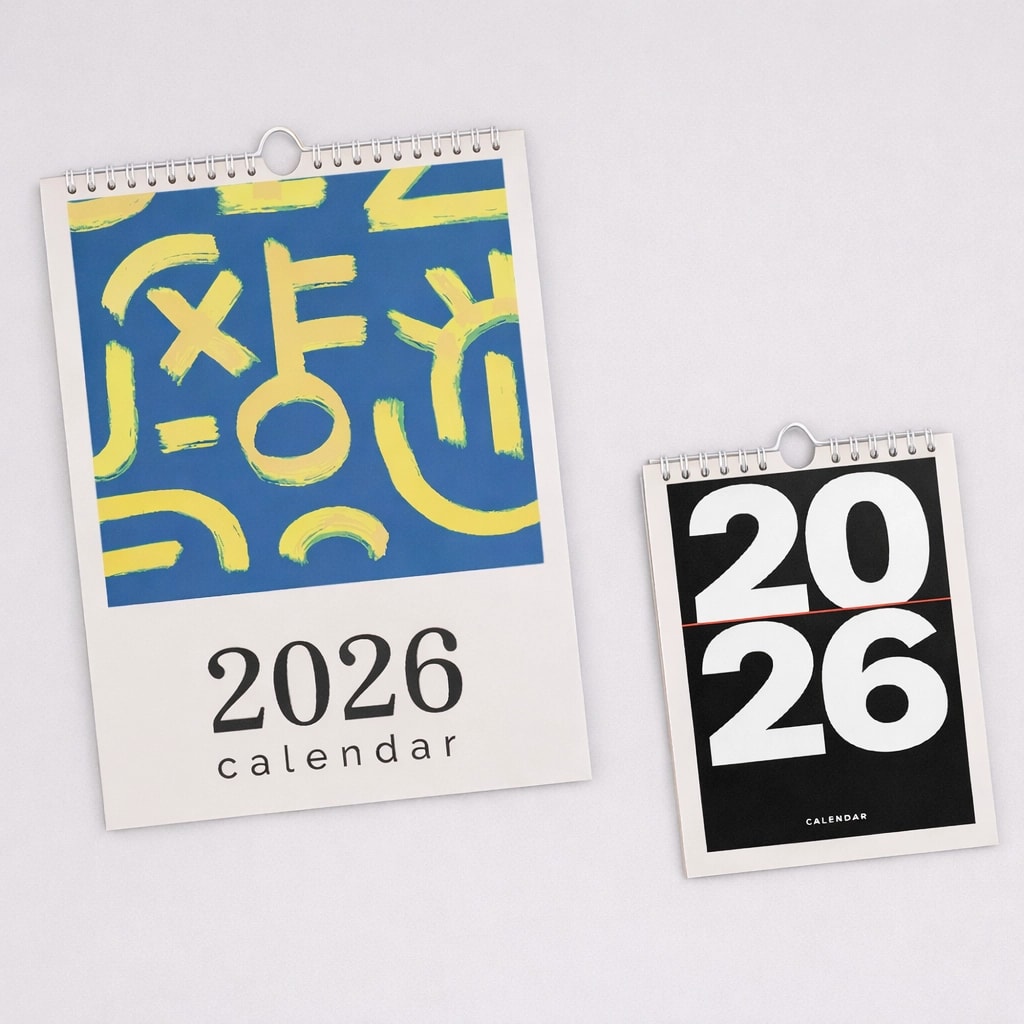
Our Personalised Wall Calendars give you the freedom to shape that idea around the audience, with room for photography, illustration, branding, useful content or something completely different.
The same format could become a photographer’s next product, a restaurant’s collection of recipes or a charity’s annual fundraiser. The value comes from recognising what will make it relevant to the customer and the people they want to reach.
That’s the real opportunity.
You’re not just selling somewhere to check the date. You’re giving someone 12 months of space to do something with.
Posted on September 30, 2026 by Emma Thompson
Related topics: