Prices
Planning a wedding means thinking about hundreds of details, but print is one of the easiest things to leave too late.
Your wedding stationery does more than share information. It sets the tone for the day, helps guests know where they need to be and brings your chosen colours, theme and style into every part of the celebration. From the first save the date to the final thank you card, each printed piece has a job to do.
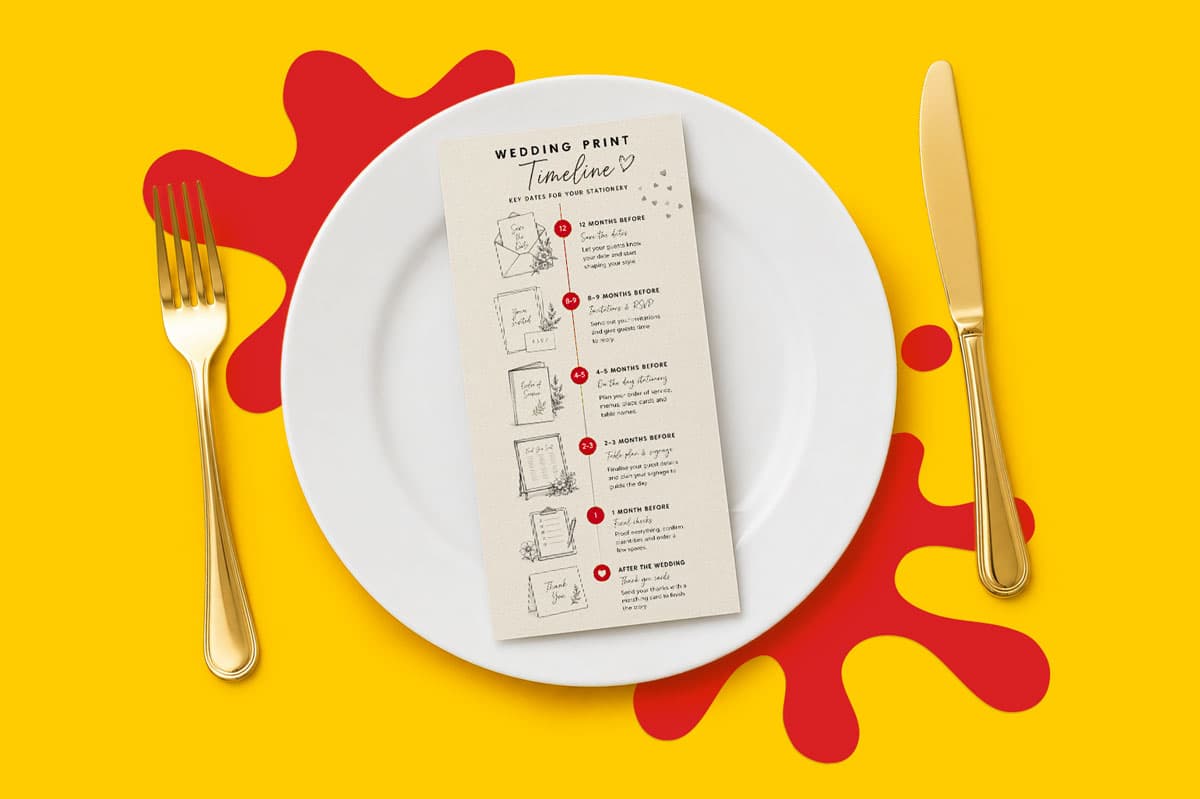
The good news is that wedding print becomes much easier when you know what you need and when you need it. This wedding print timeline walks through the main stages, so you can plan your stationery, prepare your artwork and leave enough time for checking, printing and delivery.
Timing | What to plan | Why it matters |
|---|---|---|
12 months before | Save the dates and stationery style | Guests get early notice and you can start shaping the look of your wedding print. |
8 to 9 months before | Invitations, RSVP cards and envelopes | This gives guests time to reply and gives you time to confirm numbers. |
4 to 5 months before | Order of service, menus, place cards and table names | You can start planning the print guests will use on the day. |
2 to 3 months before | Table plan, signage and final guest details | This is where the day starts to feel organised and easy for guests to follow. |
1 month before | Final checks, quantities and spare copies | Final proofing helps avoid errors with names, dates, timings and layouts. |
After the wedding | Thank you cards | A matching card gives you a simple way to finish the story after the day. |
Once you’ve confirmed your date and venue, it’s a good time to think about the first piece of wedding print your guests will see.
Save the Date Cards are especially useful if guests need to book time off, travel, arrange childcare or plan accommodation. They don’t need to include every detail of the day. The main job is to share the date, location and names clearly, so guests can keep the day free.
This is also the point where you can start shaping the style of your wedding stationery. Think about your colours, fonts, paper feel and overall design direction. You might want something clean and minimal, soft and romantic, bold and colourful, rustic and textured or polished and premium.
Even if the final invitation design comes later, deciding on a visual direction early helps each printed item feel connected.
You don’t need to have every piece of wedding stationery designed straight away, but it helps to decide on a clear visual style early. Colours, fonts, illustrations, patterns and paper choices can all shape how your wedding print feels, from the first save the date to the final thank you card.
If you’re creating your own artwork, Canva can be a useful place to start. It has thousands of designs that can be edited with your own wording, colours and images, giving you a simple way to explore different styles before you commit to a finished look.
To make setup easier, WTTB also has Canva Templates for popular print products. These are already sized for our wedding products, so you can start designing without having to set up the document size from scratch. Once your design is ready, you can export your artwork as a PDF Print file and upload it when you order.
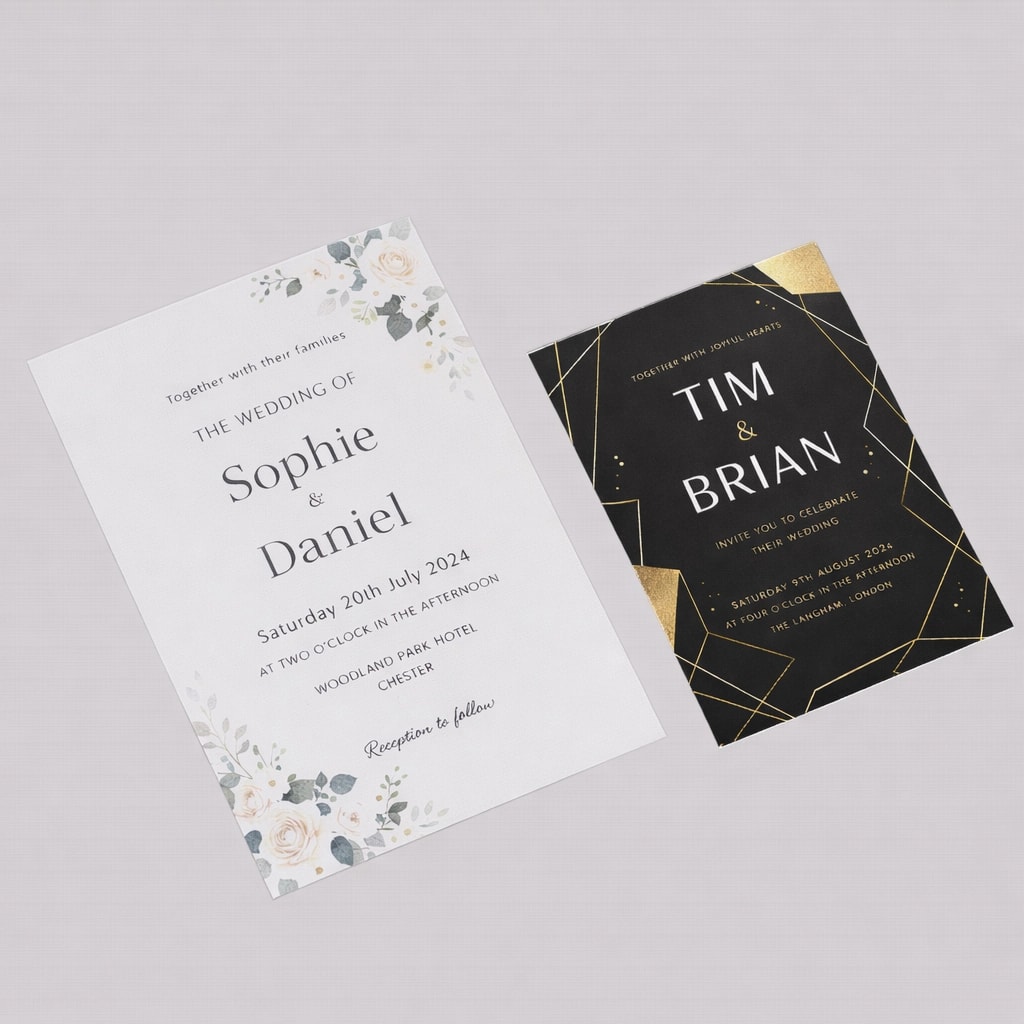
Your Wedding Invitation Printing is where the detail starts to come together.
By this stage, you’ll usually have the core information ready, including the ceremony location, reception location, timings, RSVP date and any extra guest information. Depending on your plans, your invitations might also need to mention accommodation, dress code, menu choices, transport or whether children are invited.
When you’re planning invitations, think about more than the design. The paper, finish and format all affect how the final piece feels in the hand. Silk paper can give you a clean printed finish, uncoated paper can feel softer and more natural, pearl stocks can add shimmer and textured papers can work well for more tactile designs.
If you’re not sure which paper is right for your design, the Print Materials Hub is a useful place to compare your options. It breaks down different paper stocks and materials, so you can see how silk, gloss, uncoated, recycled and premium papers may affect the look and feel of your wedding print. This is especially helpful if you’re choosing between a crisp printed finish, a softer tactile feel, a recycled look or a more premium paper for invitations and on the day stationery.
Finishes can also help certain details stand out. Matt lamination can soften the look, gloss lamination can add shine and protection, and soft touch lamination can create a smoother, more luxurious feel. For extra detail, Scodix spot UV can add a raised gloss effect to selected parts of the design, while gold or silver foil can highlight names, borders, initials or small decorative elements.
If you’re posting invitations, think about envelopes at the same time. Ordering them together can help keep the process simple and make sure the size works with your printed invitation.
Your Wedding RSVP Cards should be easy for guests to complete and easy for you to track.
Keep the wording clear and make the reply deadline obvious. You might need guests to confirm whether they’re attending, choose a menu option, share dietary requirements or give song requests for the evening. Try not to overload the card, but make sure it captures the details you’ll need later.
If you’re using a wedding website or digital reply form, you can still include a small RSVP card or insert to direct guests to the right place. The printed piece becomes a simple prompt that keeps everything clear.
Once the invitations are sorted, start thinking about the stationery guests will see during the ceremony and reception.
An Order of Service can guide guests through the ceremony, readings, hymns, music, names of the wedding party and any meaningful notes you want to include. It’s practical, but it can also become a keepsake.
For the reception, Wedding Menu Cards help guests know what’s being served and can make each table setting feel more complete. If you’re having a set menu, individual menu cards work well. If you’re having food stations or a more relaxed meal, you might use printed signage instead.
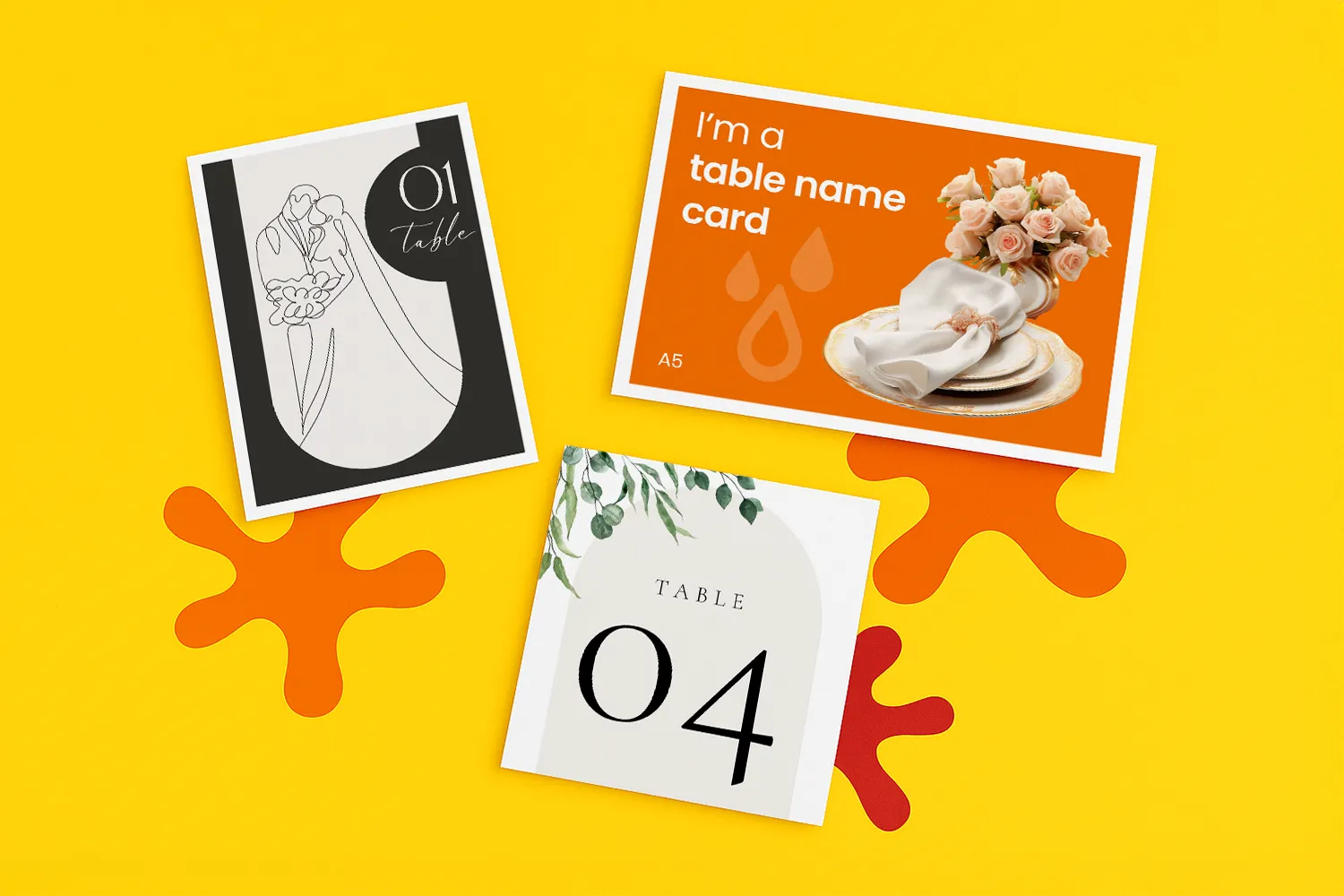
This is also a good time to start planning Wedding Place Cards and Wedding Table Name Cards. Even if guest names aren’t final yet, you can decide the size, format and design style so the artwork is ready once the seating plan is confirmed.
Your Wedding Table Plan is one of the most practical pieces of print on the day. It helps guests find their seat quickly, keeps the reception moving and reduces confusion when people arrive.
Before ordering your table plan, check every guest name carefully. Names are one of the easiest details to miss because you’ve seen them so many times during planning. It’s worth checking spelling, plus ones, family names and any last changes before the file is sent to print.
At this point, it’s also useful to think about any other signs or printed items that help guests move through the venue. You might need signs for the ceremony, reception, bar, guest book, cards and gifts table, photo area, sweet table, order of the day or evening food.
The best wedding print isn’t just decorative. It helps people understand what’s happening and where they need to be, while still fitting the look of the day.
The final month is the time for checking, not major redesigning.
Before ordering your final wedding print, check names, dates, times, venue names, postcodes, table numbers, menu options and any printed instructions. Ask someone else to read everything too. A fresh pair of eyes can spot mistakes you’ve stopped noticing.
It’s also worth ordering a few spare copies where possible. Extra invitations, place cards, menus or orders of service can be useful if guest numbers change, something gets damaged or you want to keep clean copies after the day.
For table plans and personalised items, try not to order too early unless your guest list is fully confirmed. These are the pieces most likely to be affected by late replies or seating changes.
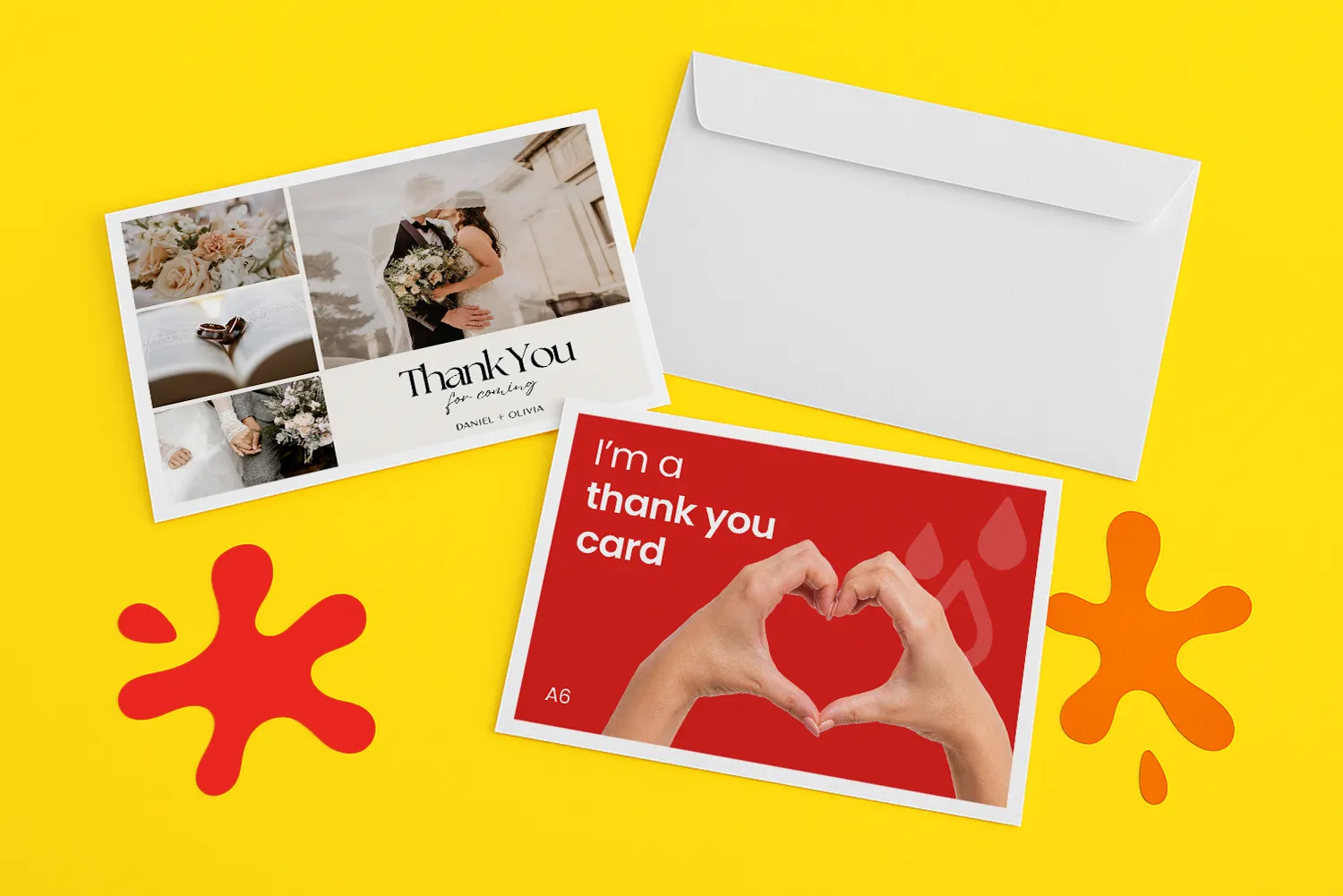
Once the wedding is over, Wedding Thank You Cards are a simple way to close the loop with guests.
You can match them to the rest of your stationery or use a photo from the day. Either way, try to make the message feel personal. A printed card gives you space to thank guests for attending, mention a gift or share a final note from the celebration.
It’s a small piece of print, but it leaves a lasting final impression.
Before you order your wedding print, make sure you’ve checked:
These checks can make the difference between print that simply looks good and print that works properly on the day.
Wedding print works best when it feels connected. Your save the dates, invitations, RSVP cards, order of service booklets, menus, place cards, table plan and thank you cards don’t all need to look identical, but they should feel like part of the same celebration.
That might mean using the same colour palette, the same typeface, the same illustration style or the same paper finish. Small details can make the whole day feel more polished and easier for guests to follow.
Explore Wedding Printing to compare the full range, from invitations and RSVP cards to table plans, menus, place cards and thank you cards. With the right timeline in place, every printed detail can be planned, checked and ready for the day.
Posted on May 6, 2026 by Emma Thompson
Related topics:
£23.52
£16.62
£19.01
£15.57
£60.27