Prices
Selling print can be difficult when customers cannot picture the finished product. A description of a banner, brochure or display board might explain the specification, but it does not always show how that product could work within a real campaign. Customers often need to see print in context before they understand its value.
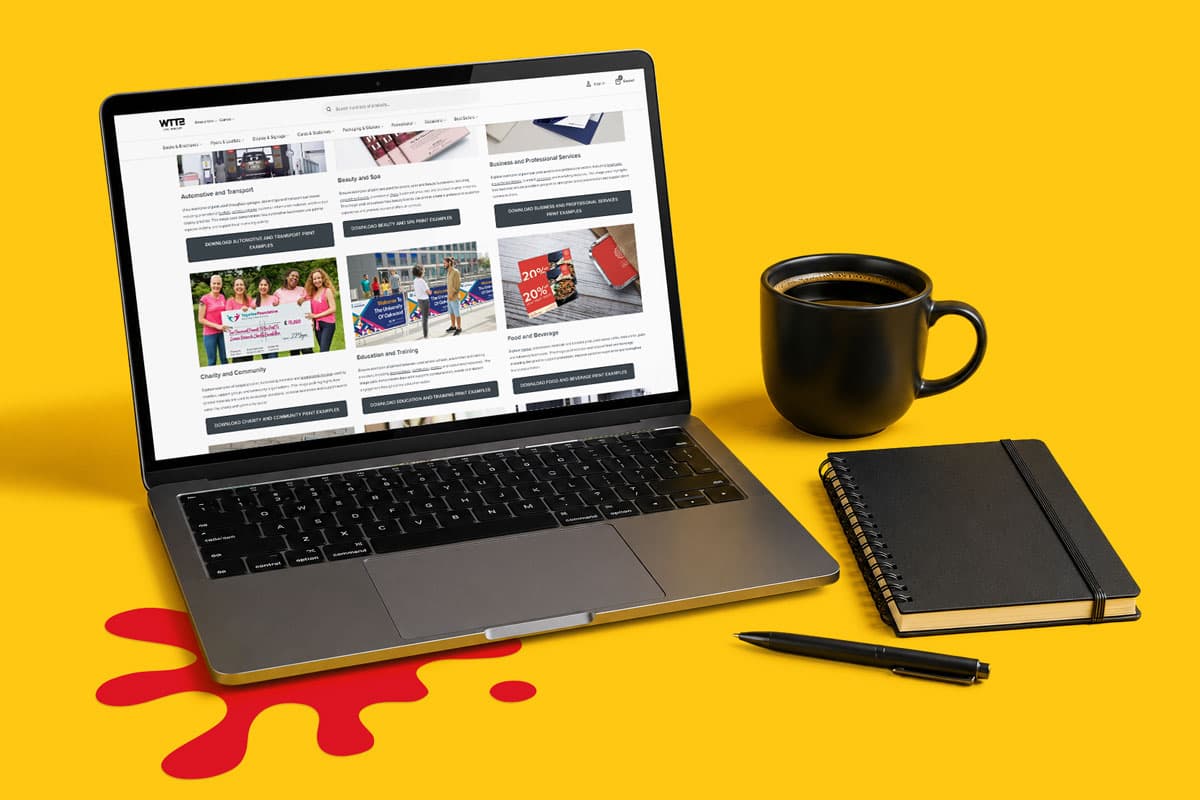
That is why we created the WTTB Image Library. Our free library gives print resellers access to professional images showing a wide range of printed products in realistic settings. The images can be used across your website, social media, email marketing, customer presentations and other promotional materials, helping you show customers what is possible rather than simply telling them what you can supply.
The WTTB Image Library is a free collection of downloadable images created to help resellers promote print more effectively. It includes products used across sectors such as retail, hospitality, education, property, construction and events, making it easier to find imagery that reflects the customers and industries you want to target.
You will find examples of banners, boards, signs, books, brochures, menus, flyers and other printed marketing materials shown within realistic environments. This helps customers understand each product’s size, purpose and potential impact.
Print is a visual product, but many customers only see it as a list of sizes, materials and finishing options. Showing a product in use changes the conversation. A pavement sign outside a café feels more relevant than an isolated product image, while a coordinated collection of event signage shows how several formats can work together.
Real world images give customers context. They show where a product might be placed, how it could support a campaign and which other printed materials could complement it. This can make it easier to move the conversation away from price alone and towards purpose, quality and overall value.
Product pages need to explain what you offer, but specifications are not always enough to inspire a purchase. Adding relevant lifestyle imagery can help customers understand how the finished product could look and where it might be used.
An outdoor banner page could show a banner attached to a fence at an event, while a menu printing page could show menus being used in a restaurant. These images help customers connect the product with a practical use and can also be used across category pages, campaign landing pages and supporting guides to create a more visual buying journey.
Producing fresh imagery for every social media post or email campaign can take time. The Image Library provides a bank of ready made visuals that can support product promotions, seasonal campaigns and industry focused content.
Hospitality imagery could be used to promote menus, table talkers and pavement signs, while retail imagery could support campaigns around window graphics, posters, loyalty cards and point of sale displays. The images can also be adapted with your own branding, messaging, offers and calls to action, helping you create more relevant campaigns without organising a separate photoshoot.
Customers do not always know which print products they need. They might approach you with one request, such as a banner or leaflet, without considering the other materials that could support the same campaign.
Relevant imagery can make these conversations more productive. When discussing a retail promotion, for example, you could show a customer an image featuring posters, window graphics, display boards and leaflets. This helps them see how the products could work together and opens the door to a wider discussion.
The images can also be used within digital presentations, printed lookbooks, proposals and sales documents. This is particularly useful when approaching a new sector because it allows you to present visual examples that reflect the customer’s working environment.
Many print orders begin with one product, but that initial enquiry can create an opportunity to explore the wider campaign. A restaurant ordering menus might also need pavement signs, window graphics, table talkers, loyalty cards or promotional leaflets. A retailer ordering posters could benefit from hanging signs, floor graphics or display boards, while an event organiser requesting a banner might also need flags, directional signage, programmes or promotional handouts.
Showing these products together can help customers understand how each element contributes to the same goal. The purpose is not to add products simply to increase the order, but to understand what the customer is trying to achieve and recommend print that supports it.
Generic marketing can make it difficult for potential customers to recognise how your services relate to their business. Industry focused imagery allows you to create more specific campaigns without changing the products you offer.
You could build a hospitality page using restaurant and café imagery, or create a campaign for schools and colleges featuring banners, books, displays and event materials. You can then adapt the messaging around the priorities of each sector, whether that is increasing visibility, improving customer experience or communicating important information.
Producing original photography requires planning, printed samples, suitable locations and editing. That level of investment may not be practical every time you want to promote a new product or target a different audience.
The Image Library gives you access to professional visuals without organising a separate shoot. This allows you to respond more quickly to opportunities, support seasonal campaigns and refresh older content. One image could be used across a website page, email campaign, social media post and customer presentation, helping you get more value from every download.
The images are designed to give resellers a flexible starting point. Add your own branding, messaging and contact details so the finished content reflects your business.
You could include a headline explaining the product benefit, highlight a relevant offer or direct customers towards a page on your website. Keep the design clear and make sure the product remains easy to see, allowing the image to support your message rather than compete with it.
Strong product imagery helps customers move from a vague idea to a clearer understanding of what print can achieve. It can strengthen your website, improve your campaigns and make customer conversations more visual, while also helping you introduce additional products in a useful and relevant way.
Our free Image Library gives print resellers practical content they can use across their marketing and sales activity. Explore the WTTB Image Library, choose the sectors and products that suit your audience and start turning print inspiration into new opportunities.
Posted on November 10, 2025 by Ben Riches
Related topics: