Prices
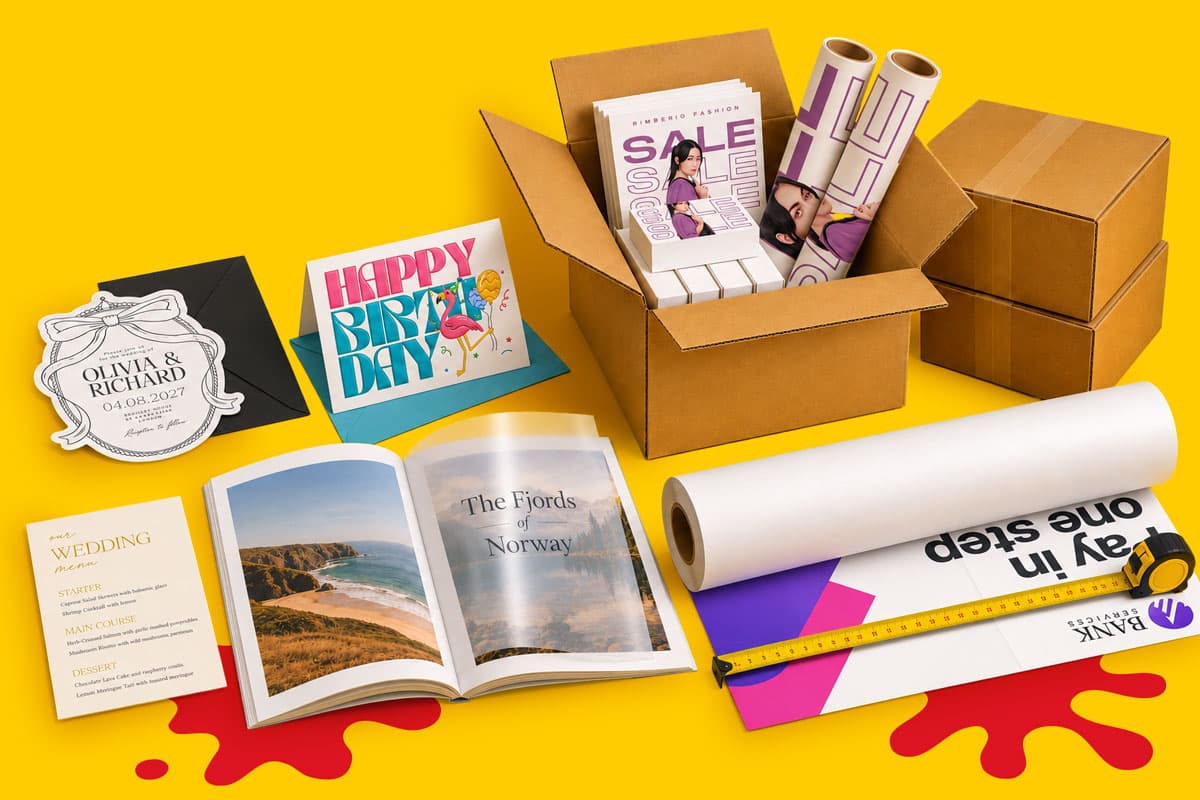
Ever had a print idea that doesn't quite fit the usual options available? Maybe a customer wants a luxury invitationwith an unusual finish, a brochure in a very specific size or branded packaging that needs to look and feel a certain way.
You know what you are trying to achieve, but finding the right combination of materials and finishes isn't always straightforward.
That's where bespoke printing comes in.
From specialist papers and embossing to custom shapes, packaging and tailored fulfilment, bespoke printing opens up possibilities beyond standard online specifications.
So, when is bespoke printing the right choice, what can you actually create and how do you turn an idea into a finished product? Let's explore.
Bespoke printing is a custom printing service designed around the specific requirements of a project, rather than a fixed selection of standard sizes, stocks and finishes.
Most everyday print jobs can be ordered online. Choose your product, select the available specifications, upload your artwork and you're ready to go.
But what if the options don't quite match your brief?
Maybe you need an unusually shaped invitation, a premium stock that isn't listed online or several different products assembled into one campaign pack. That's when a bespoke solution becomes worth exploring.
The difference isn't necessarily how elaborate the final product looks. It's whether your project needs something outside the usual production or fulfilment options.
And that makes bespoke printing relevant to more than luxury stationery. Designers, print resellers, small businesses, retailers and event organisers can all benefit from a custom approach when the project calls for it.
Bespoke printing isn't automatically better than standard printing. It's about choosing the most suitable route for the job.
Choose standard printing when... | Explore bespoke printing when... |
|---|---|
The available sizes suit your design | You need unusual sizes or precise custom dimensions |
A standard stock and finish work well | Your project requires specialist papers or finishing |
You need a familiar product with conventional construction | You want a custom shape, assembly or unusual combination of processes |
Normal delivery arrangements meet your needs | Products need bundling, specialist packing or a tailored distribution plan |
You can configure everything online | Your brief needs a production review or personalised quotation |
For example, if you need 1,000 A5 flyers on a standard stock, the online ordering process is likely to be the simplest option.
But if those flyers need to be combined with posters and business cards, packed into individual campaign kits and distributed to several locations, the project may benefit from bespoke fulfilment.
Sometimes the print itself is standard. It's what happens around it that needs a custom solution.
There is no single definition of a bespoke print project. You might only need to change one specification, or you could be combining several specialist techniques to achieve something more unusual.
Standard paper sizes work well for most projects, but not every design fits neatly into A4, A5 or another familiar format.
A business might need a brochure with unusual proportions, a promotional insert sized to fit a particular box or a display graphic produced to specific dimensions.
Custom shapes can offer similar flexibility. An invitation could follow a decorative outline, while a promotional piece might need a shaped edge or cutout.
The important thing is choosing dimensions that serve a purpose.
A custom packaging insert, for example, might be designed around the product it accompanies. A shaped invitation might instead use its outline to complement the design.
Both are reasons to explore bespoke printing, although the most suitable production method will depend on the size, material and quantity required.
Sometimes it isn't the size that makes a printed product different; it is the way the material looks and feels.
Specialist stocks can introduce texture, transparency, colour or other characteristics that aren't available through standard online specifications.
Depending on the project, WTTB can explore materials such as cotton and linen papers, translucent vellum and specialist options including seed paper.
Imagine a premium invitation printed on a heavily textured stock, or a brochure featuring a translucent page that reveals part of the design underneath.
These choices can change how someone experiences the finished print, but they also introduce practical considerations.
A heavily textured paper might complement bold typography and simple artwork, for example, while being less suitable for reproducing certain fine details or intricate imagery.
It is worth asking what you want the material to achieve, rather than choosing something unusual purely because it's available.
Our Print Materials Hub is a useful starting point for understanding how different stocks and substrates affect printed products.
Specialist finishes can introduce texture, metallic detail or unusual shapes, but each technique creates a different result.
Before choosing one, think about what you want people to notice or feel when they pick up your print.
Desired result | Finish to explore | What to consider |
|---|---|---|
A raised logo or textured detail | Embossing | Stock suitability, thickness and level of detail |
A recessed impression | Debossing | Impression depth, stock and artwork |
Metallic lettering or decorative accents | Hot foil stamping | Foil choice, fine detail and tooling |
An unusual outline or cutout | Die cutting | Shape complexity, cutting paths and structural strength |
A premium tactile feel without decorative effects | Specialist textured stock | How the material handles ink, images and fine text |
Multiple components assembled together | Advanced finishing | Assembly sequence, positioning and construction |
The best choice depends on your design, material and intended use. Here's how the different techniques compare in practice.
Embossing and debossing both add physical texture to printed materials, but they work in opposite directions.
Embossing raises selected areas above the surrounding surface. It's useful for logos, lettering and decorative elements where you want a tactile detail that stands out.
Debossing presses selected areas into the material, leaving a recessed impression.
Consider a premium invitation featuring a simple monogram. Embossing could give the initials a raised presence, while debossing might create a subtler, pressed effect.
Neither is inherently more premium. It's about the result you want to achieve.
The stock matters too. Paper thickness, texture and the complexity of the artwork can all affect how well an impression is reproduced.
If you're unsure which technique would work best, include an example of the effect you're trying to create in your bespoke enquiry. A photograph can often communicate the intended result more clearly than a technical description.
Hot foil stamping transfers a specialist foil onto selected areas of a printed surface, creating metallic or other decorative effects.
It is particularly effective when you want certain details to catch the light, such as a logo, heading, border or small design element.
Think premium stationery, presentation folders, packaging sleeves and special edition publications.
Gold and silver are familiar choices, but additional foil colours and effects may be available depending on the project.
One thing worth remembering is that more foil doesn't necessarily mean a better result.
A small, carefully positioned detail can make a stronger impression than covering large areas of the design.
It's also important to consider the artwork. Extremely fine elements, intricate shapes and certain stock combinations may need adjustments to achieve a suitable result.
Die cutting uses a specially prepared cutting tool to create shapes, openings and outlines that go beyond conventional straight edges.
It can be used for shaped invitations, packaging components, promotional cards, presentation materials and decorative cutouts.
For example, a promotional invitation might have an unusual outer shape, while a packaging sleeve could require precisely positioned tabs or openings to fit around a product.
But designing a custom shape involves more than drawing an outline.
The position of folds, narrow sections, material strength and cutting tolerances can all affect how practical the finished piece will be.
That's why it's useful to discuss unusual shapes with the production team before finalising your artwork. A small adjustment at the planning stage can make a significant difference to the finished product.
Not every bespoke finishing requirement is decorative.
Some projects involve additional components that need to be inserted, attached or assembled in a particular way.
Processes such as collation, insertion and tipping in can support more complex publications and printed materials.
For instance, a premium book might require a separate printed insert or additional sheet positioned within the publication.
These details may be less immediately noticeable than metallic foil or embossing, but they can be essential to how the finished product works.
Bespoke printing isn't limited to producing unusual products. It can also solve problems involving packing, distribution and managing several printed items together.
This is particularly useful when a campaign involves multiple products or delivery locations.
Imagine you're organising a promotional campaign for 20 retail locations.
Each store needs the same printed materials:
Ordering each product individually is straightforward enough. But what happens when you need the correct quantities grouped together and sent to 20 separate locations?
A bespoke fulfilment request could cover the production, assembly and distribution requirements as one coordinated project.
Rather than receiving large quantities of each product at a central address and separating them yourself, you could request individual packs containing the agreed materials for each location.
The exact packing arrangements, quantities and delivery instructions would be established as part of the quotation.
This type of approach can be useful for retail launches, franchise networks, events, hospitality groups and organisations managing campaigns across multiple sites.
And it highlights an important point: a bespoke project doesn't always need bespoke products. Sometimes it's the packing and delivery that need to be different.
Yes. WTTB can assess bespoke enquiries involving split deliveries and shipment to multiple addresses.
That might mean sending promotional materials directly to stores, delivering event print to different venues or distributing completed campaign kits to several recipients.
International shipping requirements can also be raised as part of a bespoke enquiry, although availability, costs, customs arrangements and delivery times need to be confirmed for the destination.
If your project involves multiple delivery locations, include the destination details, required quantities and any deadlines when requesting your quote.
It's much easier to plan fulfilment when distribution requirements are part of the original brief, rather than added once everything has been printed.
A custom print project involves more than choosing a specialist finish. Behind every unusual specification are technical decisions about materials, artwork, machinery and how different production processes work together.
WTTB combines its UK production facilities with specialist UK partners, allowing us to explore projects involving different materials, techniques and stages of production.
Our Head of Operations, Michael Bartlett, and the wider production team bring practical manufacturing knowledge to these discussions, helping assess what's achievable and which production methods may be suitable.
For example, a customer might want an embossed logo on a particular paper stock without knowing whether the material can support the desired effect. Another project might involve an intricate shape that needs adjusting to cut accurately.
These are the details that benefit from production expertise. Sometimes a different stock, a small artwork adjustment or an alternative finishing technique can make the difference between an idea and a workable specification.
You bring the idea. The team helps establish how it can be achieved.
If you've never requested custom printing before, the process might sound more complicated than ordering online.
In practice, it starts with a description of what you're trying to create.
Start by submitting an enquiry through our Bespoke Printing service.
Include what you're looking to produce, the quantity, any preferred materials or finishes and your intended delivery requirements.
You can also provide photographs, graphics, drawings or reference examples that show the result you have in mind.
You don't need to know every technical term. If you want a pressed logo but aren't sure whether that's embossing or debossing, explain the effect rather than guessing.
The team assesses your brief and considers the available production options.
For more involved projects, this may mean reviewing specialist stock compatibility, finishing techniques, quantities, construction and fulfilment.
If something needs clarifying, the team may contact you to discuss the requirements before preparing your quotation.
WTTB aims to provide a personalised quote within 24 hours, Monday to Friday.
More complex projects may require additional discussion before pricing can be finalised.
When your quote is ready, it's uploaded to your WTTB account and you'll receive an email notification.
Your quote remains valid for 30 days, giving you time to review the specifications and confirm that everything meets your requirements.
The quotation also includes an estimated production timeline, as bespoke turnaround times depend on the particular project.
Once you're happy with the quote, you can add it to your basket, choose the relevant delivery options and complete checkout.
You'll then upload your finished artwork through the Orders section of your account.
For specialist finishes, your artwork may need additional technical setup, such as separate vector elements and designated spot colours for foil, embossing or die cutting.
The team can advise on the artwork requirements for the agreed production method.
The more clearly you can explain your requirements, the easier it is for the team to assess what's possible.
That doesn't mean you need a complete technical specification before making an enquiry.
But a few useful details can help move the conversation forward.
What to provide | Why it helps |
|---|---|
Project description | Explains what you're trying to create and how it will be used |
Finished size or approximate dimensions | Helps establish suitable production methods |
Quantity | Informs the choice of process and production costs |
Preferred paper or material | Provides a starting point for stock selection |
Special finishes | Identifies effects such as foil, embossing or die cutting |
Photographs, sketches or visual references | Helps communicate details that are difficult to describe |
Draft artwork or PDFs | Gives the team a clearer understanding of the proposed design |
Deadline | Helps assess production and delivery feasibility |
Packing and delivery requirements | Allows the team to plan bundled kits, split shipments or other arrangements |
You can still make an enquiry. A photograph, sketch or example of something similar can help the team understand what you're trying to achieve, even if your design is still in progress.
Once the production method is agreed, your final artwork will need to meet the relevant technical specifications. That might include a print ready PDF, separate finishing layers or clearly defined vector paths.
Discussing these requirements early helps you prepare your artwork correctly and avoid unnecessary changes further down the line.
It can be, particularly when specialist materials, additional setup, tooling or multiple finishing processes are involved.
But not every bespoke request is necessarily expensive or elaborate.
A project involving custom dimensions will have different production requirements from one using specialist stock, embossing and foil stamping together.
The cost depends on the actual specification, quantity and production process.
If you're working towards a particular budget, include it in your enquiry so the team can consider what options may be practical.
Minimum quantities vary depending on the processes involved.
Specialist techniques such as foil stamping and die cutting can require dedicated setup, which may influence the minimum practical production run.
WTTB can assess both smaller and larger projects, so it's worth enquiring rather than assuming your quantity won't be suitable.
There isn't one standard turnaround for every bespoke project.
Production times depend on the materials, finishing processes, quantity and complexity of the work.
Your personalised quote will include an estimated production timeline, helping you understand what's achievable before placing your order.
If you're working towards a fixed event or launch date, mention it at the beginning of the enquiry.
Yes. WTTB's bespoke service is available to print resellers, designers and agencies, as well as businesses ordering directly.
If you're preparing a quote for a customer, provide as much information as you can about their expectations, including materials, finishes and any examples they've supplied.
It can also help to involve the production team while the design is still being developed, particularly when the brief includes unfamiliar processes or unusual construction.
Not every great print idea fits neatly into a standard size, stock or finish. Sometimes it's the unusual detail, specialist material or particular way a project needs to be put together that makes all the difference.
Whether you're exploring embossing for a luxury invitation, creating a custom shaped promotional piece or organising printed campaign kits for multiple locations, bespoke printing gives you another way to approach the brief.
And if you're not sure what's technically possible, that doesn't have to stop the conversation.
Explore our Bespoke Printing service, share your idea and let our team help you find a way to bring it to life.
Because when the usual print choices don't quite fit, a little WTTB Print Sorcery might be just what the project needs.
Posted on October 29, 2026 by Emma Thompson
Related topics: