Prices
Band merchandise can give listeners another way to connect with the music they enjoy.
A T shirt worn long after a gig, a poster displayed at home or a badge attached to a bag can keep an artist visible beyond the stage or streaming platform. Merchandise can also create an additional source of revenue that supports recording, touring, promotion and future releases.
However, a successful merchandise range needs more than a logo placed across several products. Each item should suit the audience, reflect the identity of the artist and be priced around its complete cost.
Whether you’re part of a new band, managing an established performer or producing authorised merchandise for an event, this guide explains how to choose products, prepare artwork, calculate prices and build a range that feels connected to the music.
Band merchandise includes physical products created around an artist, release, tour or event.
It can range from affordable badges and stickers to clothing, posters, drinkware and limited collectables. Products may feature a logo, song lyric, album artwork, illustration, tour date or another authorised part of the artist’s identity.
Merchandise can serve several purposes:
The strongest ranges balance commercial value with creative relevance. Products should feel like a natural extension of the artist rather than unrelated items carrying the same logo.
Recorded music and live performances are only part of the relationship between an artist and their audience.
Merchandise gives fans something tangible. It can represent a particular album, concert, community or period in the artist’s career.
For the artist, it can create income through:
The potential revenue depends on audience size, demand, production costs and pricing. Merchandise shouldn’t be treated as guaranteed profit, but a carefully planned range can support wider activity while building recognition.
It can also help an emerging band appear more established. A small, well designed collection can create a stronger impression than a large range of products that feel disconnected or poorly finished.
Before creating any product, make sure you own the artwork and branding or have clear permission to use it.
Copyright can protect original creative work, including illustrations, photographs, graphics and written material. Trade marks may protect names, logos and other branding used to identify a business or artist. UK Government guidance states that copyright material generally can’t be copied or used without permission unless a licence, ownership transfer or valid legal exception applies.
This means you should only create merchandise using:
Referencing, tracing, redrawing or altering another artist’s logo or imagery doesn’t automatically make commercial use lawful.
The same applies to song lyrics, photographs and recognisable artwork. Permission may be required from several rights holders depending on who created and owns each element.
When commissioning a designer, agree in writing how the artwork can be used. The agreement should cover products, quantities, territories and whether the artist retains any rights.
Legal questions involving valuable brands, disputed ownership or commercial licensing should be checked with a qualified intellectual property professional.
The right merchandise range depends on the people likely to buy it.
A new local band playing small venues may need affordable products that are easy to transport. An established touring artist may have demand for clothing, collectables and limited releases. A festival audience may respond well to dated products that preserve the memory of the event.
Think about:
You can gather useful information through social posts, mailing lists, previous sales and conversations at gigs. Preorders can also provide stronger evidence of demand before production begins.
Avoid choosing products simply because another artist sells them. Their audience, pricing and visual identity may be completely different.
Not every fan will have the same budget.
A balanced range can include affordable products alongside larger purchases. This gives more people an opportunity to support the artist without forcing every transaction towards clothing or premium items.
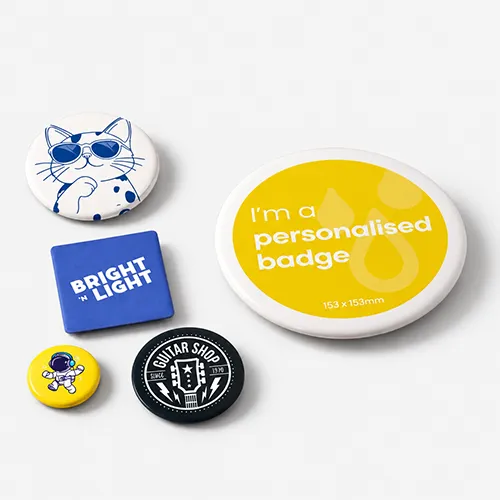
Smaller products can create accessible purchases and work well beside the till or merchandise table.
Options include:
These products can feature individual designs or be grouped into sets. A badge collection based on several songs, symbols or band members may feel more collectable than one repeated logo.
Useful products can keep the artist visible in everyday life.
Options include:
A practical item still needs to suit the artist. A tote bag may work well for bold artwork or a strong lyric, while a mug may suit a wraparound illustration, recurring motif or tour graphic.
Clothing is one of the most recognisable forms of music merchandise.
Common choices include:
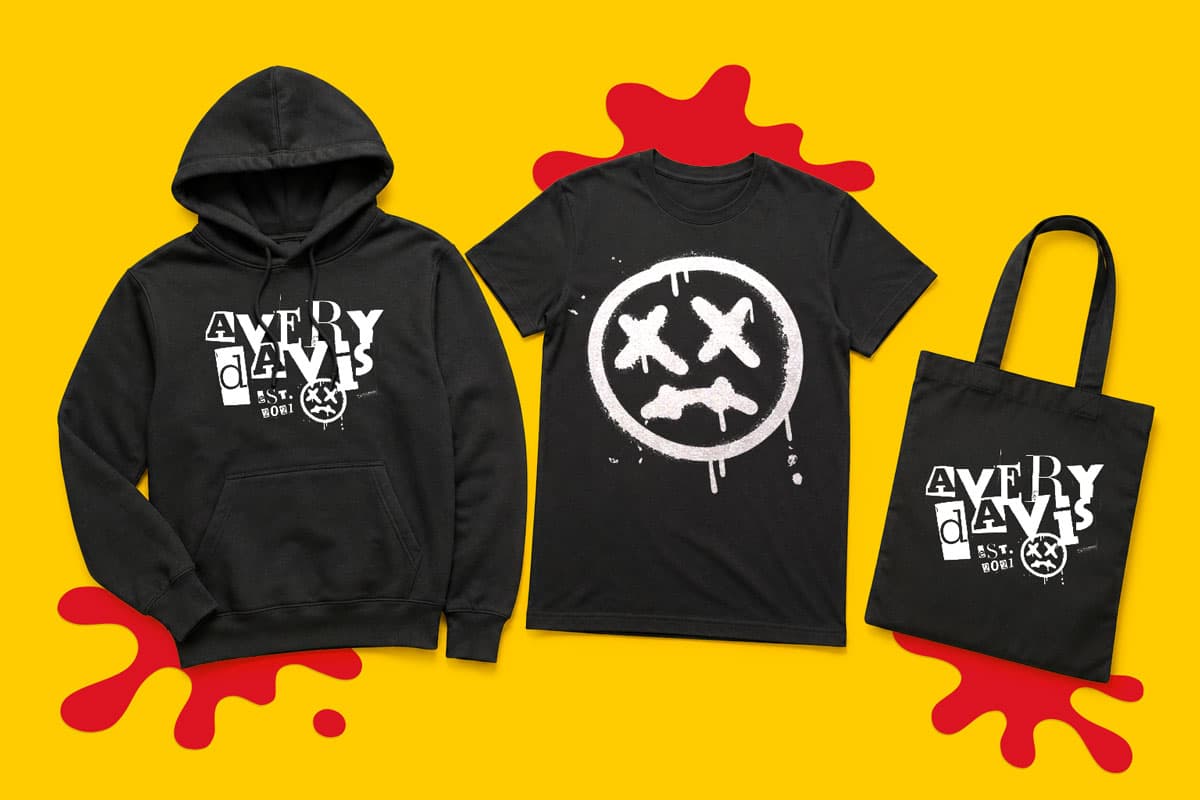
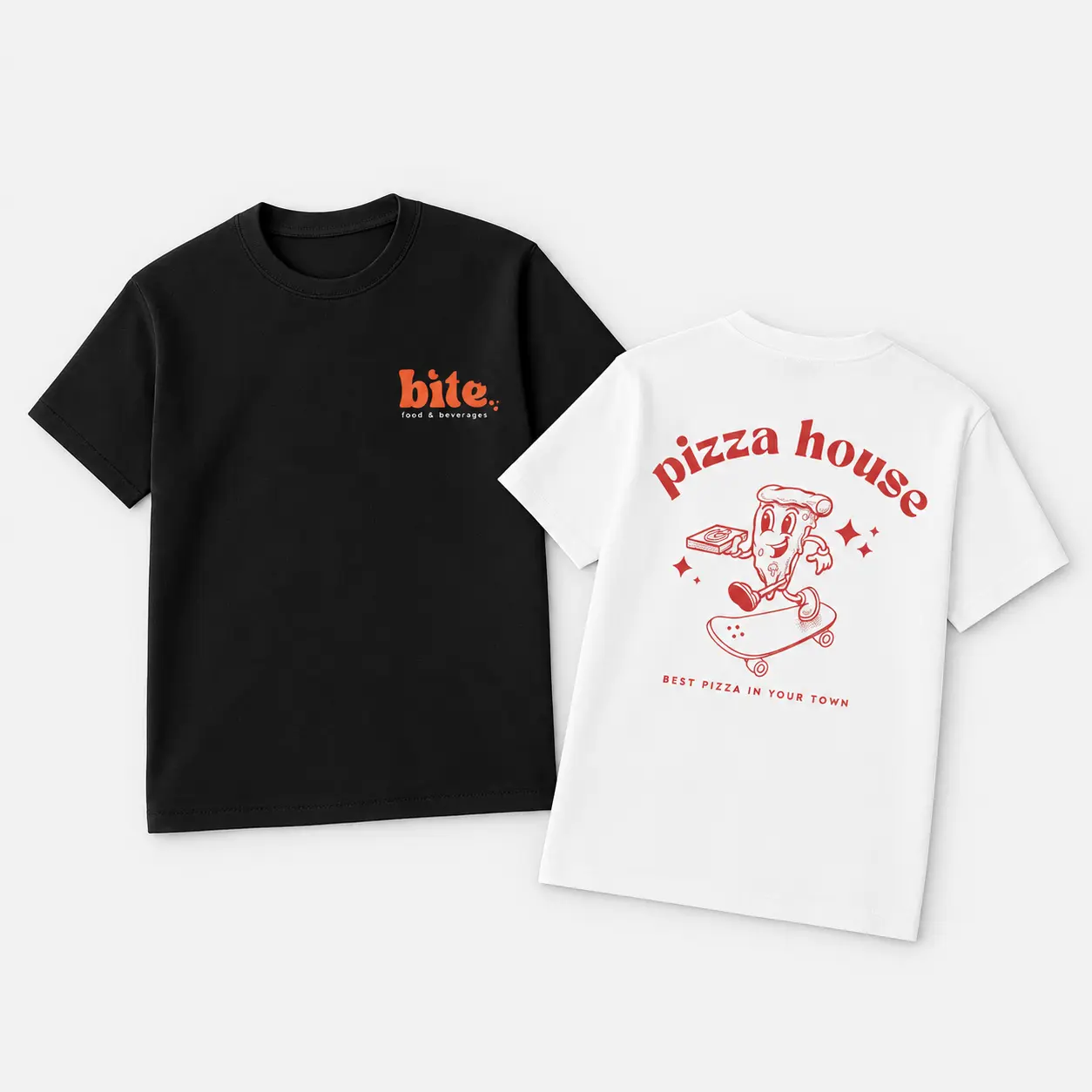
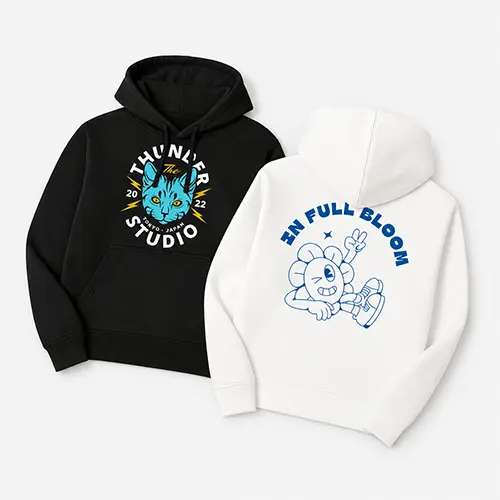
WTTB’s T shirts are available in black and white across budget, everyday and organic options, while our hoodies are available in black and white with front or back printing choices.
Clothing requires additional planning because you may need several sizes. Holding equal numbers of every size can leave you with unnecessary stock, so previous sales or preorders can help guide the allocation.
Posters provide space for album artwork, photography, tour dates and detailed illustration.
They might include:
A general promotional poster and a product intended for sale should be treated differently. Merchandise needs enough visual value for someone to display it after the event.
Limited products should only be described accurately. If a poster is sold as a numbered edition of 100, additional identical copies shouldn’t later be produced under the same claim.
A merchandise table should feel like one collection rather than a group of unrelated promotional objects.
Begin with a clear creative direction. This could come from:
One piece of artwork could become:
The designs don’t have to be identical. They should feel related while respecting the shape and purpose of each product.
A complex album illustration may work well as a poster but become unclear on a small badge. A recognisable symbol from the artwork could be extracted for smaller products instead.
This creates variety without losing the connection between items.
A release gives the range a clear theme and deadline.
Album and single artwork can provide colours, type, imagery and motifs. Tour merchandise can build on that identity by introducing dates, locations or venue specific elements.
Possible products include:
Avoid putting the full tour schedule onto every product. It may work naturally on the back of a T shirt or as part of a poster, but a simpler design could make a mug or tote bag easier to use after the tour.
You should also decide whether products will remain available once the campaign ends. A general band logo design can have a longer selling period than merchandise tied to one date.
A design created for a poster won’t automatically work on a T shirt, mug or badge.
Each product has a different shape, material and viewing distance. Artwork should be adjusted rather than copied unchanged.
Clothing designs should remain clear when viewed from several metres away.
Large areas of detail, very fine lines and small lettering may lose impact. Think about how the print sits on the garment and whether it works with the chosen fabric colour.
WTTB uses direct to film transfer printing for its personalised clothing. The process includes white ink beneath the artwork, so files should contain only the elements intended to print rather than a white box surrounding the design.
A mug presents artwork across a curved area.
A design may wrap around the surface, appear on both sides or use one central motif. Important elements should stay away from the handle and outer edges of the printable space.
Consider what a customer will see while holding the mug and how the complete design will appear in product photographs.
Tote bag designs should remain recognisable while the fabric moves, folds or contains items.
Bold illustration, typography and simplified graphics can work well. Very small details may become harder to notice on fabric than on smooth paper.
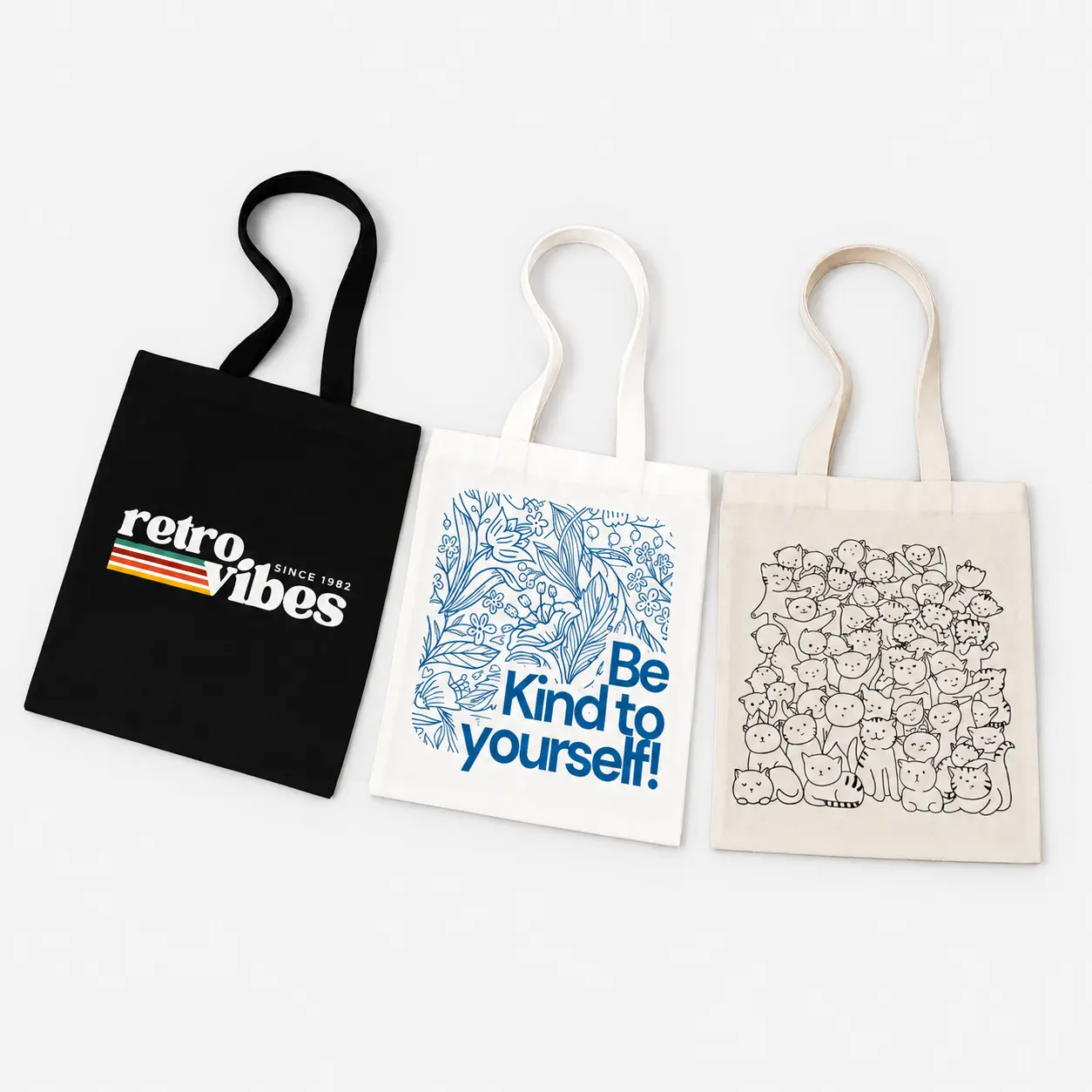
We offer natural, black and white tote bags with single or double sided printing options.
Small products require simple artwork.
Use clear shapes, readable lettering and strong contrast. A badge doesn’t provide enough room for full album artwork with several lines of small text.
A symbol, icon, portrait detail or shortened phrase may work more effectively.
Posters can hold more detail, but the design still needs structure.
Make sure the title, artist name and main image remain clear. Keep essential details inside the safe area and use images with enough resolution for the final print size.
Every supplier and product can have different artwork requirements.
Before placing an order, confirm:
WTTB accepts artwork as a print ready PDF. Our Print Ready PDF Guide explains how to export your file correctly, including bleed, colour, fonts and image quality.
You can also use our Support Guides to find product specific help before placing an order. These guides cover common artwork requirements and can help you prepare clothing, merchandise, posters and other printed products for production.
There’s no universal quantity that suits every band.
Ordering more can reduce the unit cost on some products, but that saving only matters when the items sell. Unsold merchandise ties up money and requires storage.
Use the following information to guide your first order:
For a new product, a smaller quantity may provide a safer starting point. Proven products can then be reordered in larger numbers once demand becomes clearer.
Clothing requires particular care because stock is divided across sizes. Keep a record of which sizes sell at each event so future orders reflect real demand.
Preorders can reduce risk, but customers must receive realistic production and delivery information. Don’t promise a date before confirming the manufacturing schedule.
Pricing should begin with the complete cost of selling each product.
This may include:
Markup and profit margin aren’t the same.
If a product costs £10 and sells for £20, the markup on its production cost is 100 per cent. The gross margin before any other expenses is 50 per cent.
A universal markup percentage won’t work for every product. Smaller items may need a higher percentage because payment fees and handling take up more of the selling price. Higher priced clothing may produce more cash profit while operating at a different margin.
Use this basic calculation:
Gross profit equals selling price minus the complete cost of the sale
Then calculate margin as:
Gross profit divided by selling price, multiplied by 100
For example, a product sold for £25 with complete costs of £15 produces £10 gross profit and a 40 per cent gross margin.
The complete cost matters. Using the manufacturing price alone can make a product appear more profitable than it really is.
Customers will compare the product, design, quality and meaning with its price.
A basic logo T shirt and a limited illustrated tour shirt may not need the same price. A signed and numbered poster can offer something different from an ordinary promotional print.
Price can reflect:
Avoid adding unnecessary packaging or finishes simply to appear premium. Every addition increases cost and should improve either the product, its protection or the customer experience.
Display prices clearly at live events. Complicated or hidden pricing can slow transactions and create queues.
Most artists use a combination of physical and online sales.
Live events place merchandise in front of people when their connection with the artist is strongest.
Make the display easy to understand. Show product prices clearly and provide enough lighting for customers to examine colours, sizes and designs.
Useful considerations include:
A worn display sample can show the fit of clothing without opening every item.
An independent website gives the artist greater control over presentation, pricing and customer communication.
It also requires the artist to generate traffic and manage orders, returns and customer service.
Product pages should include:
Online marketplaces can help artists reach established audiences, but fees, rules and customer expectations vary.
Review the current terms before listing products and make sure the price includes all applicable charges.
Preorders can test demand and help fund production before a larger quantity is ordered.
Crowdfunding may suit a complete collection, special edition or ambitious product that requires a clear minimum level of support.
Both approaches require transparent timescales and regular communication.
Online customers can’t hold or try the product before buying it.
Your photographs should help them understand:
Use mock ups during early concept development, but photograph the physical product before launch wherever possible. This prevents customers from receiving something that looks noticeably different from the listing.
For clothing, include measurements or a size guide. For mugs and wraparound products, show more than one angle. For posters, include an image that communicates the finished dimensions.
The strongest merchandise holds value after the immediate excitement of the event has passed.
A product becomes more memorable when it connects with a particular release, visual identity or experience.
Ideas include:
Collectability should come from genuine creative value, accurate availability and a strong connection to the artist. It shouldn’t rely on misleading scarcity.
Keep a clear record of what sold.
Track:
This information will show whether a popular design performs across several formats or only on one particular product.
It can also reveal that a product receiving attention doesn’t always generate purchases. Future production decisions should be based on sales and profit rather than compliments alone.
Producing a complete merchandise range can involve several different manufacturing methods.
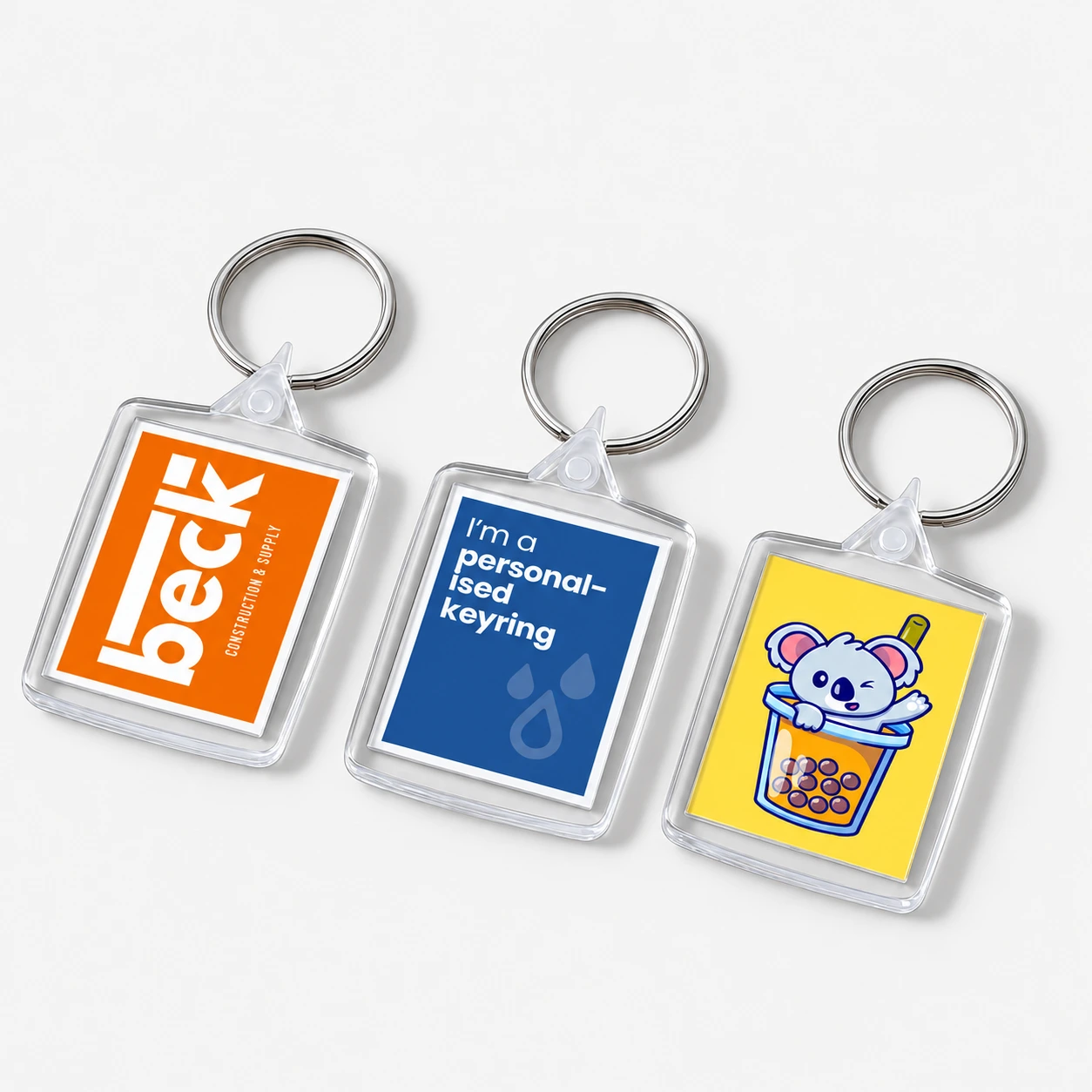
WTTB offers products across printed clothing and apparel, mugs, promotional merchandise, posters and printed marketing materials. Current options include T shirts, hoodies, tote bags, mugs, badges and keyrings.
Flexible quantities can help artists begin with a small collection or test a new design before investing in more stock. Standard UK delivery is free, with live production and delivery estimates shown during ordering.
Every order is also sent using standard white label delivery, with no invoices, promotional paperwork or branding included in the parcel. This can support artists sending selected online orders directly to customers, although WTTB doesn’t automatically connect with music platforms or online shops.
Different products still need artwork prepared for their individual formats. Templates and guidance are available through the relevant product pages, while bespoke printing is available for projects that fall outside the standard online range.
Begin with a small range containing different price points.
Badges, stickers and postcards can provide affordable options, while a T shirt or poster can act as the main product. Choose formats that match the strength of your artwork and the size of your audience.
The right quantity depends on expected demand and size distribution.
Use preorders or past sales where possible. For a first collection, ordering cautiously can reduce the risk of being left with large quantities in unpopular sizes.
Calculate the complete cost of selling the item, then add enough profit to make the product worthwhile.
Include design, production, delivery, packaging, payment charges, venue commission, tax, storage and unsold stock. Don’t base the price on manufacturing cost alone.
Not without permission from the relevant rights holders.
Logos, artwork, photographs, lyrics and other brand elements may be protected by copyright or trade marks. Changing or redrawing them doesn’t automatically give you permission to sell the result.
No. The products should feel connected, but the artwork should be adapted to each format. A poster can carry more detail than a badge, while clothing may need a stronger design that remains clear from a distance.
WTTB orders can be sent to the delivery address entered at checkout using white label packaging. Sellers still need to receive the customer order and place the corresponding order themselves.
Strong merchandise gives your audience something they can take beyond the gig, wear in everyday life and connect with long after a release.
Start with the identity of the artist. Choose products that suit the artwork, build prices around the full cost and test demand before expanding the range.
A few distinctive products can make a greater impact than a large collection without a clear idea behind it.
When you’re ready to take your artwork beyond the stage, explore WTTB’s merchandise printing range and turn your music into products your audience will be proud to wear, use and keep.
Posted on March 1, 2026 by Ben Riches
Related topics:
£17.07
£14.80
£25.45
£16.40
£22.99