Prices
Offline marketing puts your business in places a digital advert can’t always reach on its own. It can arrive through someone’s letterbox, appear in a shop window, guide visitors around an event or give a potential customer something useful to take away.
The strongest offline marketing campaigns aren’t simply about printing one product and hoping it gets noticed. They connect a clear objective with the right audience, message, format, location and next step.
Print can also encourage people to take action online. According to JICMAIL’s Q1 2026 results, the average direct mail item generated 141 seconds of attention, while the average door drop generated 57 seconds. The same research found that 9.4 per cent of mail prompted a website visit and 56 per cent of purchases driven by mail were completed online.
That means your offline and digital activity don’t have to compete. A leaflet can direct someone to your website, a poster can encourage a booking and a printed postcard can bring a previous customer back to your online shop.
For more ways to connect physical and digital channels, read our guide to combining online and offline marketing.
Offline marketing is any promotional activity that reaches customers away from a digital screen.
It can include flyers, folded leaflets, postcards, brochures, catalogues, business cards, posters, outdoor banners, exhibition displays, direct mail, packaging inserts and printed signage.
Television, radio, sponsorships and face to face events can also form part of offline marketing. However, this guide focuses on printed campaigns that small businesses can plan, distribute and measure.
Unlike a single printed item, an offline marketing campaign has a specific purpose. It might be designed to increase local awareness, attract people to an event, promote an offer, support a product launch or encourage previous customers to return.
Before choosing a size, paper or printed product, decide what the campaign needs to achieve.
A campaign designed to increase footfall will need a different format from one intended to generate online sales. A banner outside a shop can attract passing customers, while a leaflet delivered to local homes can introduce the business before they’re nearby.
Think about who needs to see the message, where they’re most likely to encounter it and what you want them to do next.
That next step should be clear and easy. It could be visiting your premises, scanning a QR code, using an offer code, booking an appointment, requesting a quote or visiting a campaign page.
Once you’ve established that, you can choose the print that best supports the journey.
A door drop campaign places your message directly into homes in the areas you want to reach.
It can work particularly well for restaurants, takeaways, estate agents, tradespeople, salons, gyms, retailers, charities and other organisations that depend on a local audience.
The first step is deciding which homes are relevant to the campaign. WTTB’s leaflet distribution service can help plan campaigns around selected neighbourhoods, postcode areas or customer profiles.
The amount of information you need to communicate should guide your format.
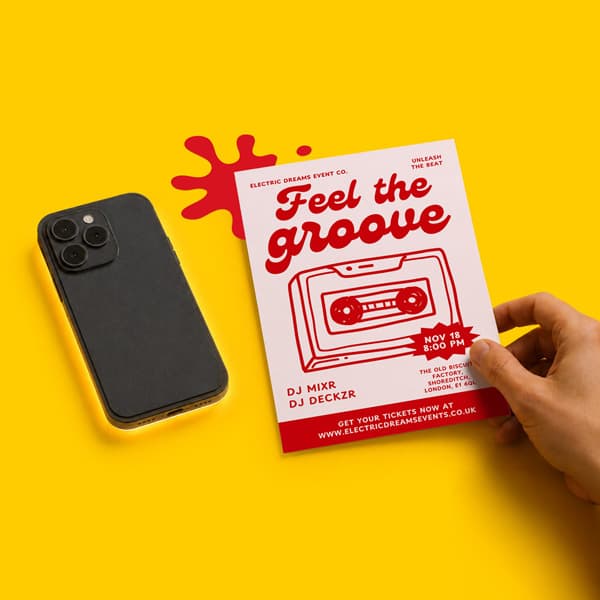
A simple promotion, opening announcement or discount can work well on a single printed flyer. The main offer can appear prominently on the front, with the supporting information and contact details on the reverse.
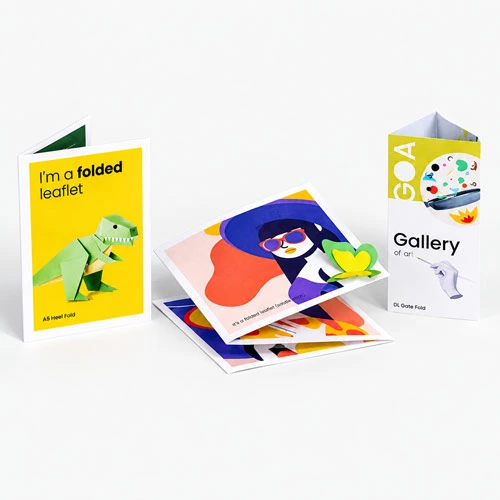
A folded leaflet gives you more room for menus, service lists, prices, maps, product ranges or event information.
A postcard can also work well when you want the campaign to feel more like a direct invitation than a general leaflet.
Your leaflet should make it immediately clear why the recipient should care.
A national sounding message can feel disconnected from a local audience. Referencing the area, local opening, nearby event or service coverage can help the campaign feel more relevant.
You don’t need to fill every available space. Lead with one strong message, explain the benefit and give the reader a clear next step.
For example, a local restaurant might use a headline introducing a new menu, followed by an offer available to nearby households and a QR code linking to online bookings.
Use a unique discount code, campaign page, QR code or telephone number so you can identify responses from the drop.
Different codes can also be used for different postcode areas. This can show which locations generated the strongest response and help improve future campaigns.
A retail campaign works best when every printed item supports the same message.
Someone might first see an outdoor banner, notice a poster in the window and then pick up a flyer after entering the shop. Each item has a different job, but the campaign should still feel connected.
Use the same headline, colours, offer and dates across every format. This builds recognition and helps customers understand the promotion more quickly.
Outdoor print should communicate the main message before someone reaches the door.
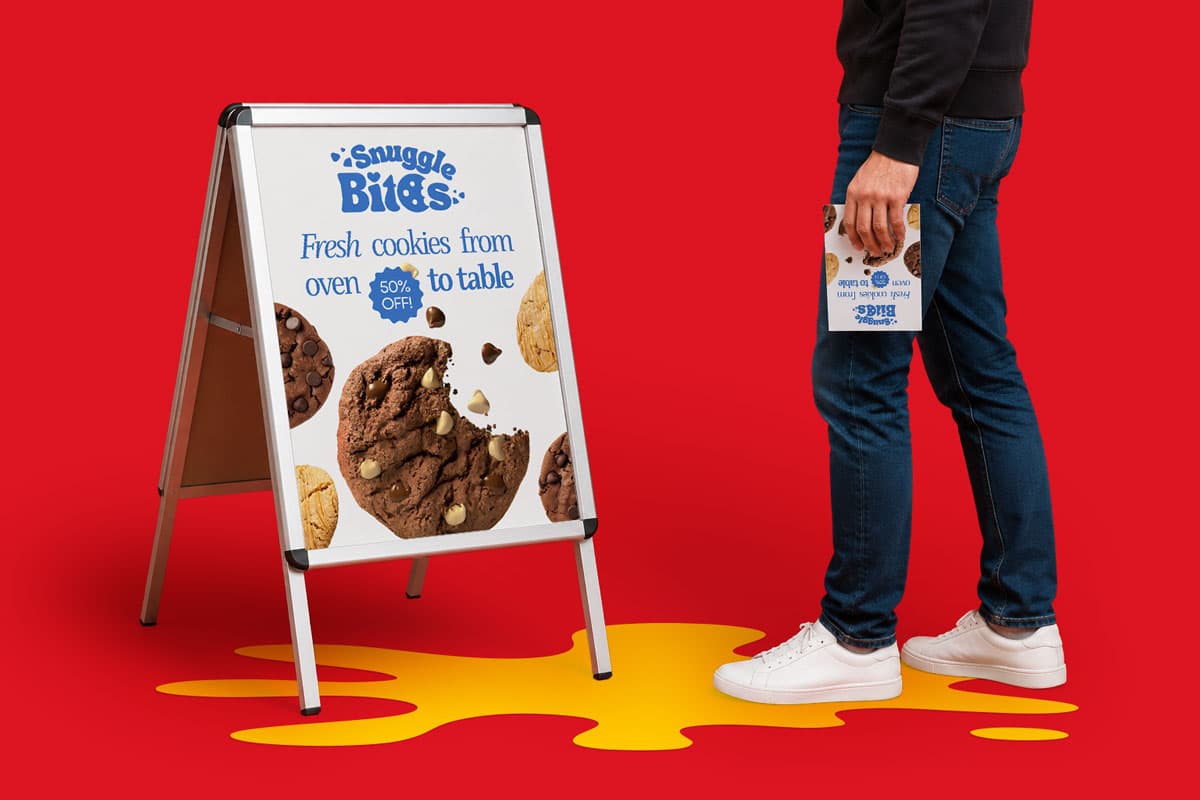
A banner can promote a sale, opening, event or seasonal offer from a distance. Posters can provide more detail as customers move closer, while printed signage can guide people towards an entrance, collection point or particular department.
The further away the item will be viewed, the less information it should contain. A large headline, short supporting message and obvious direction will usually work better than several paragraphs of small text.
Once customers enter, smaller printed products can provide the detail that wouldn’t work on outdoor signage.
Flyers can explain the offer, while menus, price lists, table displays and postcards can encourage people to browse, book or return.
Restaurants, cafés and hospitality businesses can use printed menus alongside window posters and outdoor displays so the same promotion continues throughout the venue.
The campaign shouldn’t end once the customer makes a purchase. A postcard, voucher or printed insert can encourage a second visit and extend the value of the original promotion.
Events give businesses an opportunity to combine print, digital activity and face to face conversations.
A successful event campaign should cover what happens before, during and after the event. Each stage needs different printed materials.
Invitations, posters, postcards and flyers can help create awareness and encourage registrations.
Include the date, location, booking instructions and a clear reason to attend. If the event has a dedicated page, add a QR code or short web address so people can find more information quickly.
Social media and email can support the campaign, but your printed materials can help reach people in shops, offices, venues and other physical locations.
For a broader planning process, use our event planning guide.
Your event print should help people understand who you are, what you offer and where they need to go.
Roller banners work well behind counters, beside entrances and around exhibition spaces. Keep the most important information around eye level and avoid placing essential content too close to the base.
Display boards can present product information, schedules, maps or supporting visuals. Flyers and printed booklets can give visitors something more detailed to take away.
Business cards are still useful when the aim is to continue a conversation after the event. Make sure the contact details are current and that the card directs people to the most relevant website, profile or service.
You can explore more formats through the Events and Exhibitions Hub.
Plan the follow up before the event begins.
A printed brochure or booklet can support a sales conversation, while a postcard containing a specific offer can encourage visitors to take the next step.
Where possible, use different response codes for event materials. This will help separate event generated activity from your other campaigns.
Offline marketing isn’t only for reaching new people. It can also bring previous customers back to your business.
A well timed postcard, catalogue, booklet or printed offer can remind customers what you provide and give them a reason to return.
This can work for seasonal launches, loyalty offers, service reminders, product updates and customer reactivation campaigns.
A postcard is useful when the message is simple. It can highlight an offer, deadline, new opening or seasonal reminder without asking the customer to work through too much information.
A booklet or catalogue is more suitable when you need to show a larger product range, explain a service or support a more involved buying decision.
Think about how much attention the message requires. A simple offer might need only a few seconds, while an expensive or technical product could need several pages of supporting information.
Where appropriate, divide your audience into useful groups rather than sending the same message to everyone.
A regular customer may respond to an early access offer, while someone who hasn’t purchased for a long time may need a stronger reason to return.
Personalisation can make the message feel more relevant, but any use of customer information needs to follow data protection rules.
Postal marketing isn’t covered by the Privacy and Electronic Communications Regulations, but data protection law still applies when you’re using personal information. The Information Commissioner’s Office direct marketing guidance explains the responsibilities involved.
Outdoor marketing helps make your business visible in the locations that matter to it.
That could mean a banner outside your premises, a poster in a community space, temporary signage at an event or directional boards around a site.
The right format depends on where it will be displayed, how long it needs to last and how far away the viewer will be.
PVC banners are suited to a wide range of outdoor promotions, including shopfronts, fences, events and temporary displays.
Mesh banners allow more air to pass through the material, making them useful for exposed locations. Rigid boards can work for directional signage, property advertising, construction sites and longer displays.
Before ordering, check how the item will be installed and whether you need eyelets, drill holes, fixings or a supporting structure.
Our Print Materials Hub explains the paper, board and banner materials available.
Outdoor campaigns need to communicate quickly.
Keep the headline short and make sure it has enough contrast against the background. Important details should be large enough to read from the intended distance.
Avoid using long web addresses or several different calls to action. A memorable URL, QR code, telephone number or clear direction will usually be easier to follow.
Where the design needs more explanation, use the outdoor display to capture attention and direct the viewer towards another source of information.
Print can create awareness in the real world, while digital channels give people somewhere to continue the journey.
A QR code can take someone from a flyer to a booking page. A printed offer can direct customers to an online shop. A poster can promote a social competition, and a business card can make it easy to connect on LinkedIn.
CAMIcodes can also connect printed materials to video content, allowing customers to scan a code and open a product demonstration, introduction or personalised message.
Whatever method you use, make sure the destination matches the promise made by the print.
Someone scanning a restaurant offer should arrive on the relevant menu or booking page, not the general homepage. Removing unnecessary steps makes the campaign easier to respond to and easier to measure.
Offline marketing can be tracked when measurement is planned before the campaign starts.
Unique discount codes can show which printed offer encouraged a purchase. Campaign pages can track visits from specific leaflets, posters or postcards. QR code scans can indicate interaction, while call tracking numbers can help identify telephone enquiries.
You can also ask customers how they heard about you during booking, checkout or enquiry. This won’t capture every response, but it can add useful context alongside your other data.
Compare activity before, during and after the campaign. Look for changes in sales, bookings, enquiries, website visits, footfall or repeat purchases.
Don’t judge every campaign by immediate sales alone. A poster or banner might be designed to build awareness over time, while a direct mail offer may have a specific short term response target.
The measurement should match the original objective.
Different printed products support different stages of a campaign.
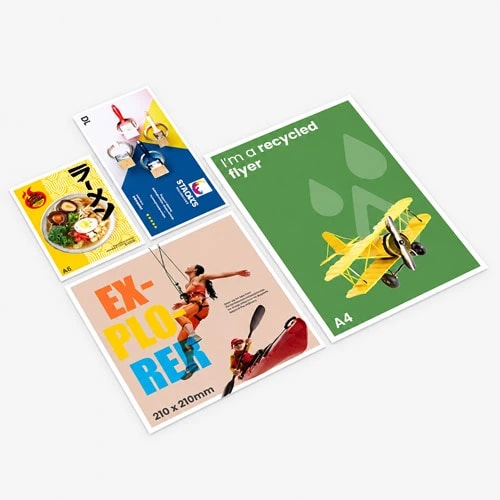
Flyers are useful for simple messages, local distribution and event handouts. Folded leaflets provide more room for menus, services and detailed information.
Postcards work well for invitations, reminders, direct offers and customer reactivation. Booklets and brochures can showcase larger ranges or explain services that need more information.
Posters, banners and signs increase visibility, while roller banners and display boards help present a business within an event or exhibition space.
Your choice of paper and finish also matters. A lighter paper can be practical for a large leaflet distribution campaign, while a heavier or specialist paper can help an invitation, postcard or premium offer feel more substantial.
You can compare stocks and finishes using our WTTB Print Materials Hub.
Every item within the campaign should look as though it belongs to the same business.
Use the same logo, colours, typefaces, headline style and tone across each format. The layout may need to change between a flyer and a banner, but the campaign should still be recognisable.
Check that important information sits inside the safe area and that backgrounds extend into the bleed. Images should be suitable for the final print size, particularly when artwork is being enlarged for posters, boards or banners.
WTTB offers free Canva print templates for a wide range of products. Each blank template is set to the correct product size, giving you a more reliable starting point for your artwork.
Before uploading your design, use the Canva print checklist or browse our Support Guides.
You can also add an Artwork Technical Check at checkout if you’d like an additional review before production.
Before sending your campaign to print, check the following:
An effective offline marketing campaign doesn’t depend on a famous brand, a huge budget or an elaborate stunt.
It depends on reaching the right audience with a relevant message, in the right place, using print that supports the action you want people to take.
A leaflet can introduce your business to a local neighbourhood. A poster can turn passing attention into footfall. An event display can begin a new sales conversation, while a postcard can remind an existing customer why they bought from you in the first place.
By planning the audience, format, message, distribution and measurement together, you can turn individual printed products into a campaign that gets your business seen, remembered and acted on.
Posted on July 24, 2026 by Emma Thompson
Related topics:

£38.46
£17.71
£17.48
£21.76
£17.86