Prices
Creative success doesn’t always mean continuing along the path that first established your career.
Before launching her own illustrated products, Liverpool designer Liz Harry created work for major names across the music industry. Her client list included Queen, Arctic Monkeys, Nicki Minaj and Jessie J, but years of interpreting briefs and balancing other people’s opinions eventually left her wanting greater creative freedom.
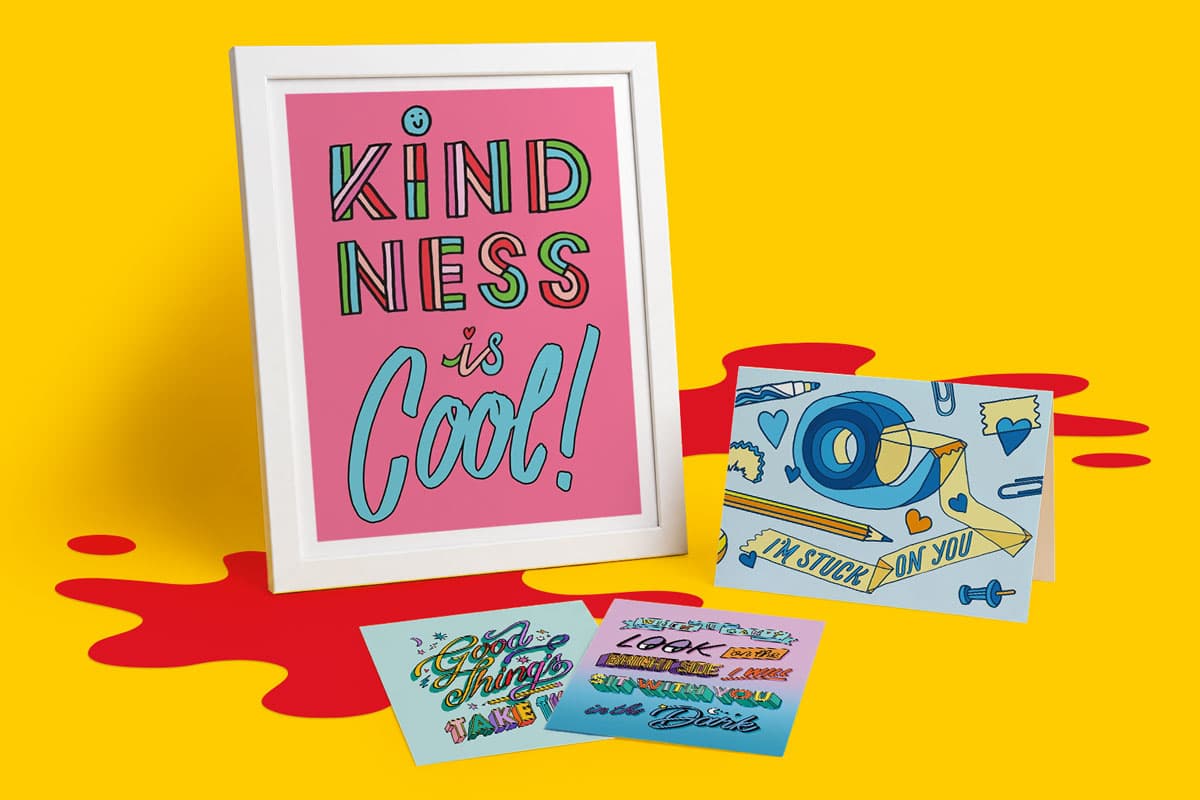
Liz returned to drawing and began creating work that reflected her own experiences, interests and visual style. Those illustrations became prints and greetings cards before expanding across stationery, stickers, accessories, clothing, bags and illustrated gifts.
Her journey shows how a designer can move from creating for clients to building a recognisable product business around their own ideas.
Liz began developing her design career while studying graphic design in Liverpool. Work for local bands led to larger projects spanning album artwork, music campaigns, catalogues and creative direction.
It was an impressive position, but client work didn’t always provide the creative freedom she wanted.
Every project began with another person’s objectives, opinions and expectations. Developing her own products gave Liz an opportunity to decide what the work represented, who it was for and how it would reach people.
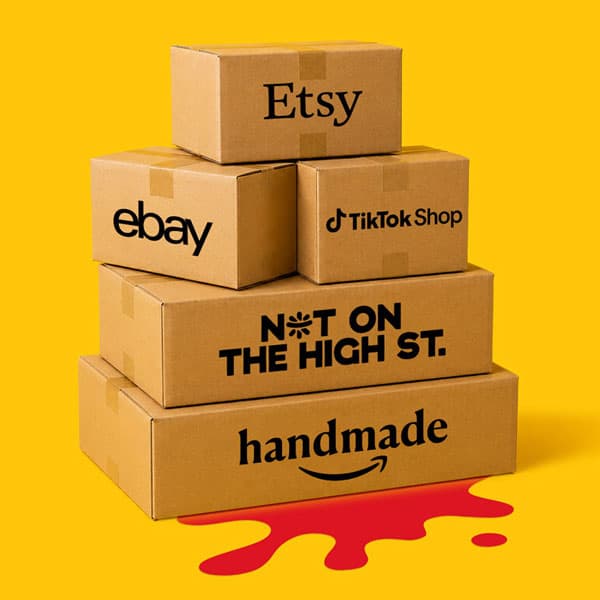
After returning to drawing while raising her family, Liz created illustrations for her children’s rooms. Interest from friends encouraged her to develop the artwork into products and open her own Etsy shop.
Prints and greetings cards provided the starting point. Liz’s range has since expanded into stationery, stickers, keyrings, jewellery, clothing, home products and colourful accessories. Her shop has now passed 35,000 sales and has been active on Etsy since 2016.
Liz Harry’s work is immediately recognisable through bright colours, bold lettering, playful illustrations and positive messages.
Her Etsy profile explains that everything begins with a hand drawn illustration. It also connects the products with her own interests and experiences, describing them as visual reminders that can encourage self care.
A recognisable identity doesn’t mean every product must look identical. It means there’s a consistent creative thread connecting the collection.
That connection might come from:
When customers can identify an artist’s work before seeing the name attached to it, individual products begin to support the wider brand.
A clear identity can also make it easier to develop new ideas. Rather than beginning every product with a completely blank page, the artist already has a visual language through which to explore it.
Liz began by selling prints and greetings cards, but her Etsy range now spans pins, stationery, stickers, keyrings, jewellery, clothing, home products and other illustrated gifts.
This demonstrates how original artwork can grow beyond one format.
An illustration could become:
The strongest product ranges don’t place every design onto every available item. Each idea should be matched with formats that strengthen it.
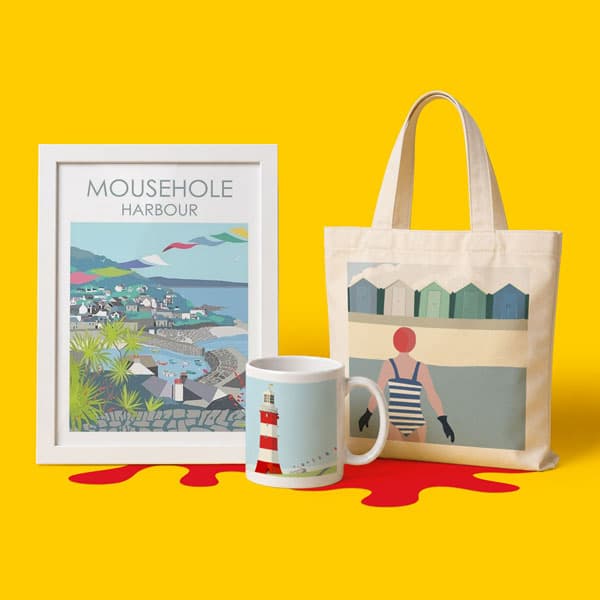
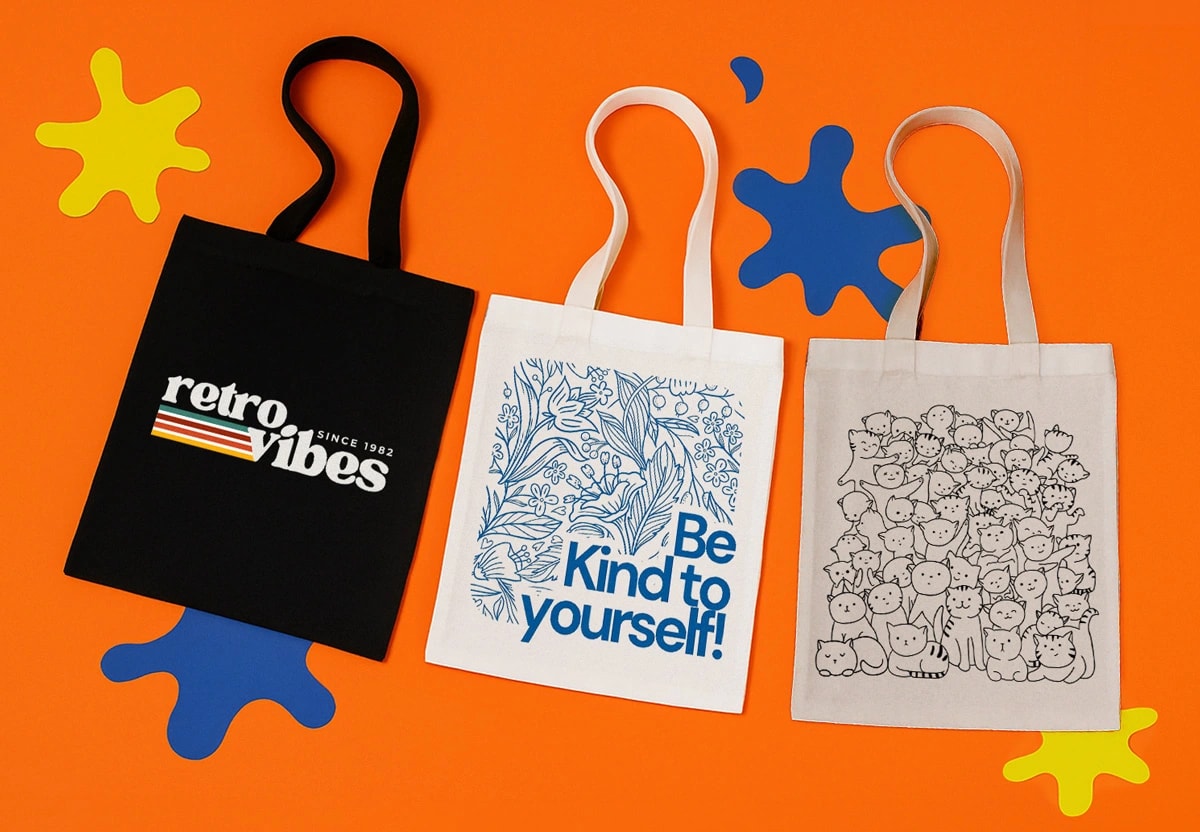
A detailed illustration might work best as wall art, while a bold phrase could suit a tote bag or mug. A small recurring motif may translate naturally into stickers, stationery or accessories.
Treating each format as its own design project creates a more convincing collection than copying the same file across several unrelated products.
Prints and greetings cards can provide a practical starting point for illustrators testing an audience.
They allow the original artwork to remain central while giving customers products at different prices. Someone who isn’t ready to purchase a larger print may begin with a card, postcard, sticker or smaller piece of stationery.
These more accessible products can also introduce customers to the artist’s style. Once that identity becomes familiar, they may return for larger pieces or products with a different purpose.
A product range could create a natural progression through:
Different formats and price points allow customers to enter the same creative world in different ways.
Artwork created for a flat print won’t automatically work on a curved mug, fabric tote bag or folded card.
Each format changes how the design is viewed.
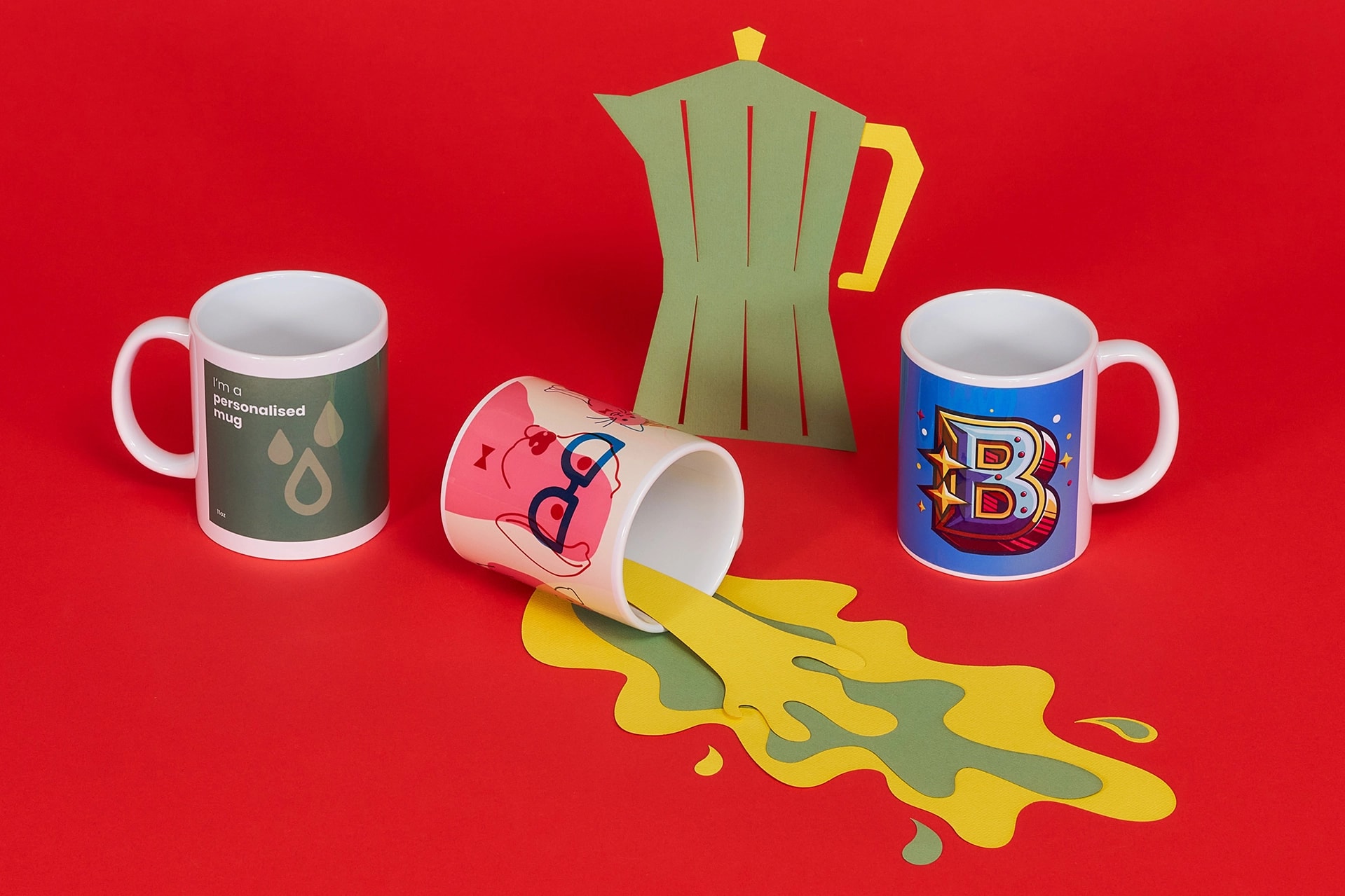
A mug may need artwork that wraps around the surface while remaining visible from more than one angle. A tote bag requires a composition that stays clear while the fabric moves or folds. A greetings card must account for its front panel, fold and trimmed edges.
Before adapting an illustration, consider:
A successful illustration can support several products, but each version should feel created for its format.
Our guide to launching a product range using Canva and WTTB looks more closely at developing and preparing a connected collection.
Social media gave Liz somewhere to share finished products while also showing the person and creative process behind them.
This can be especially useful for illustrators because the journey towards a finished product is naturally visual.
Content might include:
Customers may first discover an artist through one image or video, then gradually become familiar with the wider collection.
Social media results are never guaranteed, and platforms continually change how content is distributed. The most useful approach is usually to choose content that can be created consistently rather than chasing every trend or attempting to maintain every available channel.
One of the most distinctive parts of Liz’s approach has been using Kickstarter to support new collections.
Crowdfunding allows customers to support a creative project before full production begins. Backers pledge towards the project, usually in return for a product or reward once the required funding has been secured.
This can give an independent artist a clearer indication of demand before committing to a larger production quantity.
It can help answer questions such as:
Interest on social media doesn’t always translate into purchases. Preorders and crowdfunding can provide stronger evidence because customers are making a financial commitment rather than simply reacting to an image.
Crowdfunding still requires careful planning. The amount raised needs to cover production, packaging, delivery, platform charges and unexpected expenses. The creator must also provide realistic timescales and communicate clearly throughout the process.
It isn’t free funding, but it can provide a structured way to test an idea before committing to a complete collection.
Liz’s illustrations often explore mental health, self care and personal encouragement.
Her Etsy shop includes products built around messages such as giving yourself space, navigating difficult emotions and recognising personal strength. These ideas give the products meaning beyond their decorative qualities while connecting with customers who recognise something of themselves within them.
Personal experience can help creative work feel distinctive because it comes from a genuine point of view.
That doesn’t mean every product needs an inspirational message or a deeply personal explanation. The broader lesson is that an artist’s own interests and experiences can provide a more individual starting point than following whatever appears to be popular.
Inspiration might come from:
The aim shouldn’t be to manufacture meaning for marketing purposes. It should be to recognise the ideas that naturally appear within the work and develop them honestly.
Liz’s current shop demonstrates how a creative business can expand without losing the identity that made its first products distinctive.
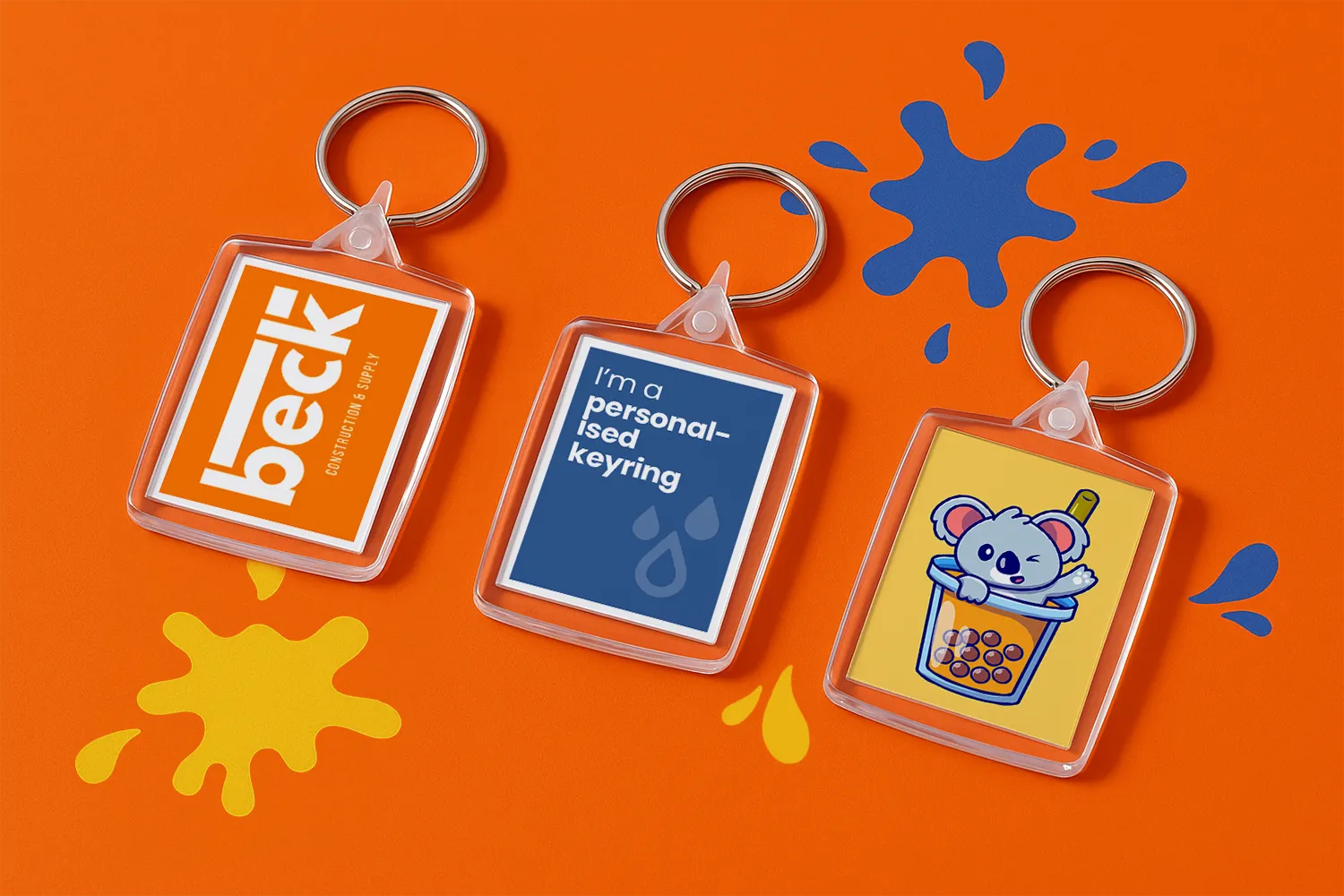
Alongside prints, cards and stationery, the range now includes scarves, tote bags, keyrings, jewellery, clothing, stickers and home accessories.
Growth doesn’t require an artist to abandon the products they began with. Instead, the response to those products can help identify what to develop next.
A successful design might inspire:
The original artwork provides continuity, while each format gives customers a different way to engage with it.
A growing product range can involve several different production processes, particularly when it includes cards, prints, stickers, clothing, accessories and other merchandise.
Liz’s Etsy profile lists a number of specialist production partners, including WTTB, alongside businesses supporting areas such as printing, clothing, stickers and accessories.
Working with external suppliers can help an artist develop products that would otherwise require specialist machinery, workspace and technical knowledge.
Before choosing a production partner, it’s useful to consider:
Physical samples are particularly useful when introducing a new format. They allow the artist to check colour, scale, finish and construction before photographing the product or committing to more stock.
A strong design can attract attention, but running a marketplace shop also depends on reliable service.
Customers need to understand exactly what they’re ordering, when it will be dispatched and what to do when they have a question.
A good product can still receive a poor response when:
Clear descriptions and manageable promises reduce the likelihood of disappointment.
Artists using external production must also allow enough time for their products to be made before setting dispatch expectations. Production time, delivery to the seller and final customer delivery may all need to be included.
Etsy programmes and seller requirements can change, so current criteria should always be checked directly through the platform rather than relying on historic figures or thresholds.
Independent creative businesses don’t have to view every other artist as direct competition.
Creative communities can help sellers:
Collaboration can be particularly effective when each person contributes something distinctive.
An illustrator might work with a textile maker, jeweller, ceramicist or clothing producer to take artwork into a format they couldn’t create independently. The resulting product can introduce both businesses to a wider audience while retaining each contributor’s identity.
Liz’s current range includes several collaborative products, demonstrating how an established visual style can be applied to new materials and formats through partnerships with other makers.
Artists building a product range often need access to several different print formats without investing in specialist production equipment.
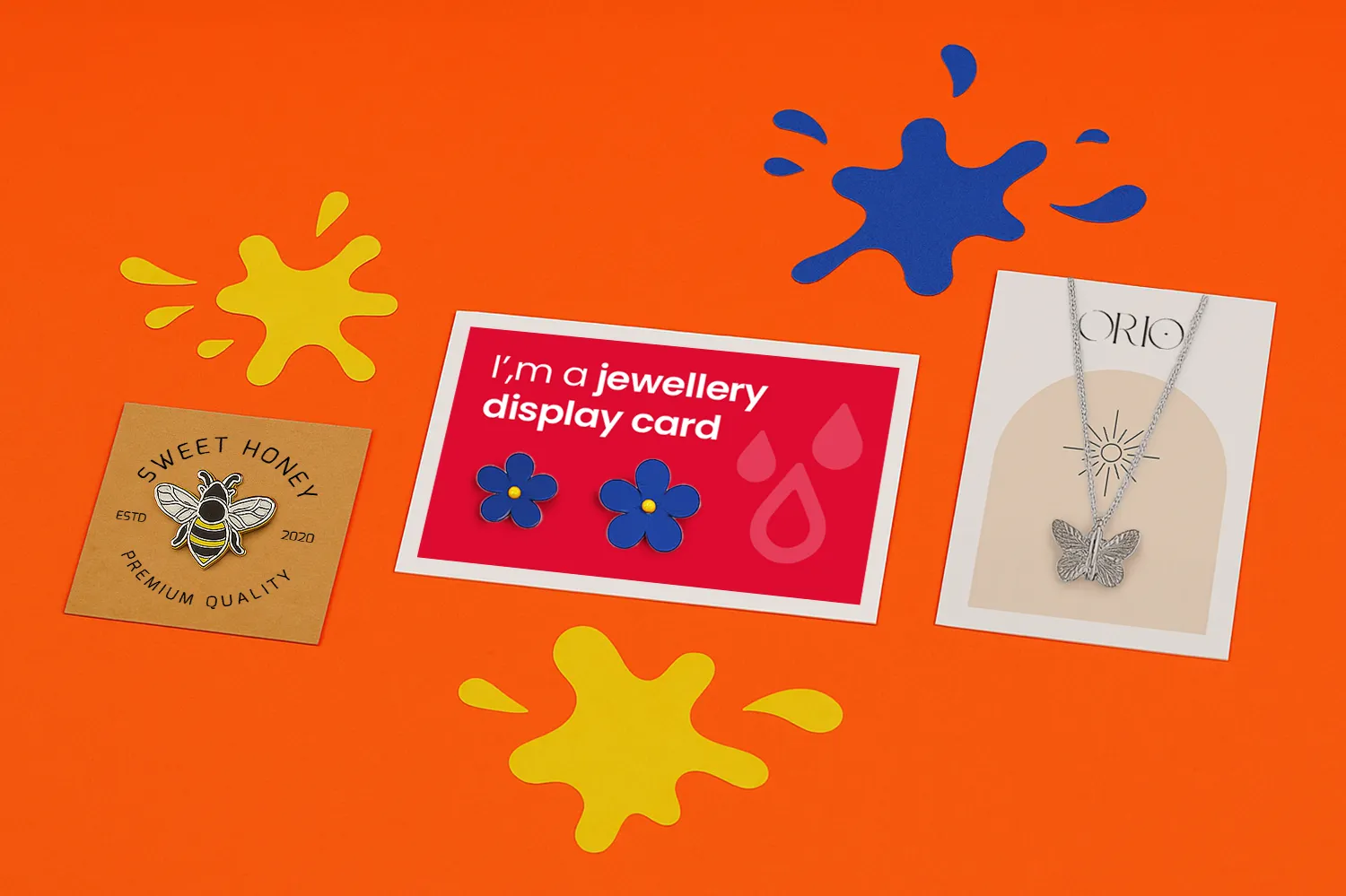
WTTB helps creators turn artwork into products across areas such as art prints, greetings cards, notepads, mugs and tote bags.
Flexible order quantities can help sellers test new designs before committing to more stock, while free UK delivery makes it easier to understand the full production cost of each item.
Every order is also sent using white label delivery. This means marketplace sellers can enter a customer’s address when placing an order without WTTB branding, pricing or promotional paperwork appearing inside the parcel.
Liz’s journey offers several useful lessons for artists developing their own product businesses.
Moving away from client briefs creates freedom, but it also requires the artist to decide what the work represents and why customers should recognise it.
Prints and greetings cards gave Liz a natural starting point. The collection expanded as its visual identity and customer response became clearer.
Crowdfunding and preorders can provide more meaningful evidence of demand before larger production costs are incurred.
Personal experiences and interests can help create designs that feel meaningful and difficult for another seller to imitate.
A successful illustration may work across several products, but each version needs to account for the object’s shape, material and use.
Production partners can help artists explore different formats without purchasing equipment for every process.
Social content, customer service, collaboration and community all contribute to a business that people want to support.
Liz Harry’s move from music industry designer to independent Etsy seller wasn’t simply a change of sales platform. It gave her the freedom to build a business around her own illustrations, messages and creative instincts.
Prints and greetings cards provided the first route into physical products. From there, a recognisable visual identity helped the collection grow across stationery, accessories, clothing, home products and collaborative pieces.
Artists can follow the same underlying principles without trying to copy the finished result.
Begin with a clear creative identity. Choose products that genuinely suit the artwork. Test what customers respond to, adapt each design for its format and expand gradually.
If you're ready to turn their ideas into products, visit the WTTB Marketplace Print Hub to find the right products and start building a range that brings your creative identity to life.
Posted on February 12, 2026 by Emma Thompson
Related topics:
£17.07
£12.06

£16.82
£24.59
£14.80