Prices
If you sell design, marketing or any kind of print service to your customers, you don't necessarily need to produce the printed products yourself.
White label printing is when a printing company produces print for another business without putting its own branding on the order.
For example, a design agency might create business cards for a client and arrange the printing on their behalf. A white label printer produces the business cards, but the order is supplied without the printer's branding. The agency can therefore provide the finished product under its own business relationship with the client.
In layman's terms, the printer, WTTB for example, works behind the scenes while you remain the customer's point of contact.
White label printing is relatively straightforward. The process usually looks like this:
You don't need to own printing equipment or produce the order yourself. The printing company handles production while you manage the relationship with your customer.
Depending on the service, the printer may also be able to send the order directly to your customer rather than sending it to you first.
This is sometimes referred to as white label print fulfilment.
White label means that one company produces a product or service which another company provides to its customer under its own business relationship.
The company doing the production remains behind the scenes.
White labelling isn't exclusive to printing. You can find the same basic model across many industries, where a business provides something to its customers without producing every part of it itself.
With white label printing, the product is the printed item and the printing company is the production partner.
For example, a marketing agency might offer printed flyers as part of a campaign without owning a printing press. The agency manages the customer and campaign, while a white label printer handles the physical production.
With white label printing, the printing company works behind the scenes rather than being presented as the supplier to your customer.
This allows you to maintain your own customer relationship while outsourcing the physical production.
Exactly what information is included with an order depends on the printer and the fulfilment service they provide. If this is important to your business, check what branding, paperwork and packaging are included before placing an order.
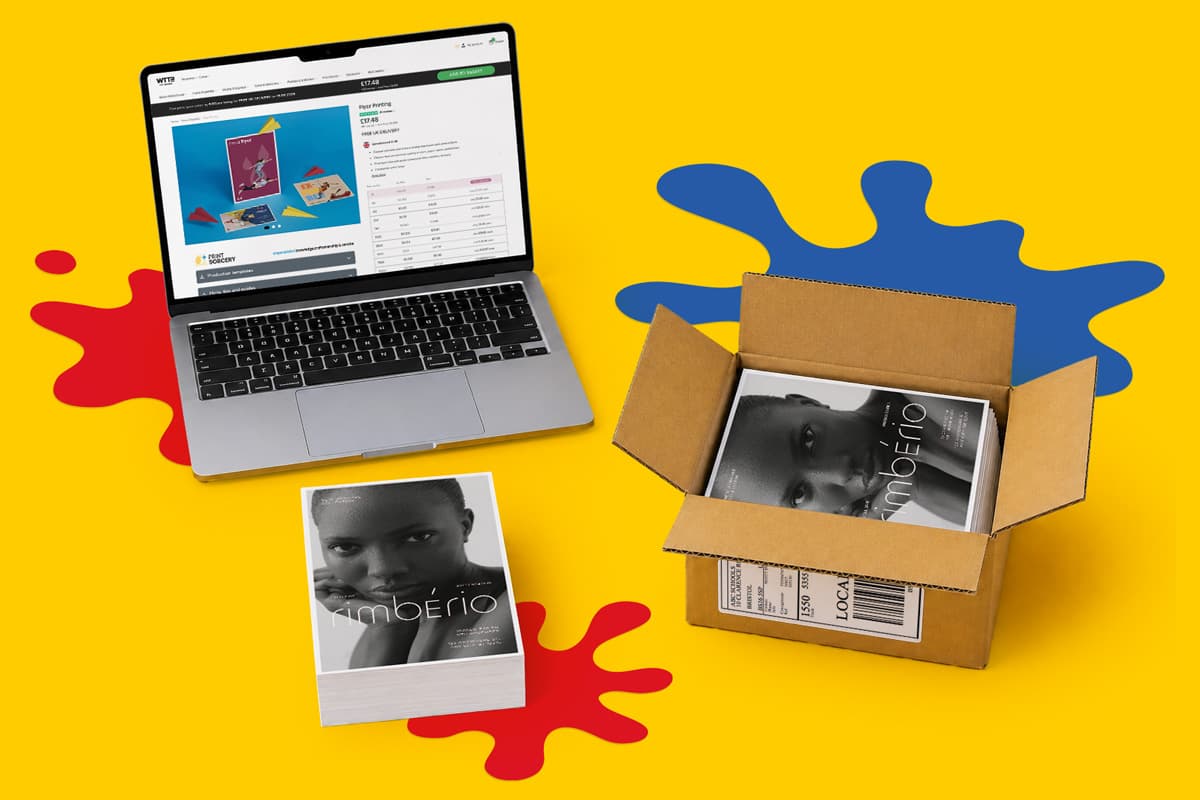
For businesses looking to offer print without managing production themselves, WTTB provides access to a UK trade manufacturing network, with 140+ customisable print products available through its automated print API. Orders can be processed, printed and dispatched directly to your customer, allowing you to build print into your own service while production happens behind the scenes.
The important distinction is that white label printing doesn't mean pretending you physically manufactured the product yourself. It means the production partner doesn't need to become part of your customer's buying experience.
White label printing can be useful for any business that sells or arranges printed products without producing them in-house. Common examples include:
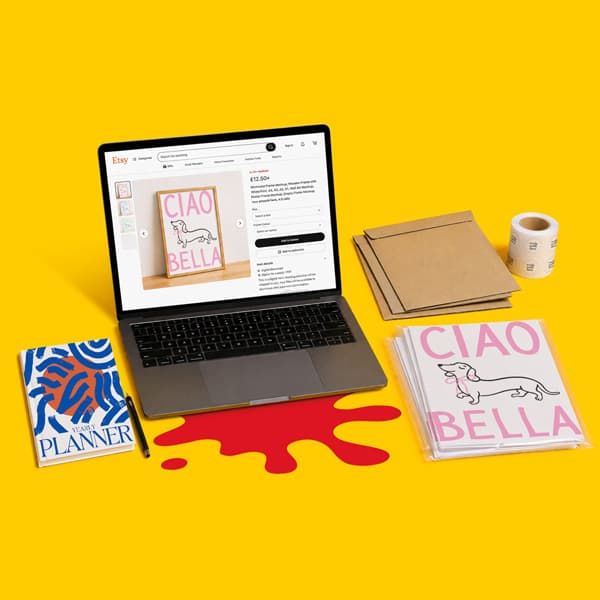
If you sell personalised or printed products online, our Marketplace Printing Hub is designed for Etsy, eBay and online shop sellers. It provides access to a wide range of customisable print products, helping you fulfil orders without holding your own print stock. With our Print API, you can also connect your storefront directly to our manufacturing network and automate the process from order to dispatch.
The biggest advantage of white label printing is simple.
You can sell or provide printed products to your customers without having to produce them yourself.
That can make a significant difference to businesses that want to offer print as part of their service.
Commercial printing requires specialist equipment, materials, production knowledge and space. Using a white label printer means you can offer printed products without making that investment yourself.
You focus on finding customers, creating the artwork or managing the project. Your printing partner handles production.
You might currently offer design but not printing. Or perhaps you already sell flyers but want to add brochures, business cards, posters, signage or other products.
Working with a print partner can make it easier to expand your offering. Instead of telling your customer to find another supplier, you can arrange more of the project yourself.
Printing can involve much more than simply pressing "print". Artwork needs checking, materials need preparing, products need producing and finished orders need packing and dispatching.
Outsourcing production lets you spend more time on the parts of the business where you add the most value.
A professional printer already has the equipment, materials and production processes needed to manufacture printed products at scale.
Rather than trying to reproduce that infrastructure yourself, you can use an established printing partner when you need it.
This is one of the biggest reasons businesses use white label printing. Your customer deals with you. You can manage the quote, artwork, approvals and project while your printing partner handles production behind the scenes.
That means print can become part of your service rather than becoming a reason to send your customer somewhere else.
Depending on the service, white label fulfilment can allow the finished order to go directly to your customer. This removes an unnecessary step from the process.
Instead of:
Printer → You → Customer
the order can potentially go:
Printer → Customer
while you continue to manage the customer relationship.
No. You don't necessarily need to call yourself a print reseller to use a white label printing service.
White label printing can be useful for designers, agencies, freelancers and businesses that simply want to arrange print for their customers.
If you regularly create artwork for clients, manage marketing campaigns or provide printed materials as part of your service, a white label printer can effectively act as your production partner.
You don't need to own a printing press to offer print.
Imagine a graphic designer working with a local restaurant.
The restaurant needs 5,000 flyers for a new opening.
The designer creates the artwork and normally provides the design to the restaurant. However, the restaurant also wants the designer to arrange the printing.
The designer could:
The designer has therefore provided both the design and the printed product, without needing to own printing equipment or manufacture 5,000 flyers themselves.
The printer does the production. The designer manages the customer.
That's the basic idea behind white label printing.
The difference is primarily who the customer sees as their supplier.
With a traditional printing arrangement, a business may order directly from a printer and deal with that printer throughout the process.
With white label printing, the business may instead act as the customer's supplier while another printing company handles production behind the scenes.
Traditional printing | White label printing |
Customer orders directly from printer | You order from printer on your customer's behalf |
Printer is the visible supplier | Printer remains behind the scenes |
Order may go to you first | Order may be sent directly to your customer |
You manage the print yourself | Production is outsourced |
Limited to your own production capability | Access to a wider production capability |
White label printing therefore isn't necessarily a different type of printing. It's a different way of delivering the printing service.
White label print fulfilment is the process of producing, preparing and dispatching printed products on behalf of another business without presenting the printer as the customer's supplier.
The fulfilment element goes beyond simply manufacturing the product.
Depending on the service, it can include preparing the finished print for dispatch and sending it directly to the end customer.
This can be particularly useful for businesses handling multiple customer orders or selling print as part of a wider service.
They're closely related, but they're not necessarily identical terms.
Unbranded printing generally refers to a printed product or package that doesn't display the printer's branding.
White label printing describes the wider business arrangement: another company is producing the product on your behalf while you maintain the customer relationship.
In other words, unbranded packaging can be part of a white label service, but white labelling is about more than simply removing a logo.
White label printing is when a printing company produces printed products for another business without presenting its own branding to that business's customer.
The printer handles production while the other business maintains the customer relationship.
You receive an order from your customer, place the print order with a white label printer, and the printer produces and dispatches the finished product without its own customer-facing branding.
White label printing allows businesses to offer print without owning production equipment, expand their product offering, save production time, work with specialist printers and maintain their own customer relationships.
Graphic designers, design agencies, marketing agencies, freelancers, print resellers and other businesses that arrange printed products for their customers can use white label printing.
No. You can use white label printing simply because you want to provide printed products as part of your existing service.
Yes, white label fulfilment can allow a printer to dispatch an order directly to your customer, depending on the service and delivery arrangements offered.
This means you can manage the order without having to receive, store and resend the finished print yourself.
With a white label service, the printing company is kept behind the scenes and its branding is not presented as part of the customer-facing service. The exact packaging and documentation provided should be checked with the printer.
White label printing and print reselling are closely related, but they describe different parts of the process.
A print reseller sells printed products to their own customers but uses another company to produce them. The reseller manages the customer relationship and typically sets their own pricing.
White label printing describes how the production is presented to that customer. The printer works behind the scenes rather than being presented as the customer's supplier.
This means a business can be both a print reseller and a white label customer. For example, a design agency could sell 5,000 flyers to a client, order them from a white label printer and have them dispatched directly to the client.
In simple terms:
You don't need to own a printing press to sell print.
Whether you're a designer arranging business cards for a client, an agency managing a campaign or a print reseller handling orders for multiple customers, a white label printing service can handle the production while you focus on your customer.
You bring the customer. You manage the relationship. Your printing partner handles the production.
That's white label printing.
Posted on August 11, 2026 by Emma Thompson
Related topics:
£19.93
£51.01
£17.71





£21.76
£177.23