Prices
Choosing paper can feel more complicated than it should.
You may see options such as 100gsm, 150gsm, 250gsm and 400gsm, but those numbers don’t tell you everything about how a finished product will look or feel.
GSM helps you compare paper weights, but it doesn’t directly measure thickness, rigidity or quality. The paper surface, fibres, coating and manufacturing process can all change how two stocks with the same GSM behave.
The right choice also depends on the product. A lightweight leaflet can be easier to fold and distribute, while a postcard or business card needs enough substance to withstand regular handling.
This guide explains what GSM means, how different paper weights behave and what to consider when choosing paper for flyers, books, brochures, cards and business stationery.
GSM stands for grams per square metre.
GSM is the standard measurement used to describe paper weight. When printers talk about 150gsm, 250gsm or 400gsm paper, they are referring to the weight of the material per square metre.
It measures the mass of a sheet of material measuring one square metre. A 150gsm paper therefore weighs 150 grams per square metre, while a 350gsm stock weighs 350 grams across the same area.
The higher number indicates a heavier paper, but it doesn’t provide a precise measurement of thickness.
A paper with an open, bulky structure may feel thicker than a more compressed stock at the same GSM. Coatings and fibres can also affect how flexible, smooth or rigid the sheet feels.
GSM is therefore best used as one part of the specification. It helps you compare weight, but the material and intended use still need to be considered.
Not necessarily.
A heavier paper can feel more substantial, but the highest available weight won’t always produce the best result.
A leaflet designed for widespread distribution may work better on a lighter stock that folds easily and keeps delivery weight manageable. A long book printed on very heavy inner pages could become bulky, difficult to hold and expensive to post.
The aim isn’t to choose the largest number. It’s to find the paper weight that supports how the product will be handled, displayed and distributed.
Quality also depends on the paper itself. A carefully chosen uncoated stock may feel more appropriate for an understated brand than a heavier glossy sheet.
These terms describe related but separate qualities.
GSM measures the weight of the paper across one square metre.
Thickness measures the distance between the two surfaces of the sheet.
Stiffness describes how strongly the sheet resists bending.
A higher GSM often produces a thicker and stiffer sheet, but the relationship isn’t exact. Two 250gsm stocks can feel different when one is coated and compressed while the other has a softer, more open construction.
This is why choosing paper from its GSM alone can be misleading. The same weight may feel different across silk, gloss, uncoated, recycled and specialist stocks.
The words paper and card are commonly used to distinguish lighter, flexible sheets from heavier, more rigid stocks.
There isn’t one universal GSM at which paper officially becomes card. Suppliers may describe similar weights differently depending on the product, stock and intended use.
Within commercial printing, lighter weights are often used for inner pages, leaflets and stationery. Heavier weights are more commonly described as card when used for covers, postcards, invitations and business cards.
It’s more useful to compare the complete specification than to rely on the label alone.
GSM tells you the weight, while the paper type affects its surface, texture and relationship with ink.
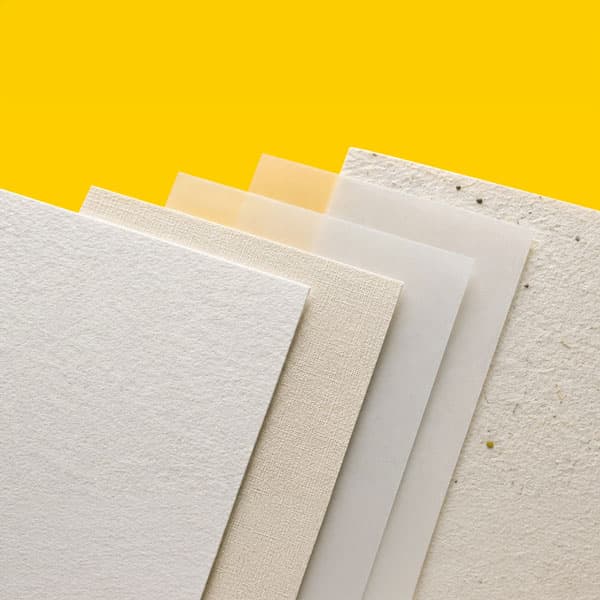
Silk paper has a smooth coated surface with a gentle sheen. It supports sharp detail and strong colour while producing less glare than gloss, making it a common choice for brochures, catalogues, flyers and booklet pages.
Gloss paper has a more reflective surface. It can strengthen contrast and colour, which may suit photography and bold promotional designs.
Uncoated paper has no applied surface coating. Its natural texture absorbs more ink, creating softer colour and a more tactile finish. It’s also easier to write on, making it useful for stationery, workbooks, forms and products that may be stamped or completed by hand.
Recycled and specialist papers may introduce further differences in shade, texture, bulk and appearance.
For a closer comparison of surfaces and decorative options, read our guide to choosing the right paper and finish for your print.
The exact options available will depend on the product and paper type, but common weights can be grouped according to how they tend to behave.
These lighter weights are flexible and familiar from office paper, letters and everyday documents.
They can suit products where low weight and easy handling matter more than a substantial feel. Depending on the product specification, lighter papers may be used for stationery, inserts, forms and some publication pages.
Printing may show through more readily, particularly where both sides contain dark colours or large areas of ink.
This range can provide more substance while remaining flexible.
It’s commonly suited to flyers, leaflets, booklet pages, programmes and promotional handouts. The paper can be folded and carried easily without feeling as light as ordinary office stock.
The final feel will still depend heavily on whether the paper is silk, gloss or uncoated.
These weights feel more substantial and can work well for higher quality flyers, posters, booklet covers and menus.
They remain flexible, but provide greater resistance to creasing and show through. Folded products may require careful production to prevent cracking, particularly where dark artwork crosses a fold.
At this level, the stock begins to feel more like lightweight card.
It may suit invitations, postcards, covers, certificates, presentation materials and products that need more strength than an ordinary leaflet.
The sheet can still bend, but it won’t fold as freely as a lighter paper without the correct finishing process.
These heavier card weights are commonly chosen for greetings cards, postcards, invitations, certificates and business cards.
They provide a more rigid and substantial feel, helping products withstand repeated handling. WTTB business card options, for example, include 400gsm silk and uncoated stocks.
Heavier doesn’t automatically mean more suitable. A 400gsm card may work well for a business card but would be impractical for the inner pages of an ordinary brochure.
Flyers can be handed out, placed inside orders, displayed on counters or distributed through letterboxes. The right GSM depends on how long they need to last and how they’ll reach the reader.
A lighter flyer can be cost effective for high volume campaigns and easy to carry in large quantities. A heavier sheet can feel more substantial and may remain presentable for longer.
Consider the amount of ink in the design too. A very light stock may allow dark printing on the reverse to show through. Moving to a slightly heavier paper can improve opacity, but the paper surface and artwork also affect the result.
For a one off handout, the heaviest paper may add cost without improving the response. For a premium service, product launch or event invitation, additional weight may support the intended impression.
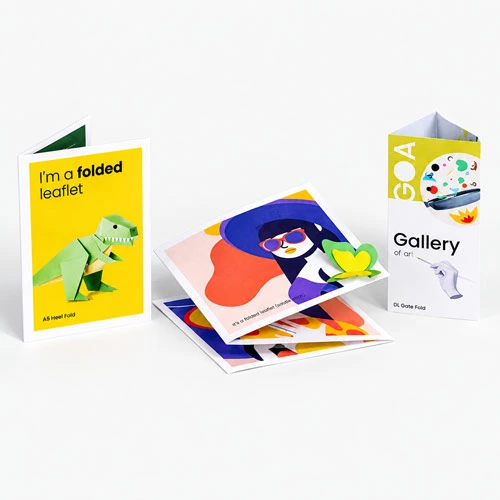
Folded Leaflets need to bend cleanly while keeping panels aligned.
Lighter and medium weight papers are generally easier to fold and can suit roll folds, concertina folds and promotional leaflets containing several panels.
A heavier stock can create a more substantial result, but it may need to be creased before folding. Creasing creates a controlled line that helps the paper bend and reduces the risk of the printed surface cracking.
The direction of the paper fibres, number of folds and amount of ink crossing each fold can also influence the result.
Choose the GSM alongside the fold type rather than deciding on the paper weight independently.
A poster displayed in a frame or fixed to a flat indoor surface may not need a heavy card.
Lighter and medium weight papers can be easier to roll, transport and replace. A heavier stock may hang more firmly and resist minor handling damage, but it will also be less flexible.
Consider how the poster will be installed. A print that needs to fit inside a snap frame has different requirements from one sold as unframed wall art.
Where presentation is important, the paper surface may have more visual impact than the weight. Silk can balance colour with readability, while uncoated paper may suit illustration or typography with a softer finish. Coated stocks generally create stronger colour, while uncoated papers produce a more natural appearance.
Paper weight has a significant effect on the size and handling of a book. A higher GSM increases the thickness and overall weight of the finished publication. Across a long book, even a small increase per page can create a noticeably thicker spine and heavier parcel.
Lighter paper can help novels, manuals and text led books remain comfortable to hold. Medium weight stocks may suit magazines, catalogues and image led publications where colour reproduction and reduced show through are priorities.
The cover will usually use a heavier paper than the inner pages. This protects the publication and creates a clearer distinction between the outside and inside.
When choosing inner page paper, consider:
A workbook may benefit from writable uncoated pages, while a photographic catalogue may be better suited to silk. Silk is commonly used for booklets because it balances clear image reproduction with comfortable reading.
A cover needs enough strength to protect the pages without making the publication awkward to open.
Saddle stitched and perfect bound books often use a heavier cover stock than their inner pages. The difference creates a more finished appearance and helps the publication withstand handling.
However, the cover weight must remain compatible with the binding method, spine and total page count.
A heavy cover on a very slim booklet may feel disproportionate, while a large perfect bound publication may benefit from greater rigidity.
Lamination can also improve surface protection and change the finish without relying entirely on additional paper weight.
Postcards need to remain flat enough for handling and delivery while providing a suitable surface for the design.
A heavier stock can help protect the corners and create a more substantial product. The reverse may need to be written on, so an uncoated stock or writable reverse should be considered where appropriate.
Postage requirements depend on the complete dimensions and weight of the item, not simply the GSM. Packaging, envelopes and additional inserts all contribute to the final mailing weight.
Greetings cards need enough strength to stand when opened.
A lighter paper may collapse or curl, while a heavier card creates greater stability. The fold also needs to open cleanly without the printed surface cracking.
The choice should account for whether the inside will be written on. Uncoated surfaces tend to accept pens and pencils more easily than coated papers.
The card’s size matters too. A larger card may require more rigidity than a smaller format because the panels have a greater area to support.
Invitations are often expected to feel more substantial than an ordinary flyer.
A heavier card can create that physical presence, but the material and finish are equally important. A textured uncoated paper may provide a more distinctive result than a heavier standard card, while pearl stocks can add a subtle sheen.
The right choice depends on the design and occasion. Minimal typography may suit a tactile uncoated stock, while photography or bold colour may perform better on a smoother surface.
Decorative finishes such as foil, Spot UV or lamination should be considered separately from GSM. They change the appearance and surface of the invitation rather than simply making the base paper heavier. Our paper and finish guide explains these options in more detail.
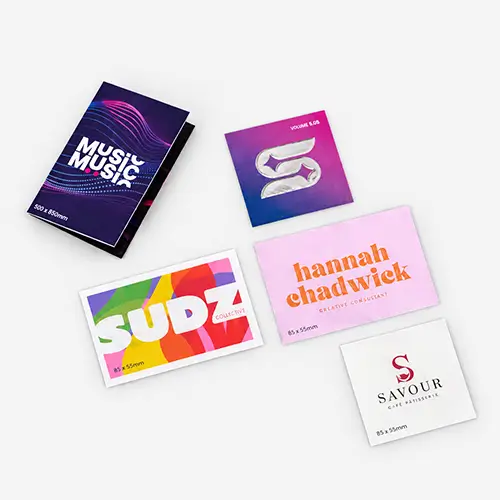
Business cards are handled, stored in wallets and exchanged in busy environments, so they generally benefit from a sturdy stock.
A heavier card can create a more substantial feel and resist bending, but paper type, finish and design still influence the overall result.
A 400gsm silk card will feel smoother and reproduce colour differently from a 400gsm uncoated card. Both have the same GSM, but their surfaces create different experiences.
Ultra thick layered products such as MultiLoft use a different construction altogether. Multiple paper layers are bonded to form a thicker, more rigid card, showing why GSM alone doesn’t describe every printed product accurately.
Letterheads, compliment slips and forms need to pass through office printers, accept handwriting and remain comfortable to handle.
A lighter uncoated paper is usually more practical than heavy card for these applications. The surface provides better grip for pens, pencils and stamps, while the lower weight keeps documents easy to file and post.
Stationery used for certificates, menus or presentation documents may require a heavier option, but compatibility with office equipment should still be checked before reprinting or personalising it.
Not directly. A higher GSM doesn’t automatically produce brighter or more accurate colour. The surface of the paper generally has a greater direct influence on how ink behaves.
Coated papers such as silk and gloss hold ink closer to the surface, which can create sharper detail and stronger contrast. Uncoated paper absorbs more ink, often giving colour a softer and more natural appearance.
Paper shade matters too. Bright white, warm white, cream and brown stocks can all change how printed colours appear.
Choose GSM for the physical behaviour of the sheet and paper type for the finish, texture and visual result.
It can help, but GSM isn’t the only factor. Show through depends on the paper’s opacity, colour, coating and the amount of ink printed on each side.
A sheet containing large dark areas may show through more than a design containing mostly white space. Moving to a heavier paper may reduce the effect, but a different stock or adjusted artwork could also improve the result.
This is especially important for books, brochures and double sided leaflets where readers view one page while printing appears on the reverse.
No. Heavier paper is usually more resistant to folding.
That can make it feel substantial, but it may also increase the risk of cracking along the fold, especially where heavy ink coverage crosses the crease.
Lighter paper generally bends more easily. Heavier stocks may need to be creased before folding so the fibres follow a controlled line.
Always choose the paper weight with the product’s construction in mind.
Yes, because heavier paper increases the complete weight of the finished item.
The difference may seem small for one flyer or card, but it becomes more significant across a catalogue, book or large direct mail campaign.
The final mailing weight can include:
Check the complete packed item against the delivery service’s current size and weight limits before committing to a large quantity.
A heavier or thicker paper may resist bending and creasing more effectively, but durability depends on how the product is used.
A laminated medium weight card may withstand spills and repeated handling better than an untreated heavier stock. A flexible leaflet carried in a pocket has different durability requirements from a menu used repeatedly on a table.
Outdoor print requires materials designed for external conditions rather than simply a higher paper GSM.
Think about moisture, handling, folding, sunlight and length of use before choosing the specification.
Paper is difficult to judge from a screen. Photographs can show colour and texture, but they can’t fully communicate weight, flexibility or how a surface feels in the hand.
Our Print Materials Hub brings together information about popular and specialist stocks, including silk, gloss, uncoated, recycled, pearl and textured papers.
WTTB sample packs also provide a way to compare selected papers and finishes physically before choosing a specification. This can be particularly useful when the feel of the stock forms an important part of the product.
Not every GSM is available or suitable across every printed product. WTTB product pages show the paper types and weights compatible with each format. This prevents a stock being selected where it wouldn’t work properly with the folding, binding or production method.
Begin with the product and how it will be used. Then compare the paper options available within that specification.
For unfamiliar paper terminology, the Print Dictionary provides further explanations, while the Print Materials Hub can help you compare individual paper surfaces and applications.
Most everyday office and printer paper is around 80gsm, although the exact weight varies depending on the stock.
This is at the lighter end of the commercial print spectrum, making it suitable for documents that need to be lightweight, flexible and easy to handle.
150gsm feels noticeably more substantial than standard office paper, while still remaining lightweight and flexible.
The actual feel will depend on the paper type, too. A 150gsm silk, gloss or uncoated stock can feel quite different despite having the same GSM.
250gsm sits around the point where paper may start to be described as card, although there is no universal GSM at which paper officially becomes card.
The terminology varies between products and suppliers, so it is more useful to consider how the stock actually behaves: how rigid it is, how it folds and how it feels in the hand.
For most flyers, lighter to medium-weight stocks offer a good balance between cost, portability and durability.
Higher GSM can give a flyer a more substantial feel, which may suit premium promotions or handouts intended to make a stronger physical impression. For high-volume distribution, however, a lighter stock may be more practical.
The right choice depends on how the flyers will be distributed, how long they need to last and the impression you want them to create.
Choose a GSM that works with the fold and the number of panels in your leaflet.
Lighter and medium-weight papers are generally easier to fold, while heavier stocks can create a more substantial finish but may need to be creased before folding. The design matters too, particularly where heavy ink coverage crosses a fold.
There isn't one ideal GSM for every book. Page count, binding, content and intended use all influence the choice.
Lighter stocks can help keep longer books comfortable to hold and economical to post, while medium-weight papers can be better suited to magazines, catalogues and image-led publications. Covers are generally printed on heavier stock than the inner pages.
Business cards need to withstand frequent handling, so they are typically produced on heavier card stocks such as 350gsm or 400gsm.
However, GSM isn't the only thing that affects how a business card feels. The paper type, coating and any specialist construction can make two cards with similar weights feel very different.
Not necessarily.
A heavier stock can cost more because it uses more material, but price also depends on the paper type, print quantity, size, finish and production method.
In some cases, a specialist lower-GSM paper can cost more than a standard heavier stock. GSM should therefore be considered alongside the rest of the specification rather than treated as a direct measure of price.
Yes and this is one of the most important things to remember when choosing paper.
Two stocks can have the same GSM but differ in thickness, stiffness, texture and appearance because of their fibres, coating and manufacturing process.
A 300gsm silk card, for example, will feel very different from a 300gsm uncoated stock. GSM tells you the weight; it doesn't tell you the whole story.
80gsm: Lightweight and flexible, commonly associated with everyday printer paper.
120gsm: Still lightweight, but with more substance than standard office paper. Useful for leaflets, flyers and pages where a little more weight is desirable.
150gsm: A popular middle ground for promotional print, offering more presence without becoming difficult to handle or fold.
250gsm: Considerably more substantial and often used where a product needs to behave more like lightweight card.
300gsm: A sturdy card stock commonly used for covers, postcards, invitations and other printed products that need greater rigidity.
400gsm: Heavy card with a more premium, rigid feel, often used for business cards and high-end stationery.
If you're unsure which paper weight to choose, start with how the finished print will be used rather than simply choosing the highest GSM.
Choose a lighter GSM when:
Choose a medium GSM when:
Choose a heavier GSM when:
Remember: GSM is only one part of the specification. Paper type, coating, thickness, stiffness and finish can all change the final result.
Flyers: GSM affects portability, durability and perceived quality.
Leaflets: GSM needs to work with the fold and number of panels.
Business cards: Higher GSM can provide greater rigidity, but finish and construction also affect the feel.
Brochures: Inner-page GSM affects weight, flexibility and the finished thickness of the publication.
Posters: GSM affects handling and rigidity, but the installation method and paper surface may matter more.
Books: GSM has a major effect on page thickness, spine width, overall weight and postage.
Invitations: GSM contributes to the physical impression, but texture and finish can be equally important.
Menus: GSM needs to balance handling, durability and whether the menu will be laminated or otherwise protected.
GSM measures weight. Microns measure thickness.
GSM tells you how much a square metre of paper weighs, while microns (µm) describe the physical thickness of the material.
This means two papers with the same GSM can have different thicknesses, while two papers with similar thicknesses can have different GSM values.
For most print buying decisions, GSM is the easier starting point because it is widely used to specify commercial paper and card. However, if the physical thickness of the finished product matters, GSM alone may not tell you everything you need to know.
GSM gives you a useful way to compare paper weight, but it shouldn’t be the only factor guiding your decision.
Consider how the product will be handled, folded, posted, displayed or bound. Then look at the paper surface, stiffness, colour and finish alongside its GSM.
A heavier paper isn’t automatically more professional, just as a lighter paper isn’t automatically lower quality. The strongest choice is the one that makes the finished product easier to use and better suited to its purpose.
Explore the WTTB Print Materials Hub to compare paper types, understand their properties and find the right stock for your next printed project.
Posted on August 11, 2026 by Emma Thompson
Related topics:
£17.48
£21.76
£21.76
£51.01
£19.93